North American Nebula
programNorth American Nebula is a large H II emission nebula located in the constellation of Cygnus.
Also known as Caldwell 20 (NGC 7000), the North American Nebula is located approximately 1,800 to 2,590 light-years from Earth. It occupies an area of the sky that appears more than three times larger than the full moon. Discovered by William Herschel in 1786, its shape resembles the North American continent.
Articles · 1
view in feed →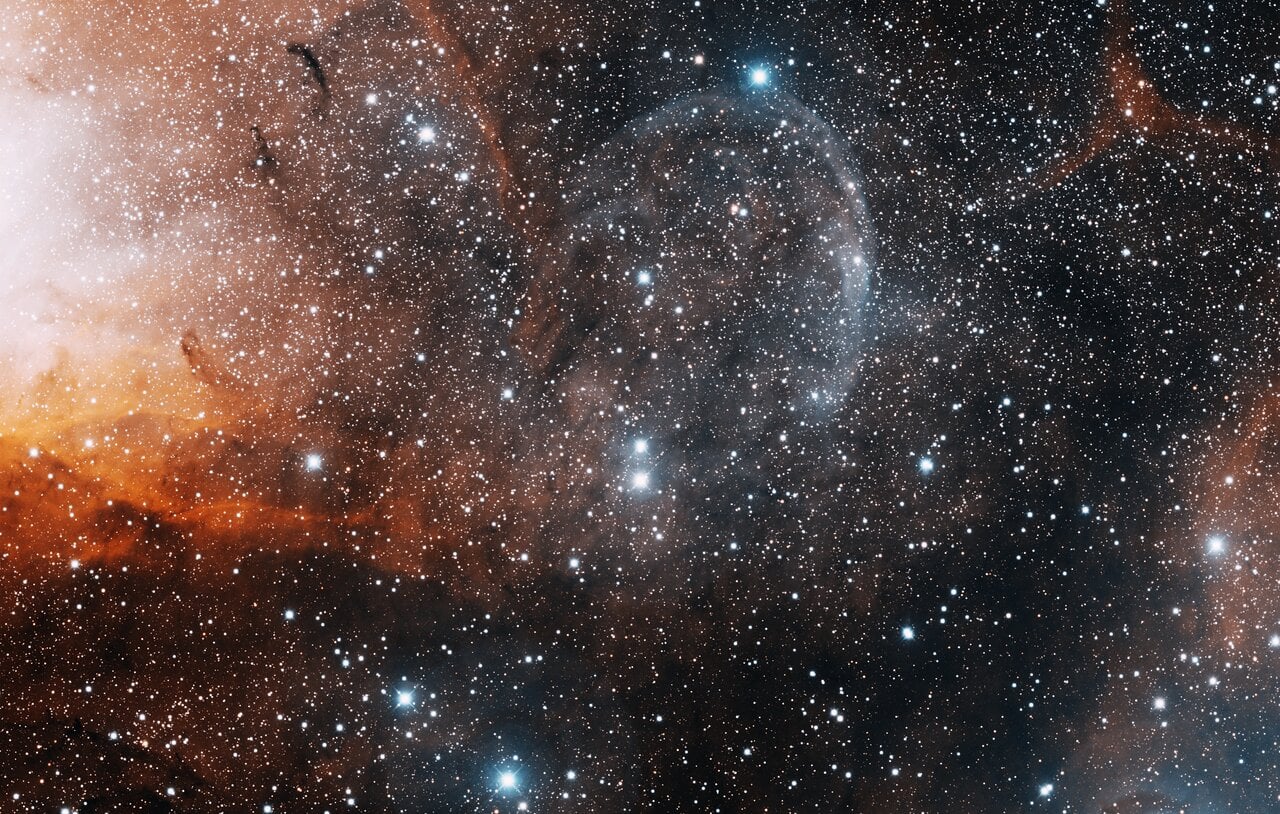
NASA’s SPHEREx Telescope Just Mapped the Cosmic Ices That Will Someday Build Planets
SPHEREx has begun mapping cosmic ices and Polycyclic Aromatic Hydrocarbons (PAHs) across the Milky Way, revealing significant findings in the Cygnus-X and North American Nebula regions. The telescope's wide field infrared imaging system captures critical wavelengths, aiding our understanding of planetary formation. Early data indicates a lack of spatial correlation between ices and PAHs due to ultraviolet radiation effects.