European Space Agency
agencyEvents · 10
- launch2026-12-01PLATO launches to find exoplanets
- launch2026-12-01PLATO mission to monitor stars
- launch2025-12-1714th launch of Galileo satellites
- launch2025-12-01Launch of Kompsat-7 satellite
- launch2025-11-04Launch of Copernicus Sentinel-1D satellite
- launch2025-08-13Launch of MetOp-SG-A1 weather satellite
- launch2025-07-25Launch of CO3D and MicroCarb satellites
- launch2025-04-29Launch of ESA’s Biomass satellite
- milestone2025-04-24P160C solid rocket motor test fire
- launch2025-03-06Launch of CSO-3 observation satellite
People · 1
Articles · 3
view in feed →
ESA and Canada Sign Agreement on the Exchange of Classified Information around Strategic Space Domains
European Space Agency and Canada have formalized a General Security of Information Agreement (GSOIA), establishing a legally binding framework for the exchange of classified information. This agreement aims to enhance collaboration in strategic domains, including space-based surveillance, disaster response, and security-related technologies, thereby fostering closer ties between the two entities in critical space initiatives.
The space agencies of Canada and Europe agree to exchange classified information
Canadian Space Agency and European Space Agency signed a General Security of Information Agreement (GSOIA) on April 14, 2026, at the 41st Space Symposium. This legally binding framework enables the secure exchange of classified information, enhancing collaboration in space-based surveillance and dual-use technologies. The agreement reflects Canada's commitment to ESA, including a recent $500M funding pledge for projects.
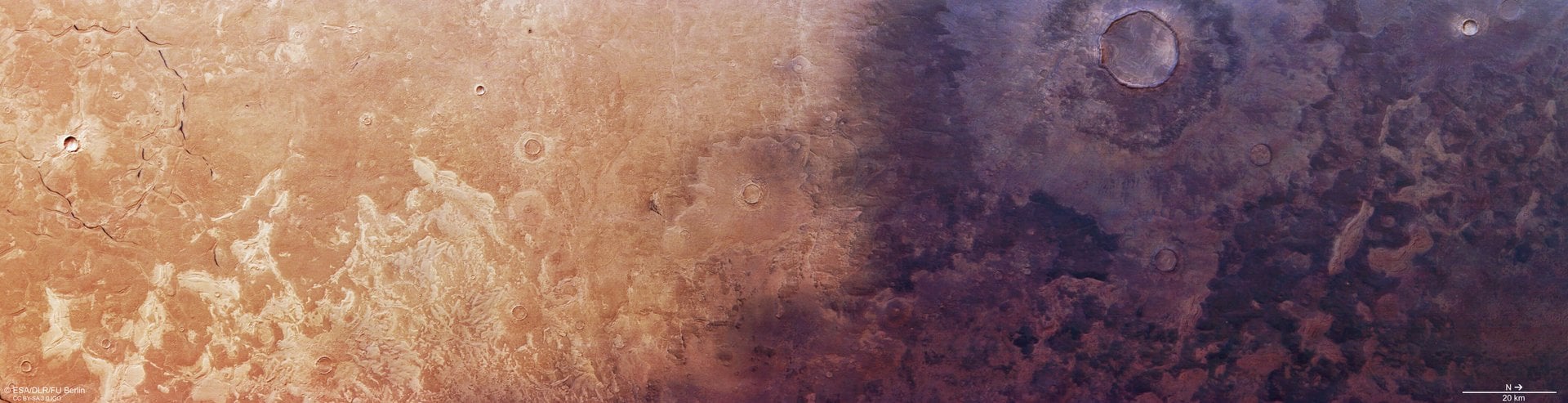
Watch This Dark Volcanic Ash Creep Across the Red Planet
European Space Agency images from the Mars Express reveal a dark volcanic ash blanket creeping across Utopia Planitia, indicating geological activity. This change, observed over approximately 50 years since the Viking orbiters, suggests wind-driven processes are at play. The findings highlight subsurface ice and tectonic features, challenging the notion of Mars as a static, lifeless planet.