
Space Symposium 2026 – 350TB/Day, Copernicus Economy & Europe’s Speed Problem with Josef Aschbacher
Josef Aschbacher, Director General of the European Space Agency, discussed Europe's competitive position in the global space ecosystem during the Space Symposium 2026. He emphasized the need for significant changes to enhance Europe's capabilities and address challenges such as the Copernicus economy and the continent's speed problem in space operations and technology development.

ESA and Canada Sign Agreement on the Exchange of Classified Information around Strategic Space Domains
European Space Agency and Canada have formalized a General Security of Information Agreement (GSOIA), establishing a legally binding framework for the exchange of classified information. This agreement aims to enhance collaboration in strategic domains, including space-based surveillance, disaster response, and security-related technologies, thereby fostering closer ties between the two entities in critical space initiatives.

OQ wins ESA 5G contract
OQ Technology has secured a €1 million contract from the European Space Agency for its BEAMSAT-5G project, aimed at enhancing beamforming technologies for satellite communications. Officially launched on February 3, 2026, this initiative will facilitate the integration of terrestrial 5G with satellite systems, supporting OQ's development of next-generation D2D satellites for high-capacity connectivity.
The space agencies of Canada and Europe agree to exchange classified information
Canadian Space Agency and European Space Agency signed a General Security of Information Agreement (GSOIA) on April 14, 2026, at the 41st Space Symposium. This legally binding framework enables the secure exchange of classified information, enhancing collaboration in space-based surveillance and dual-use technologies. The agreement reflects Canada's commitment to ESA, including a recent $500M funding pledge for projects.
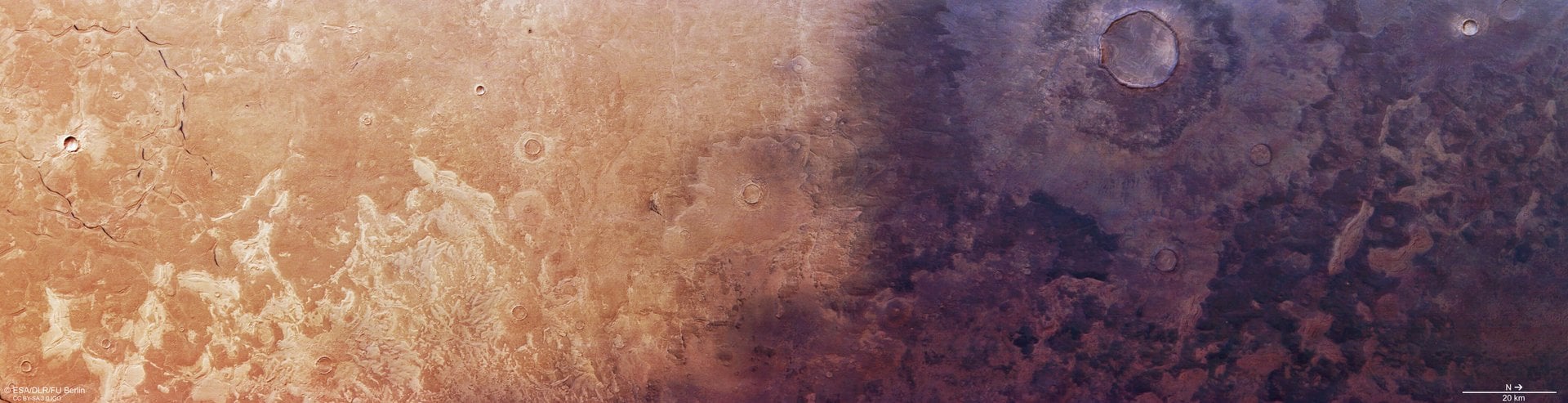
Watch This Dark Volcanic Ash Creep Across the Red Planet
European Space Agency images from the Mars Express reveal a dark volcanic ash blanket creeping across Utopia Planitia, indicating geological activity. This change, observed over approximately 50 years since the Viking orbiters, suggests wind-driven processes are at play. The findings highlight subsurface ice and tectonic features, challenging the notion of Mars as a static, lifeless planet.

NASA Plan to Shoot and Ship Samples of the Red Planet on Hold
NASA's Mars Sample Return project is currently on hold due to intense scrutiny. The initiative involves the Perseverance rover collecting Martian samples and storing them in tubes for future retrieval. The plan includes a Sample Return Lander equipped with a Mars Ascent Vehicle and a robotic arm from the European Space Agency for specimen transfer to Earth.