
A School of Mud Volcano Islands in Azerbaijan
NASA's Earth Observatory highlights the unique tadpole-shaped mud volcano islands along Azerbaijan's Absheron Peninsula, formed by explosive eruptions and erosion. The region, known for its high concentration of mud volcanoes, features at least 220 such formations. The islands, including Xərə Zirə Adası and Səngi Muğan Adası, exhibit active vents and historical eruptions, posing geological risks.

The Spacesuit Gap: Why Artemis III’s 2028 Landing Date Is Already Slipping
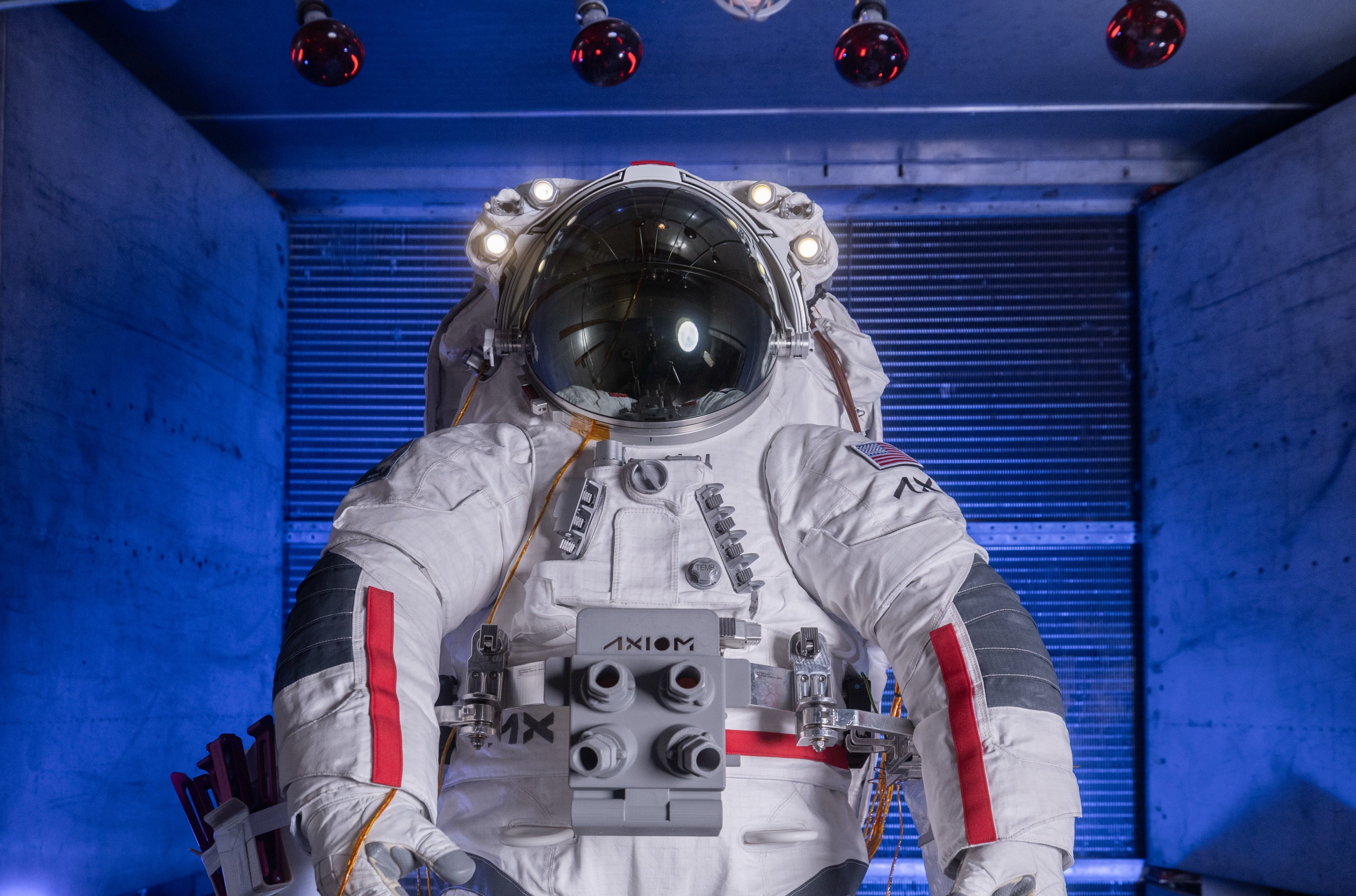
NASA's next-generation spacesuits for Artemis lunar missions may not be ready until 2031, contradicting public confidence in a 2028 lunar landing. The Office of Inspector General report highlights a failed contracting strategy, reducing competition to a sole-source arrangement with Axiom Space. Delays in development raise concerns about meeting the original schedule for lunar surface missions.
NASA’s 2028 Moon Landing Has A Spacesuit Problem, New Report Says
NASA's 2028 Moon landing is jeopardized by spacesuit development delays, as reported by the Office of the Inspector General. Axiom Space remains the sole vendor after Collins Aerospace withdrew. Axiom secured $350M in financing for suit development, co-led by Type One Ventures and Qatar Investment Authority. Future interoperability standards are recommended for Artemis vehicles and suits.

Artemis spacesuit development risks further delays
NASA's inspector general warns that new spacesuits for Artemis lunar missions and the ISS may not be ready until after 2030. The report criticizes the xEVAS program's commercial approach, citing technical risks and poor performance by Collins Aerospace. Axiom Space continues development, but delays could push demonstrations to 2031, conflicting with optimistic timelines for upcoming missions.
April 20, 2025: Visiting Asteroid Donaldjohanson
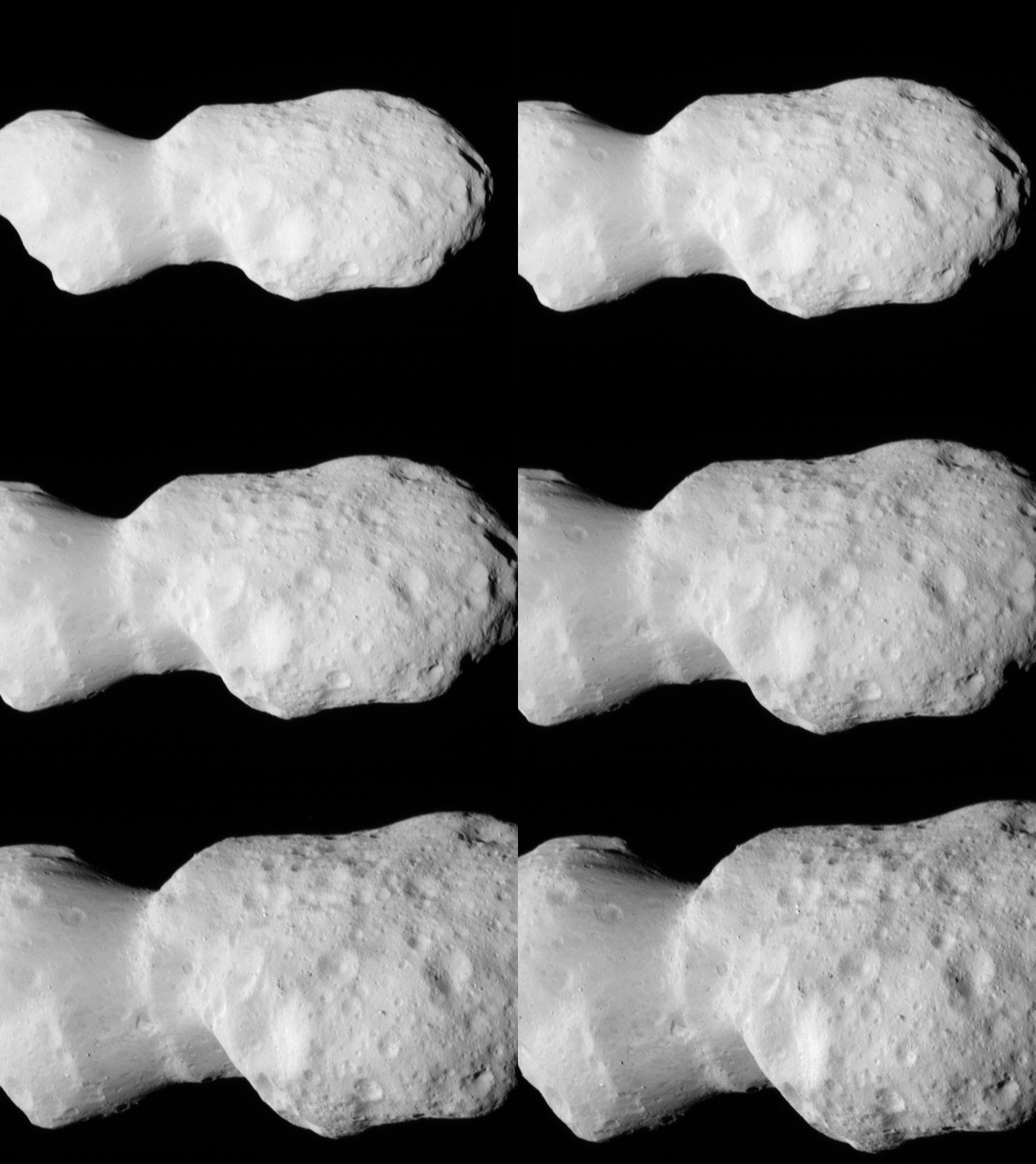
NASA’s Lucy spacecraft successfully imaged asteroid 52246 Donaldjohanson on April 20, 2025, approaching within 600 miles (920 km). The asteroid, measuring 5 miles (8 km) long, exhibits a peanut shape indicative of an elongated contact binary. Images captured by the Lucy LOng Range Reconnaissance Imager (L’LORRII) revealed unexpected geological features, prompting further study.
NASA IG Raises More Questions About Readiness for Human Lunar Landings
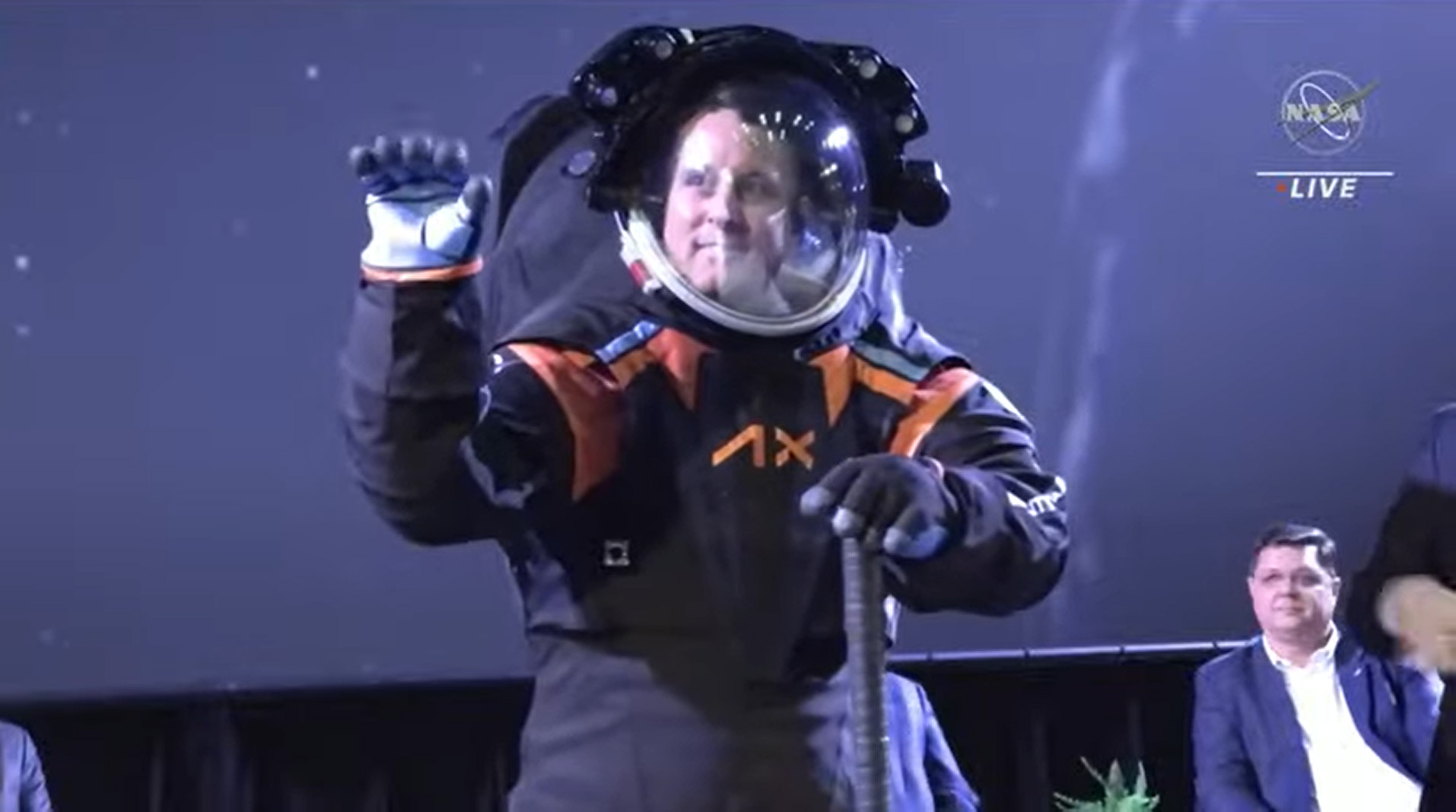
NASA's Office of Inspector General raised concerns about the feasibility of landing humans on the Moon by 2028, citing delays in the Human Landing Systems and spacesuit readiness. Axiom Space is developing lunar suits, having secured $350 million in financing. The report indicates potential delays until 2031 for both lunar and ISS suits, impacting Artemis III timelines.
NASA on Track for Future Missions with Initial Artemis II Assessments
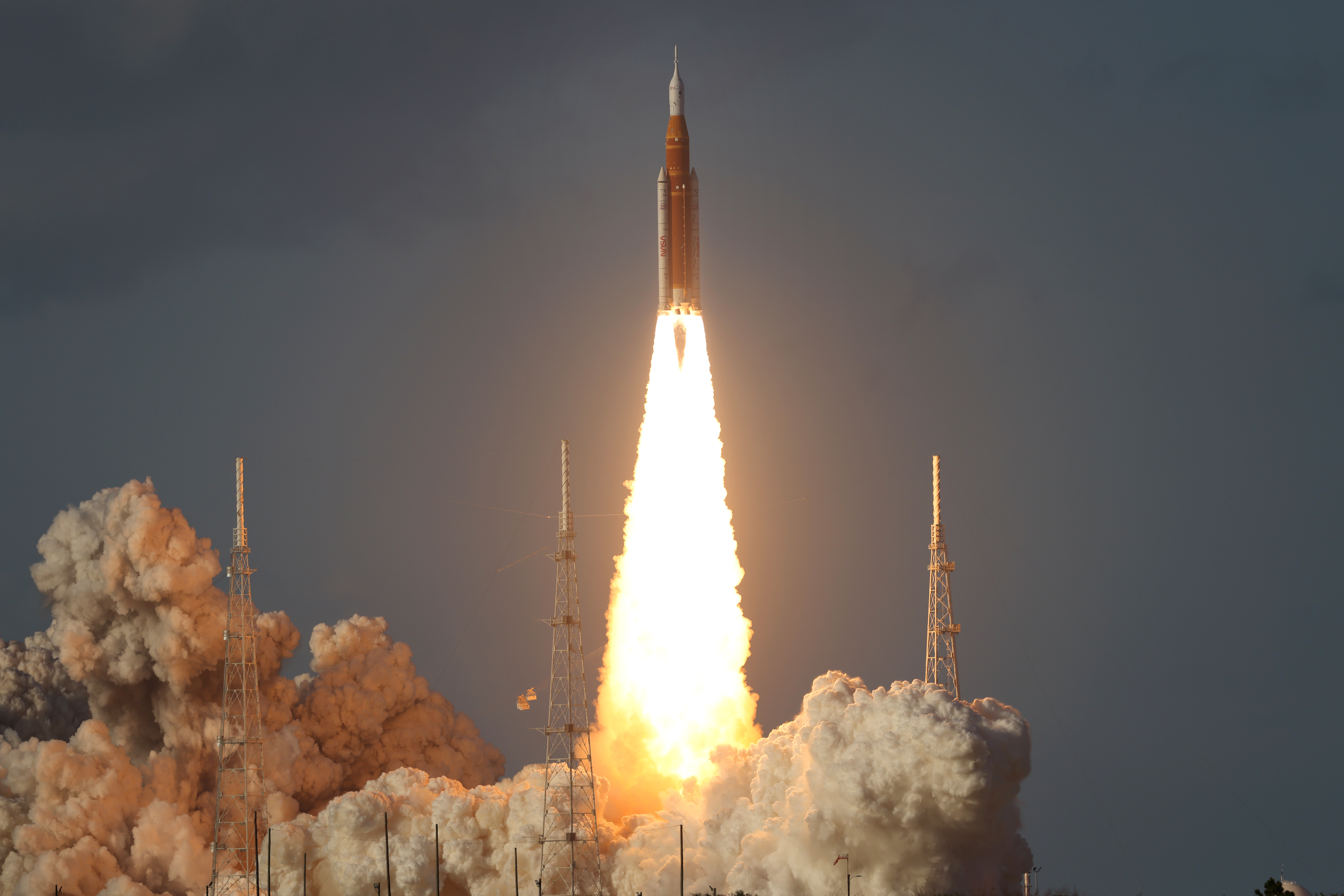
NASA's Orion spacecraft successfully completed its Artemis II mission, splashing down on April 10, 2026, after a 694,481-mile journey. Engineers are analyzing performance data from the SLS rocket and launch systems. Initial assessments indicate the heat shield performed well, with reduced char loss compared to Artemis I, and the crew module will undergo further inspections at Kennedy Space Center.
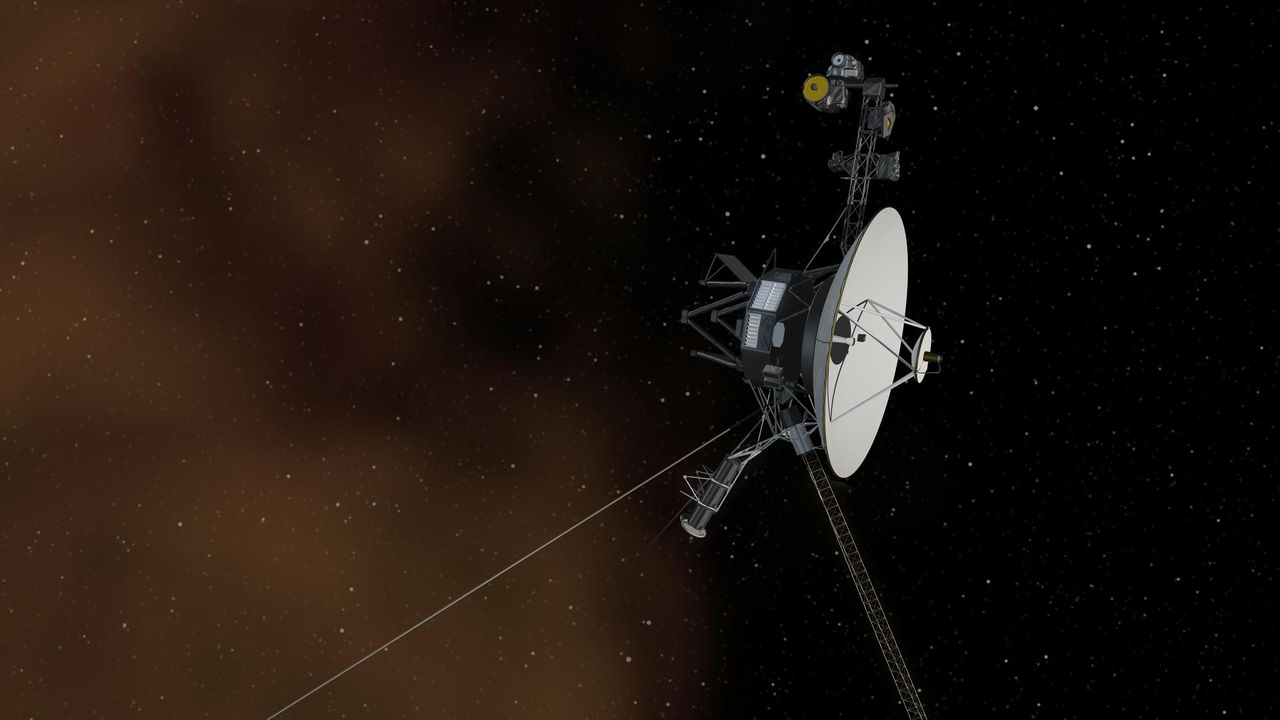
NASA shuts down Voyager 1 instrument to keep probe exploring interstellar space
NASA engineers have shut down the Low-energy Charged Particles experiment (LECP) on Voyager 1 to conserve power for continued exploration of interstellar space. This decision, made on April 17, follows years of planning to prioritize instrument shutdowns. Voyager 1, launched in 1977, remains the most distant human-made object, over 15 billion miles from Earth.

NASA Rolls Out Artemis III Moon Rocket Core Stage
NASA rolled out the core stage of the SLS rocket for the Artemis III mission on April 20, 2026, transporting it from the Michoud Assembly Facility to the Pegasus barge. This stage, measuring 212 feet tall, will provide over 2 million pounds of thrust using four RS-25 engines, crucial for the crewed lunar landing planned for 2027.
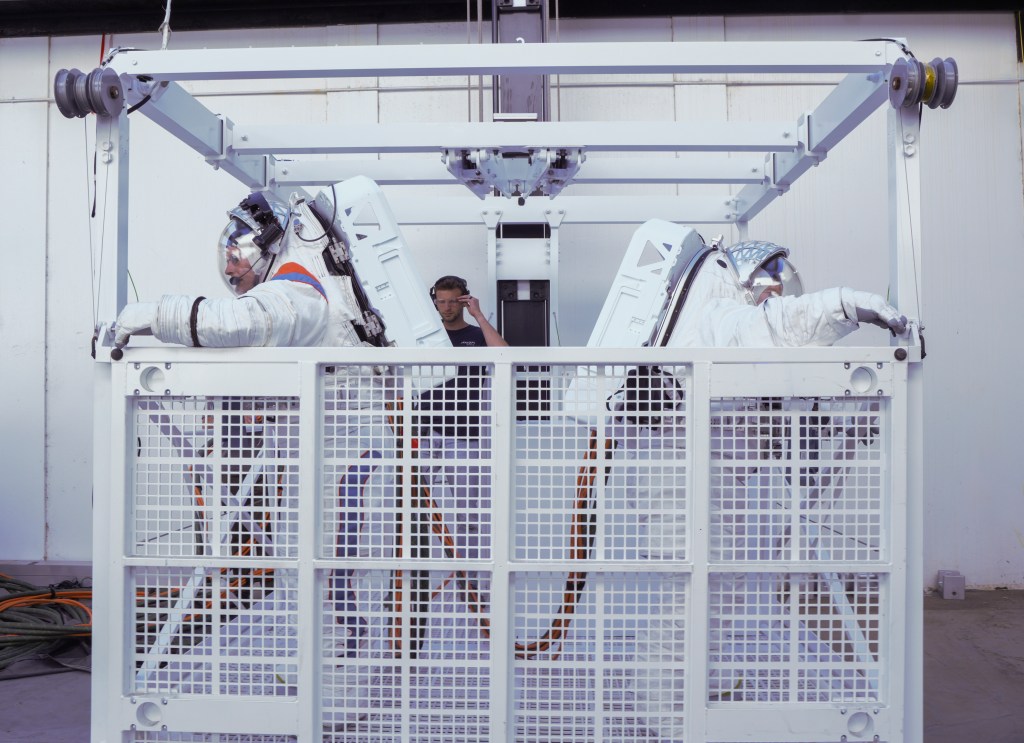
NASA’s IG: With only Axiom building NASA’s future spacesuits, the agency’s lunar program faces great scheduling risk
NASA's inspector general warns that the lunar program faces significant scheduling risks due to reliance on Axiom as the sole contractor for new spacesuits. The report highlights potential delays if Axiom fails to meet requirements, necessitating continued use of outdated EMU suits. Alternative options exist, but standardization issues complicate future suit development for the Artemis program.

With eyes on future NASA moon base, Space Force launches cislunar acquisition task force
Space Force is establishing a new Cislunar Coordination Office to support NASA's planned lunar base, as announced by Maj. Gen. Stephen Purdy. This initiative follows President Trump's Executive Order aimed at creating a permanent lunar outpost by 2030. The office will be led by Jamie Stearns, focusing on technology acquisition and collaboration with industry and government entities.
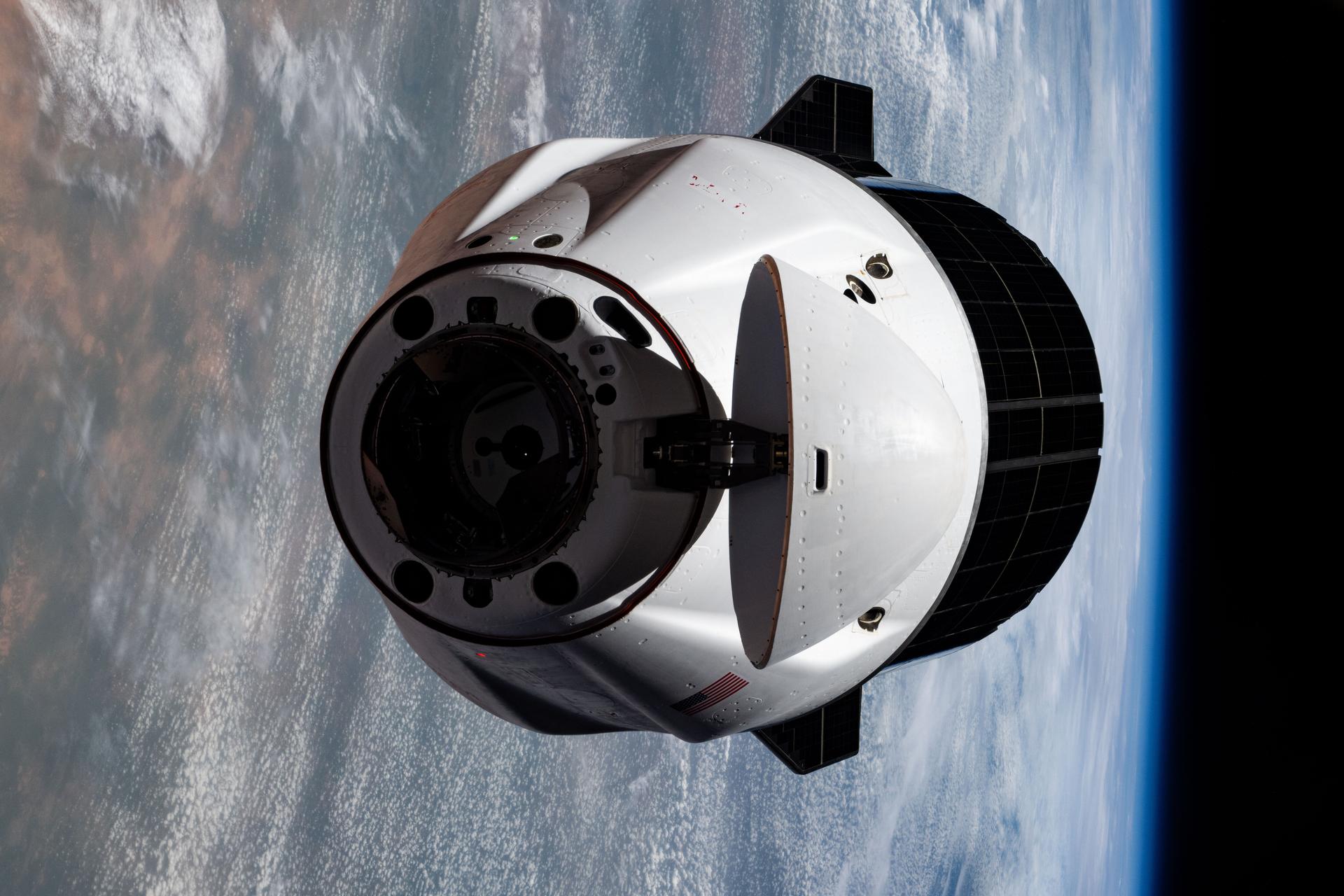
NASA Invites Media to SpaceX’s 34th Resupply Launch to Space Station
NASA has invited media to cover SpaceX's 34th Commercial Resupply Services mission, targeting launch no earlier than May 12, 2026. The Falcon 9 rocket will deliver over 5,000 pounds of science, supplies, and hardware to the International Space Station. This mission includes experiments on microgravity effects and new treatments for osteoporosis, enhancing research capabilities in space.

Latvia joins the Artemis Accords
Latvia has officially signed the Artemis Accords at a ceremony on April 20, becoming the 62nd country to join this multilateral framework aimed at fostering cooperation in NASA's lunar exploration initiatives. Minister Dace Melbārde emphasized the commitment to responsible space exploration, while Jānis Beķeris highlighted new opportunities for Latvian scientists and entrepreneurs in the global space economy.
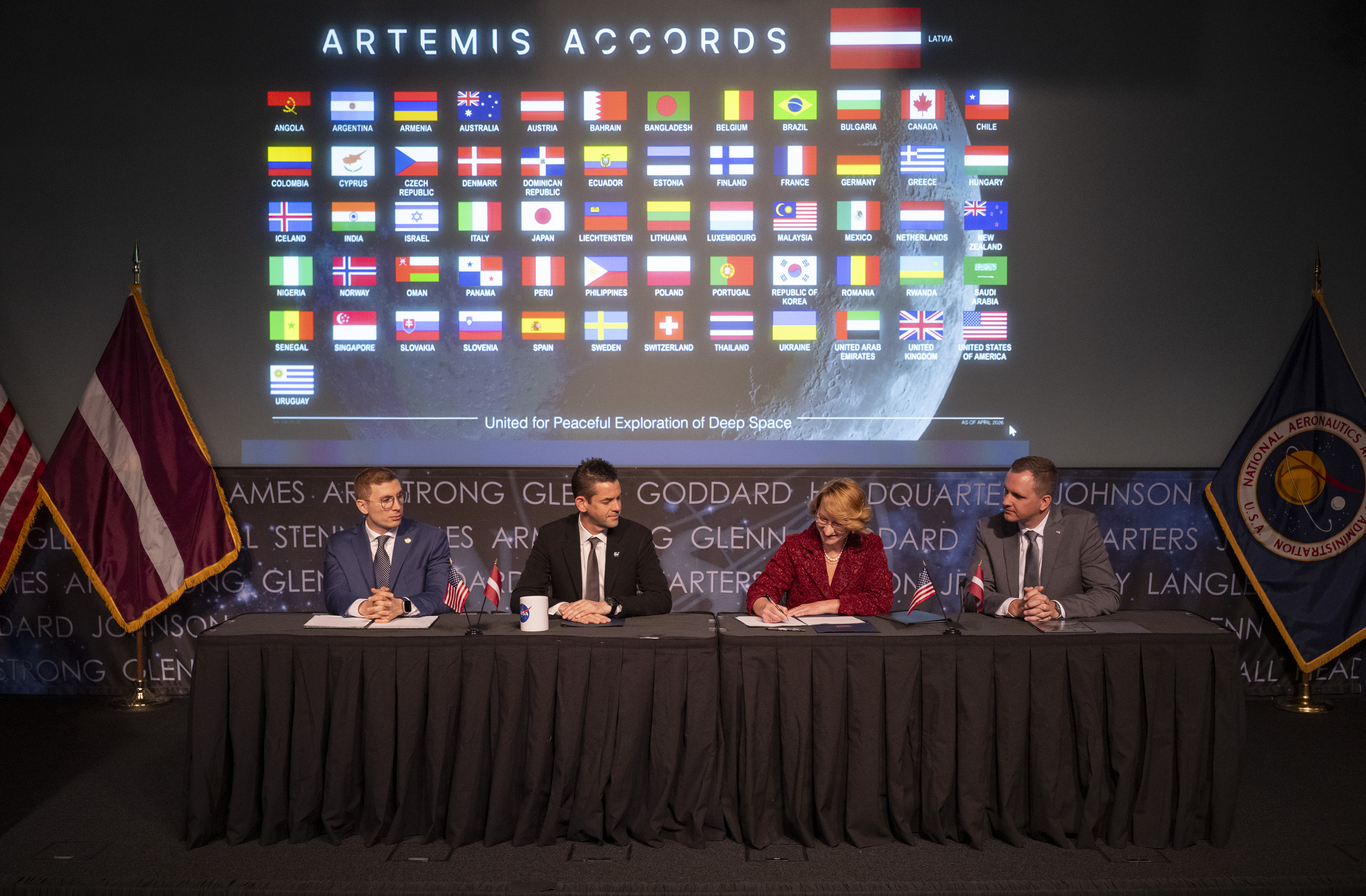
NASA Welcomes Latvia as Newest Artemis Accords Signatory
Latvia signed the Artemis Accords on April 20, 2026, becoming the 62nd nation to commit to responsible space exploration. The signing ceremony, hosted by NASA at its headquarters, featured Jared Isaacman and Dace Melbārde. This partnership enhances international cooperation and aims to establish a sustainable lunar presence, fostering future collaboration in space activities under the Artemis framework.

Wheels Up for X-59
NASA's X-59 quiet supersonic research aircraft achieved a critical milestone by transitioning to wheels up during its test campaign on April 14, 2026. This advancement marks significant progress towards supersonic flight, with the aircraft demonstrating its highest speeds and operational range. Future tests will evaluate control performance, structural dynamics, and the eXternal Vision System's functionality.

Did NASA’s Artemis II mission really do lunar science or go to the Moon for all humanity?
NASA's Artemis II mission, while celebrated, has been misrepresented regarding its lunar science contributions. Official statements claim it aids in selecting future landing sites, yet the mission only performed a brief flyby, lacking sufficient time or proximity for meaningful observations. In contrast, the Lunar Reconnaissance Orbiter has been mapping the Moon for over 15 years, providing extensive data.
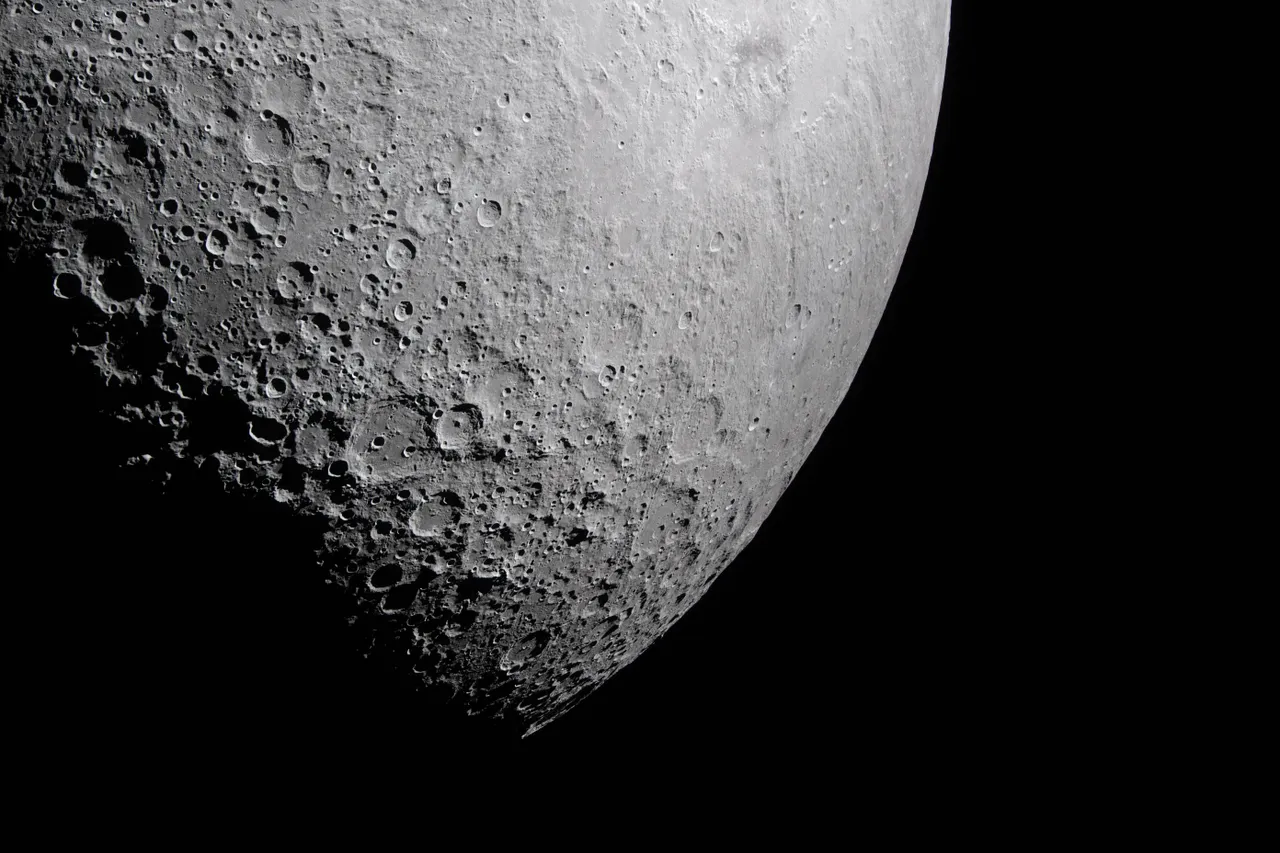
A peek at the far side of the moon | Space photo of the day for April 20, 2026
NASA's Artemis 2 mission captured a stunning image of the moon's far side on April 6, 2026. The Orion spacecraft, carrying four astronauts, flew 252,756 miles from Earth, marking humanity's farthest journey from home. This mission is the first crewed lunar flight since Apollo 17 in 1972, showcasing the moon's hidden side during a 40-minute communication blackout.
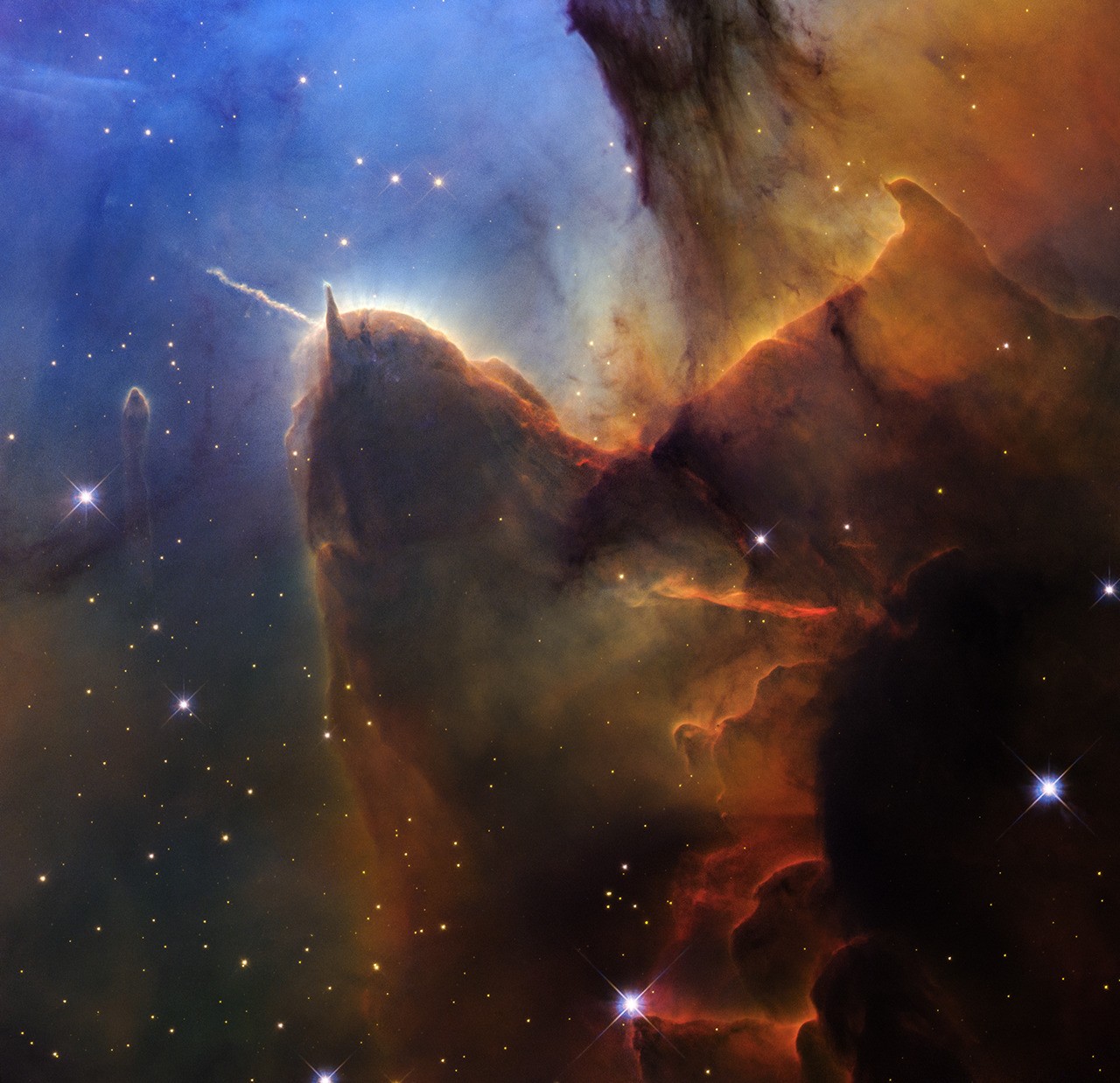
NASA’s Hubble Dazzles With Young Stars in Trifid Nebula
NASA's Hubble Space Telescope celebrates its 36th anniversary by showcasing a new image of the Trifid Nebula, revealing changes in this star-forming region since its first capture in 1997. Enhanced imaging capabilities allow for detailed observations of star formation processes, including the influence of massive stars on surrounding gas and dust, fostering new stellar births over 300,000 years.

Space Force sets up ‘cislunar coordination’ office to focus beyond Earth orbit
U.S. Space Force is establishing a cislunar coordination office to enhance acquisition efforts for operations beyond Earth orbit. Maj. Gen. Stephen Purdy emphasized the need for integrating cislunar capabilities, reflecting the executive order from December 2025. Jaime Stearns will lead the office, focusing on collaboration with NASA and other agencies to ensure national security in cislunar space.

In the wake of Artemis 2, America needs to consider the ‘why’ of its government space program
SpaceX's innovations in space flight technology have sparked debate over the Artemis program's value, with critics arguing for a shift in funding towards commercial ventures. However, the government’s role remains crucial in establishing infrastructure and reducing risks for future missions. The $10.08 billion allocated for Artemis 4 and 5 underscores the ongoing commitment to human space exploration despite public skepticism.

Thailand’s Krabi Coast
NASA's Earth Observatory highlighted Thailand's Krabi Coast in an image captured by the Landsat 8 OLI on March 23, 2026. The region features stunning tropical karst landscapes, sandy beaches, and diverse land cover. Popular among tourists, Railay and Phra Nang beaches attract rock climbers, while the area showcases significant geological formations shaped over millions of years.
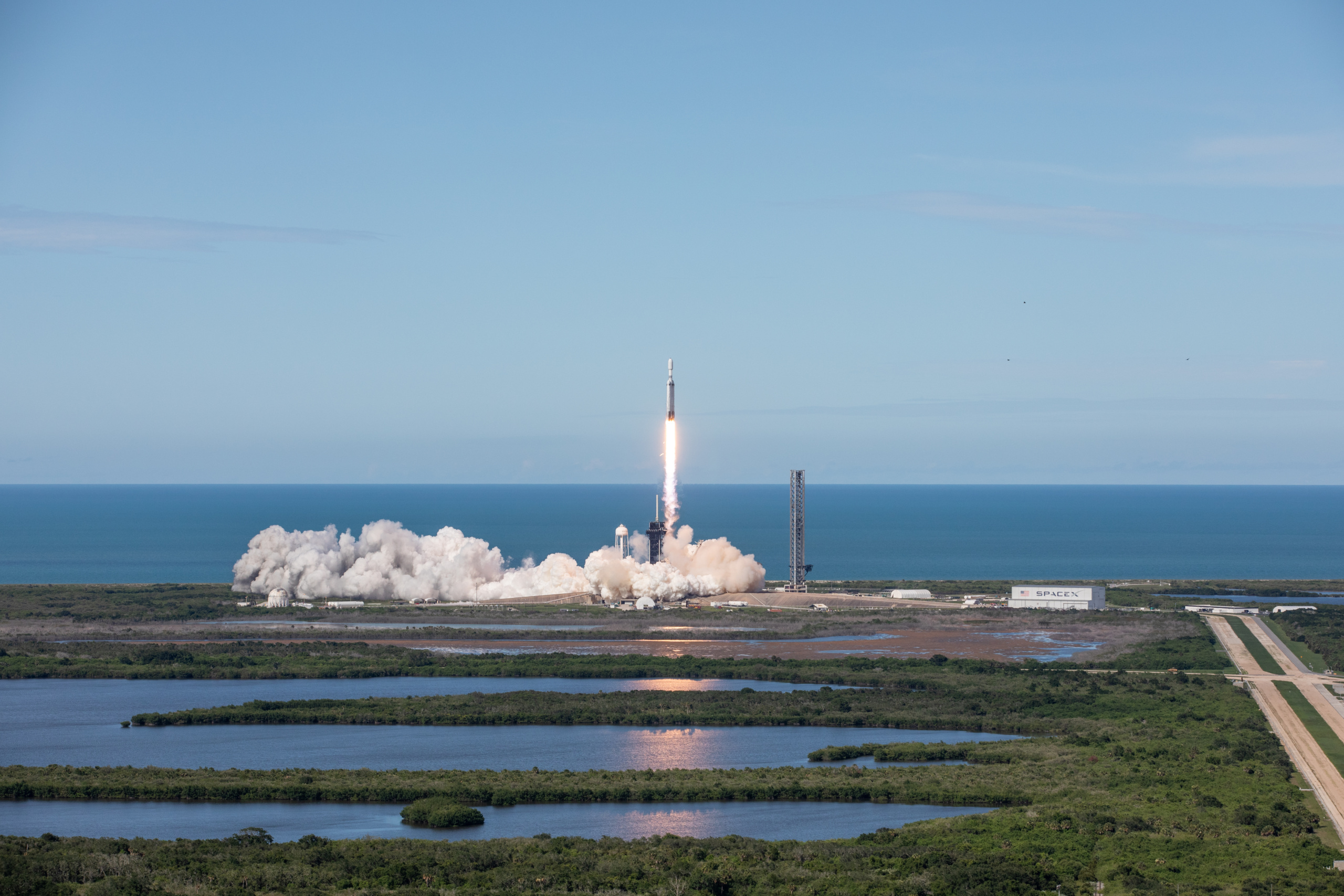
SpaceX Won A Mars Mission That Might Get Cancelled
NASA selected SpaceX's Falcon Heavy to potentially launch the Rosalind Franklin rover to Mars by late 2028 for a reported $175.7M. However, the White House's FY2027 budget proposal suggests canceling NASA's participation in the mission, putting its future in jeopardy. This marks NASA's second attempt at an ExoMars partnership after previous cancellations due to budget constraints.

What’s Happening in Space Policy April 19-25, 2026
NASA Administrator Jared Isaacman will testify on April 19 regarding the FY2027 budget request, which proposes a $5.6 billion cut to the agency's budget. This follows the successful Artemis II mission. The House Science, Space, and Technology Committee will discuss concerns over NASA's compliance with congressional directives amid proposed budget reductions affecting various programs and operations.
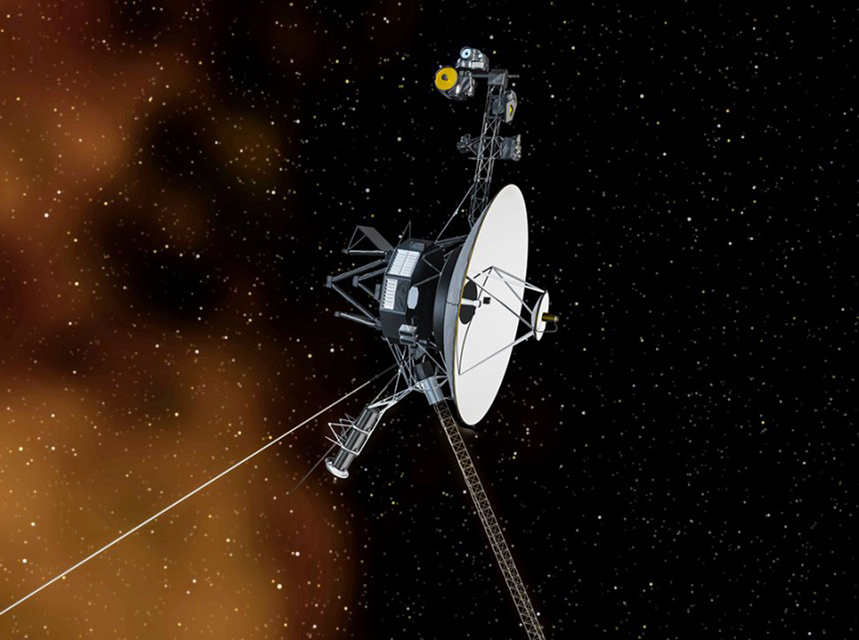
NASA Shuts Off Instrument on Voyager 1 to Extend Interstellar Mission
NASA engineers at Jet Propulsion Laboratory deactivated the Low-energy Charged Particles (LECP) instrument on Voyager 1 on April 17, 2026, to conserve power. This decision follows a power drop during a maneuver, ensuring continued operation of the Magnetometer and Plasma Wave Subsystem. The shutdown extends the mission's capabilities into the 2030s, with a planned power management strategy called the Big Bang.

Rhea Space Activity raises $6 million to develop GPS-free spacecraft navigation
Rhea Space Activity has secured $6 million in a Series A funding round to enhance its AutoNav navigation software, designed for GPS-free spacecraft operation. This funding will accelerate development of a visual-based system utilizing onboard optical sensors. The technology, originally from NASA Jet Propulsion Laboratory, will be tested on a reentry capsule from Varda Space Industries.
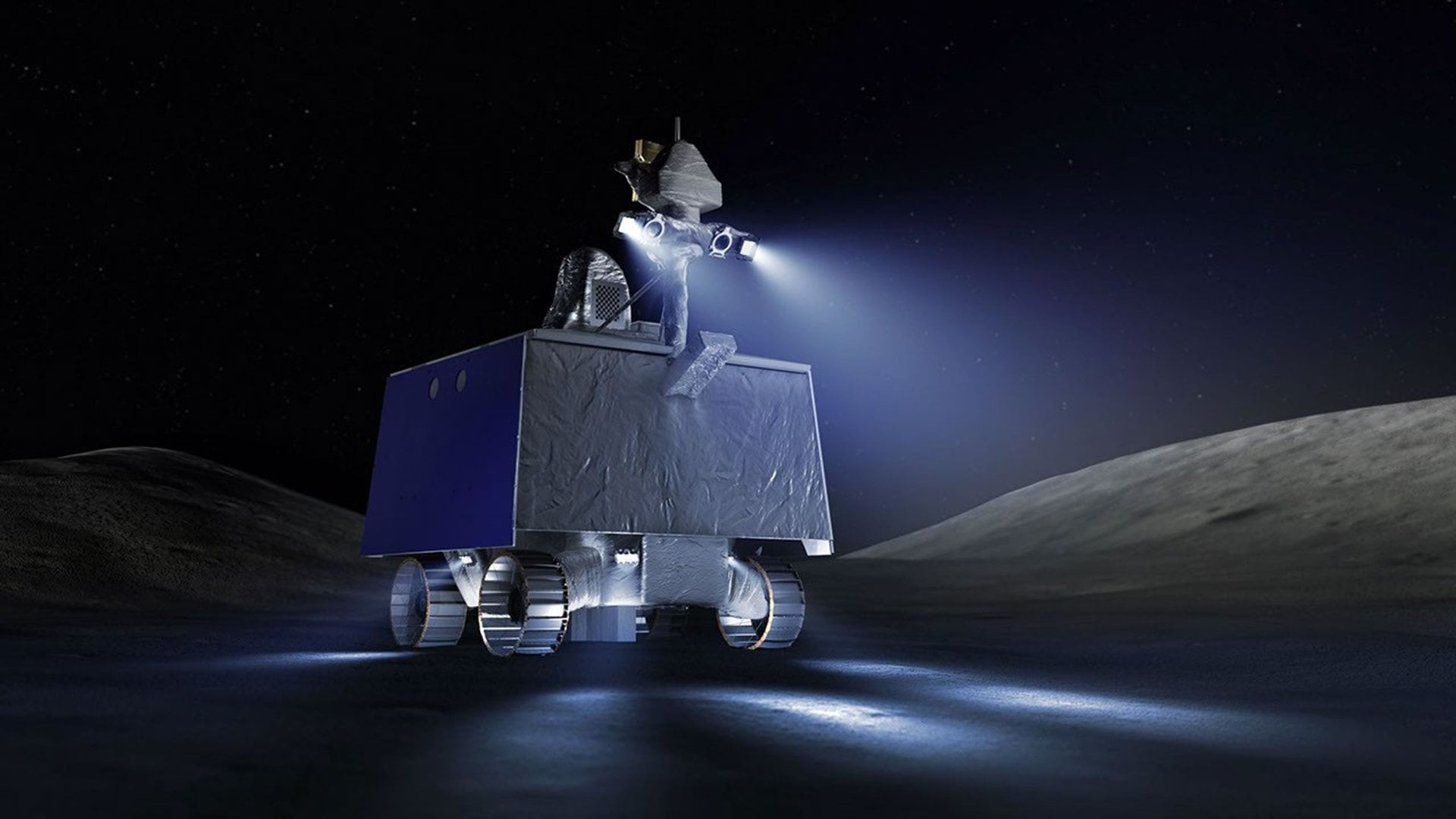
"Immature" Lunar Soil Could Be Suitable for Roadways on the Moon
NASA's Artemis Program and ESA's Moon Village aim to establish a sustainable lunar presence. Research by Vanesa Muñiz Lloréns and Michael Lucas indicates that

Final ground testing begins of Katalyst’s Swift rescue spacecraft
Katalyst has initiated final ground testing of its LINK spacecraft, designed for the Gehrels-Swift rescue mission, at NASA's Goddard Space Flight Center. Following a contract awarded by NASA, LINK will undergo vibration and thermal tests before being integrated into Northrop Grumman's Pegasus rocket for a potential launch later this year to prevent the telescope's orbital decay.

Engineers shut down another instrument on Voyager-1
NASA engineers at Jet Propulsion Laboratory shut down the Low-energy Charged Particles experiment on Voyager 1 on April 17, 2026, due to declining power. This decision follows a pre-established plan to extend the spacecraft's operational life. Voyager 1 now has three active instruments, with hopes to last until 2027, marking its fiftieth anniversary in space.
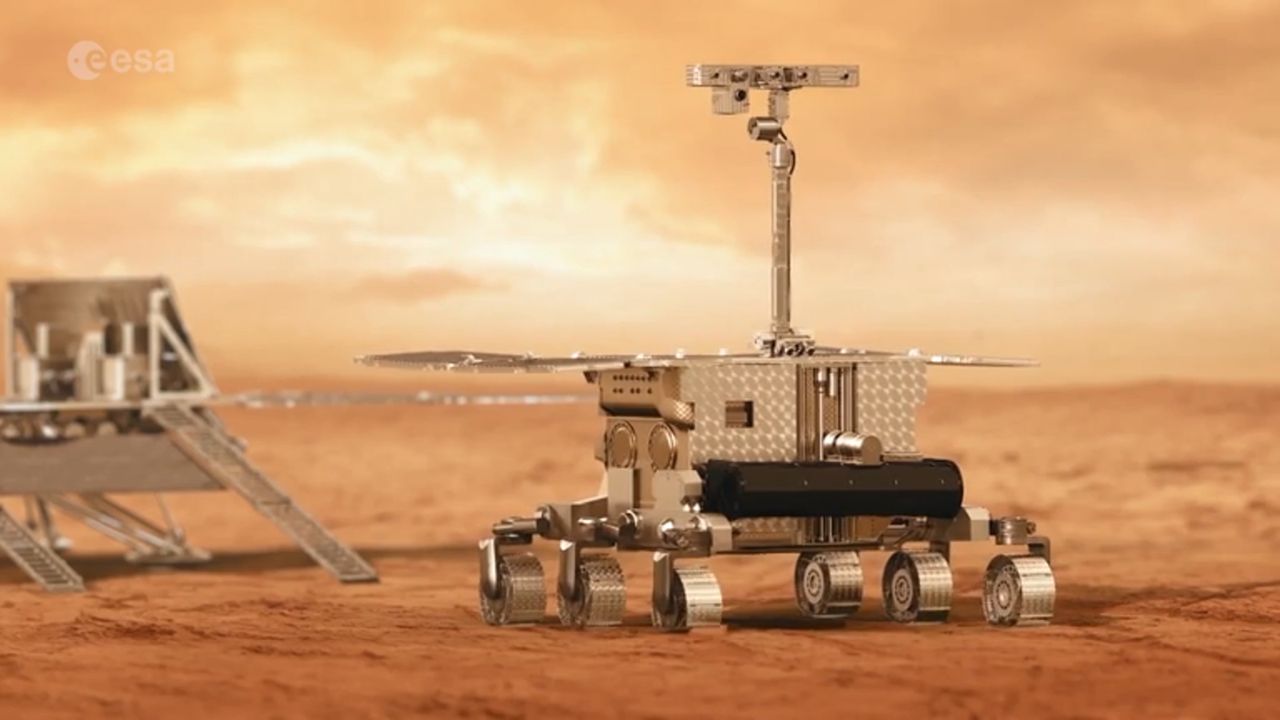
This life-hunting rover may be SpaceX's 1st-ever Mars launch
SpaceX has secured its first Mars launch with NASA selecting its Falcon Heavy rocket to deploy the Rosalind Franklin rover in late 2028. This mission, part of the ExoMars program, aims to search for signs of life on Mars. NASA will provide crucial support, including a propulsion system and specialized instruments for the rover's scientific objectives.

April 17, 2026 Quick space links
NASA has approved the provision of rocket, landing engines, and radioisotope heater units for Europe's Mars Franklin rover, selecting a Falcon Heavy for its 2028 launch. Originally, Russia was to supply the lander, but was removed from the project following its 2022 invasion of Ukraine. Airbus and Sener now hold contracts for its development.
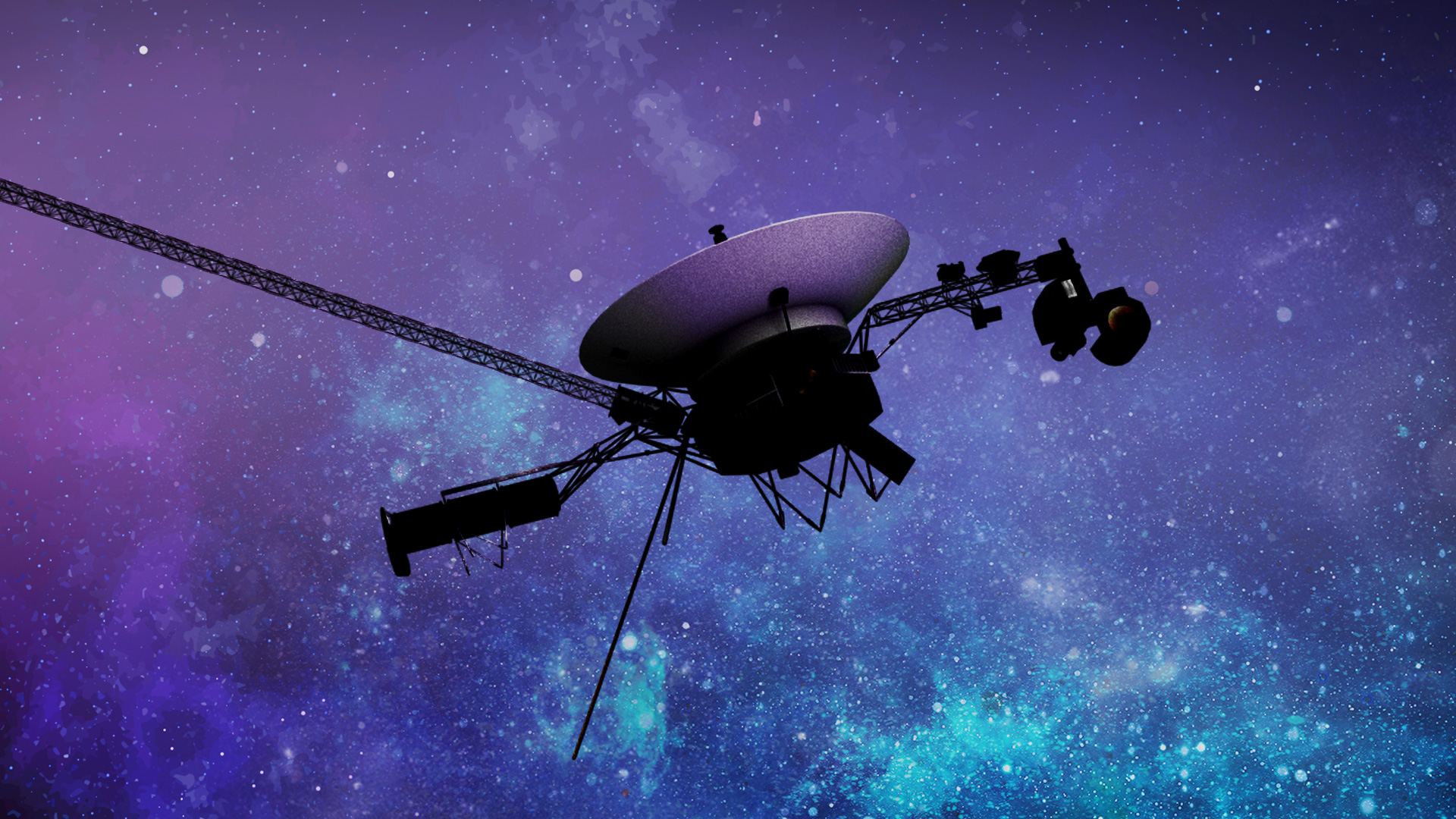
NASA Shuts Off Instrument on Voyager 1 to Keep Spacecraft Operating
NASA engineers at Jet Propulsion Laboratory (JPL) commanded the shutdown of the Low-energy Charged Particles (LECP) experiment on Voyager 1 on April 17 to conserve power. This decision follows a pre-established plan to maintain mission operations, having already deactivated seven of ten instruments. The LECP has provided critical interstellar data since Voyager 1's 1977 launch.
Webinar 4/29: NASA CSDA Program Vendor Focus- MDA Space
NASA's Commercial Satellite Data Acquisition (CSDA) program aims to enhance Earth science research by integrating commercial satellite data. A webinar on April 29, 2026, will feature MDA Space, showcasing its CHORUS-C and RADARSAT-2 synthetic aperture radar (SAR) constellation. Participants will learn to access and utilize these data products to complement NASA's existing Earth science datasets.
NASA Artemis II Human Research Data Methodology Challenge
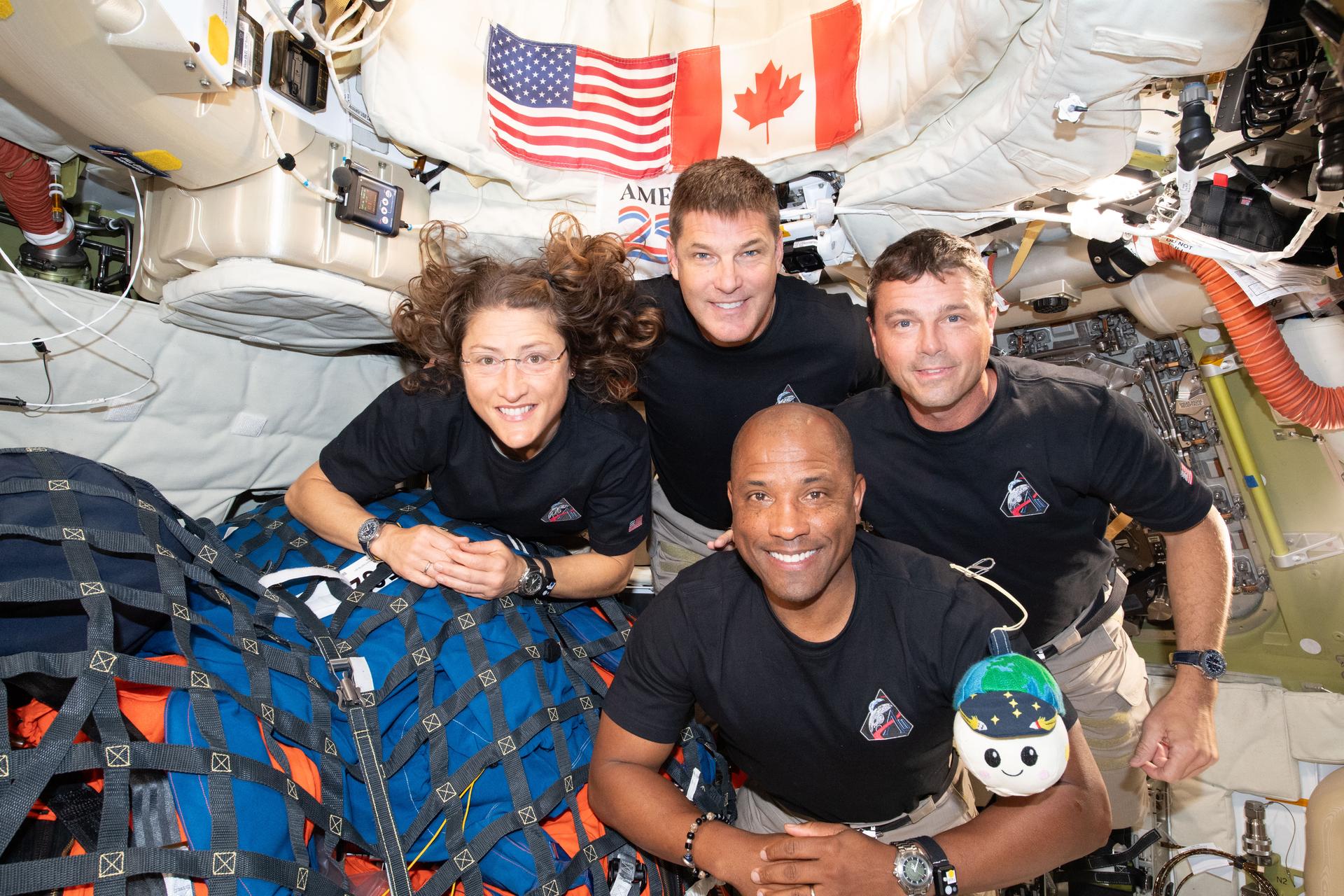
NASA's Artemis II crew, including Christina Koch, Reid Wiseman, Victor Glover, and Jeremy Hansen, returned from a lunar mission on April 7, 2026. The mission provided critical data for NASA's Human Research Program, focusing on astronaut health in deep space. A challenge with a $25,000 prize seeks innovative methodologies to analyze this unique dataset from the mission.
NASA, OPM Announce New NASA Force Website, Open Job Applications
NASA and the U.S. Office of Personnel Management launched the NASA Force website on April 17, 2026, opening applications for aerospace engineer positions. This initiative aims to recruit top technical talent to support NASA's exploration and technology priorities. Administrator Jared Isaacman emphasized the need for skilled professionals to maintain U.S. leadership in air and space.
Artemis II pilot talks about what it was really like to fly and land in Orion
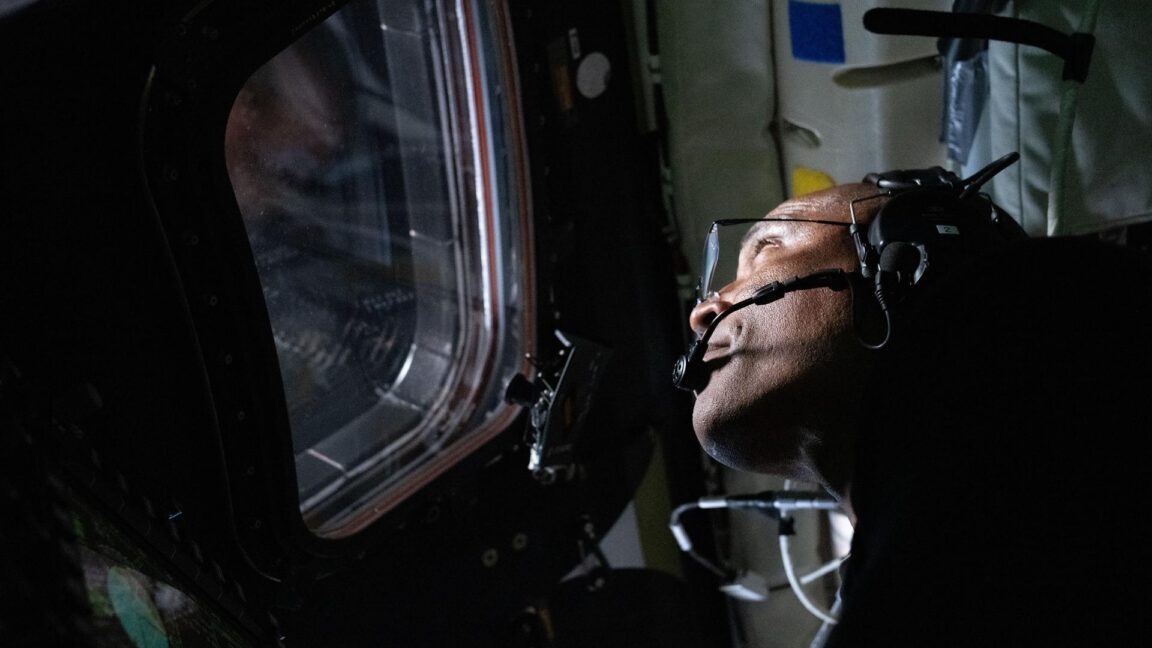
Victor Glover discussed his experience piloting Orion during the Artemis II mission, emphasizing the spacecraft's superior handling compared to simulations. Glover highlighted the importance of test piloting for future missions, noting that successful rendezvous and docking operations will be crucial for Artemis III and IV. He expressed confidence in the spacecraft's capabilities and the teams behind its development.

The space station startups: NASA’s new space station plan is mistaken
NASA's new space station plan faces strong opposition from Axiom Space, Vast, and Starlab Space executives. They argue that the market can sustain independent stations by 2030, countering NASA's belief of insufficient demand. Max Haot of Vast emphasized their readiness, while Jonathan Cirtain of Axiom highlighted revenue from private missions. Axiom has raised $450M in funding, while Vast has secured over $1B.
NASA’s Mobile Launcher Arrives at Vehicle Assembly Building
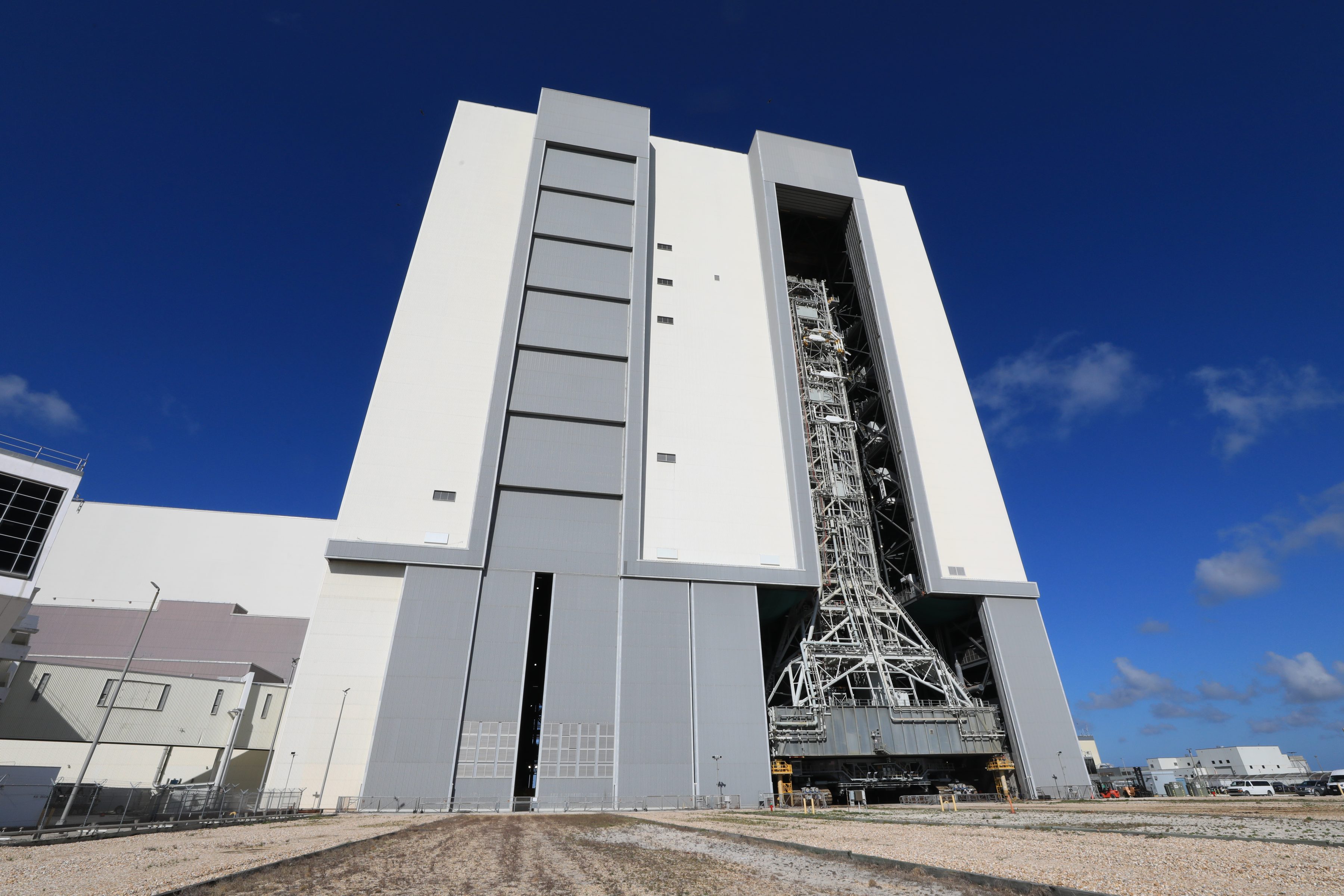
NASA’s mobile launcher arrived at the Vehicle Assembly Building on April 17, 2026, following a 4-mile journey from Launch Complex 39B. This marks the preparation phase for Artemis III stacking operations. The launcher, 380 feet tall, will support the SLS rocket and Orion spacecraft with essential connections for launch, including power and communications systems.
Quality Assessment Report Evaluates Tomorrow.io Precipitation Radar Data
Tomorrow.io's Ka-band Precipitation Radars aboard the R1 and R2 spacecraft received approval for NASA scientific use following a quality assessment by NASA's Commercial Satellite Data Acquisition (CSDA) program. The evaluation confirmed excellent geolocation accuracy and strong correlations with ground radar, enhancing confidence in commercial Earth observation data for NASA's scientific objectives and applications.
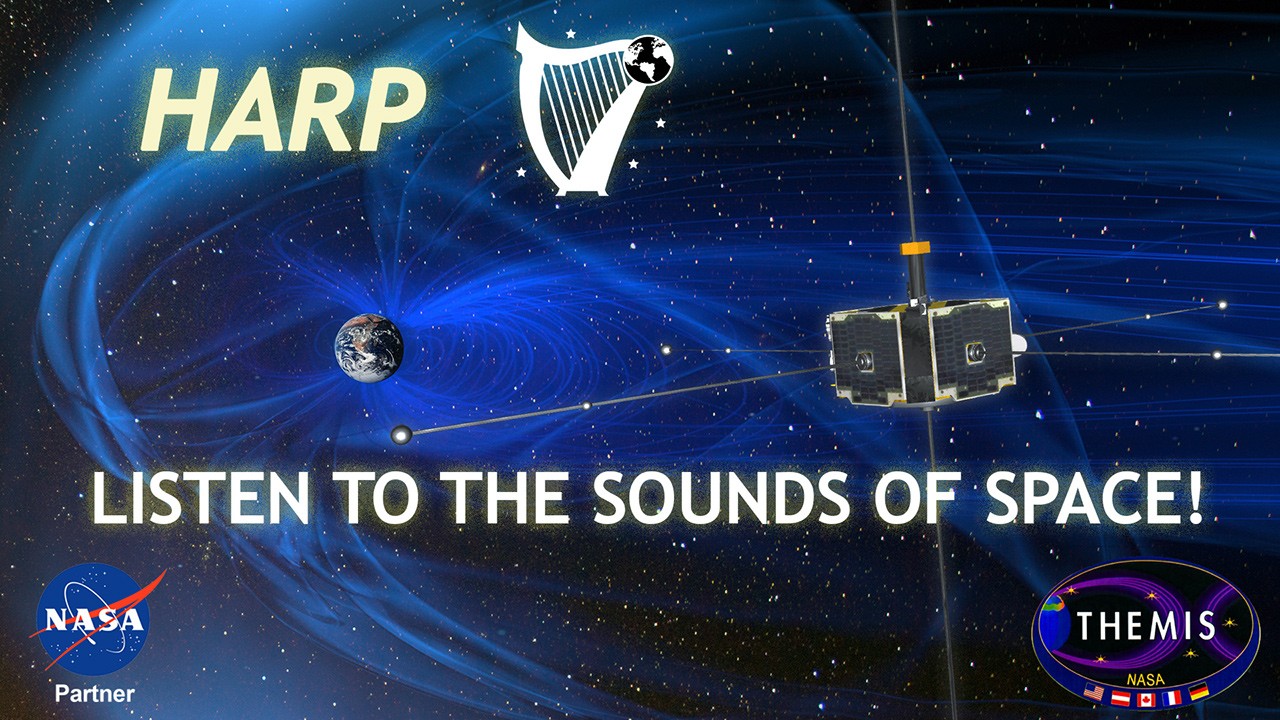
Volunteers Discover Rare Space Weather Events Using Their Ears
NASA's Heliophysics Audified: Resonances in Plasmas (HARP) project engaged volunteers to analyze plasma waves by translating magnetic field data into sound. Unexpectedly, they discovered lower pitches near Earth and higher pitches farther away, challenging existing theories. This anomaly will enhance understanding of geomagnetic storms, with findings published in Frontiers in Astronomy and Space Sciences.
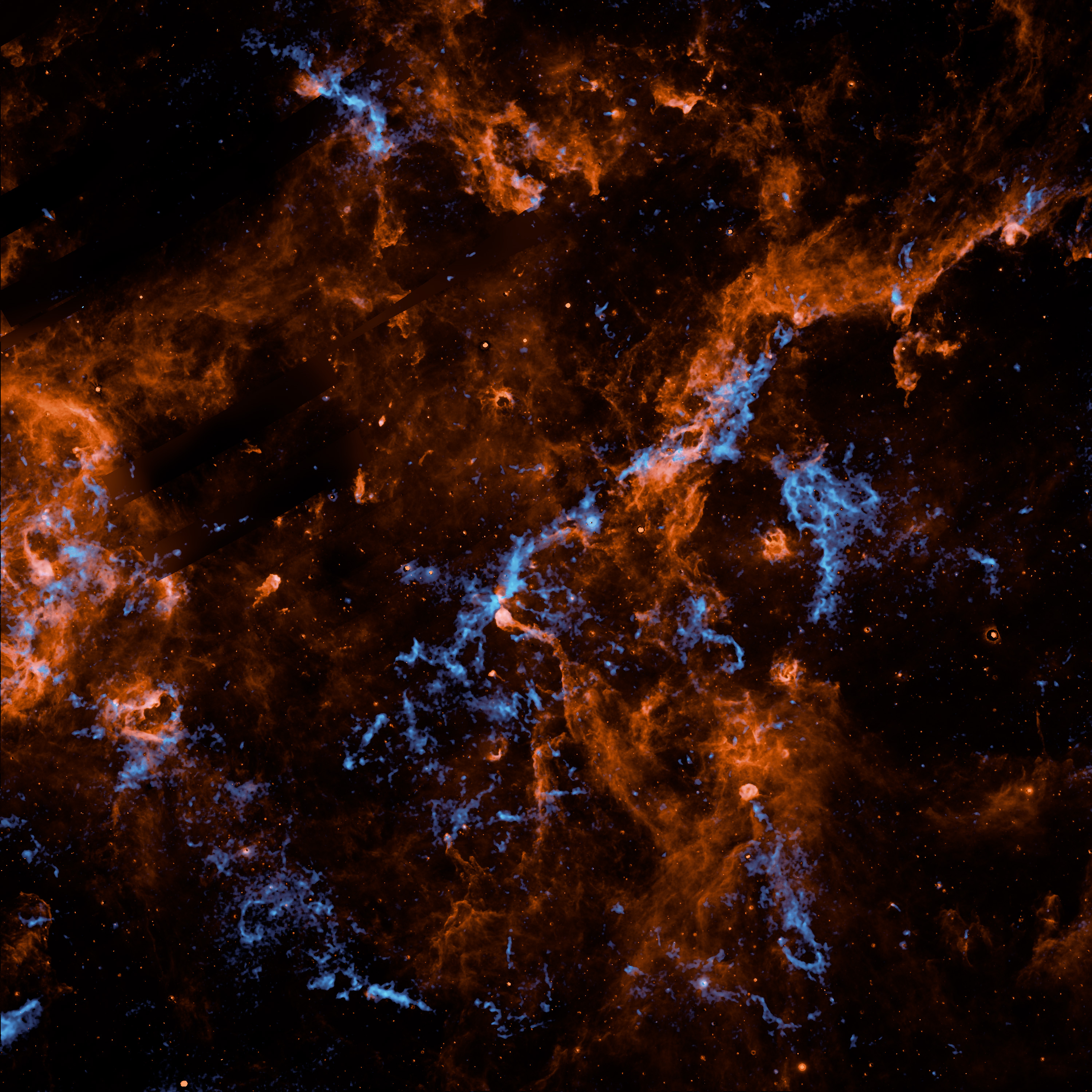
NASA’s SPHEREx Observatory Maps Interstellar Ice in Milky Way
NASA’s SPHEREx Observatory has successfully mapped interstellar ice in the Milky Way, revealing chemical signatures of water ice and polycyclic aromatic hydrocarbons in Cygnus X, a star-forming region. This observation, released on April 15, 2026, supports SPHEREx’s goal to identify vital ice molecules that contribute to the development of life across the universe.
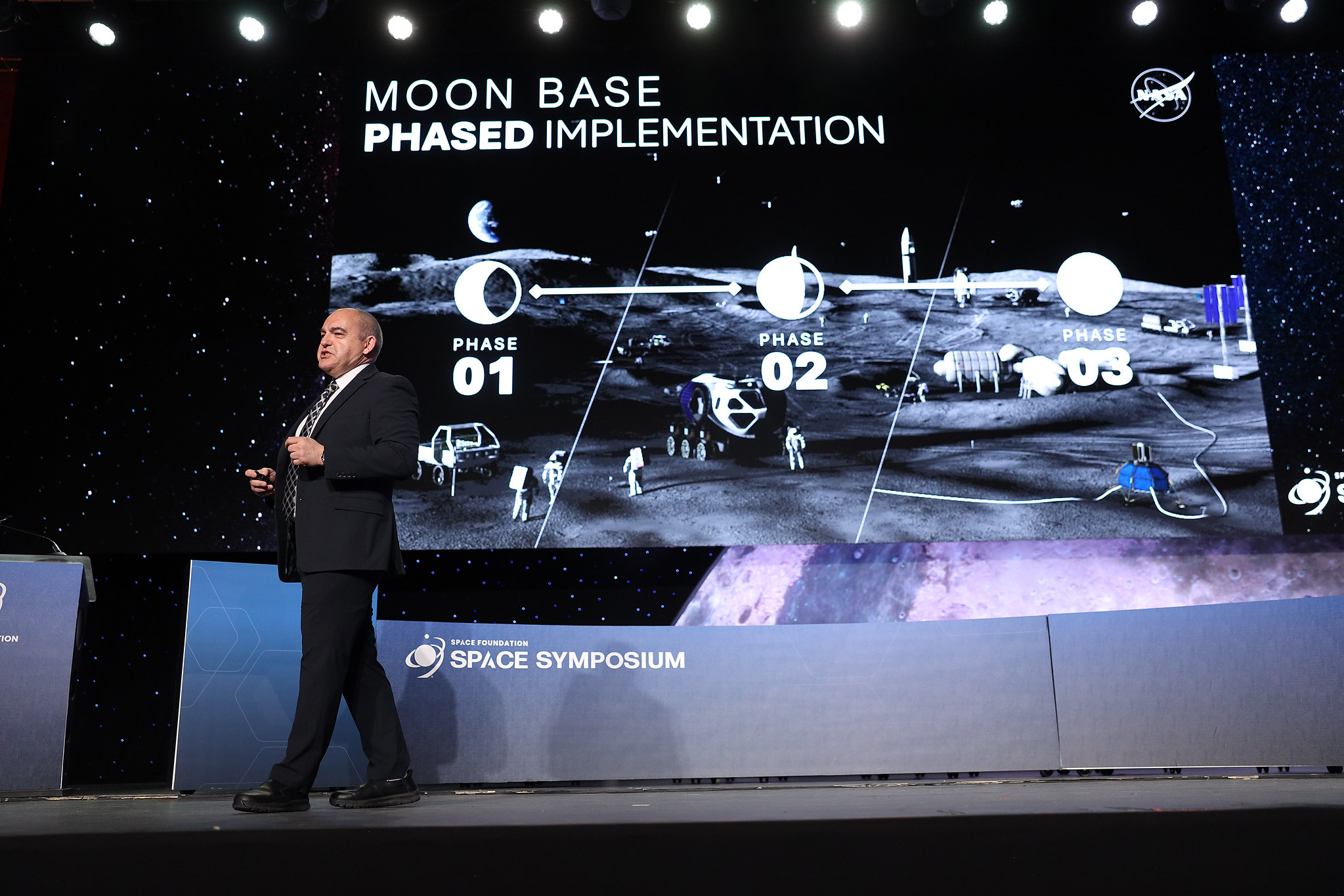
Industry panel: Moon base essentials include transportation, surface power
NASA's lunar base program requires reliable transportation, communication relays, and surface power, as discussed by industry leaders at the Space Symposium. Nick Cummings, from SpaceX, emphasized the need for regular and affordable lunar transport. Jacqueline Cortese of Blue Origin highlighted the necessity for diverse access methods, while Tim Crain from Intuitive Machines stressed the importance of a lunar communication constellation.
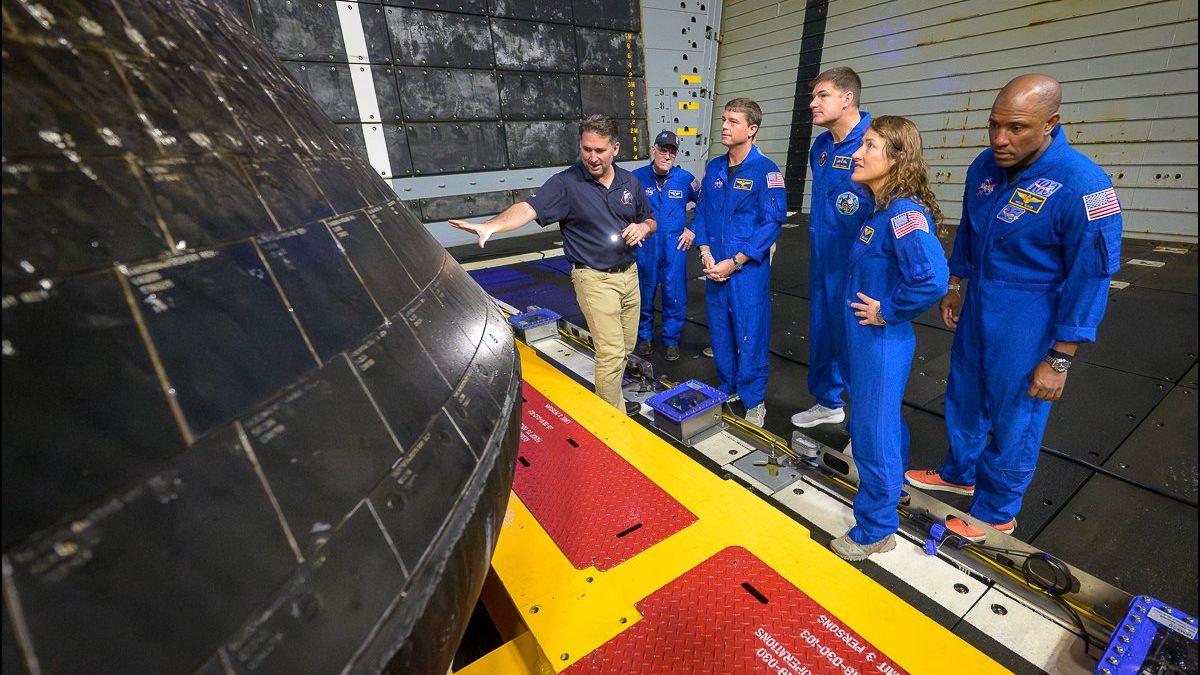
Artemis 2's heat shield seems to have aced its trial by fire
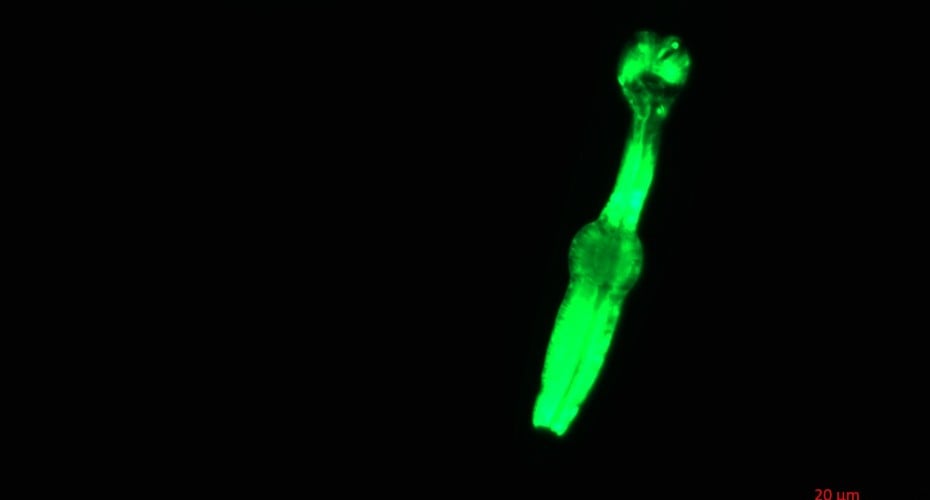
To Survive Deep Space, Astronauts May Owe a Debt to Microscopic Worms
C. elegans nematode worms launched aboard NASA's Northrop Grumman CRS-24 mission on April 11, 2026, to the International Space Station (ISS) for the Fluorescent Deep Space Petri-Pods project. Funded by the UK Space Agency, these worms will endure microgravity and cosmic radiation for 15 weeks, aiding research on biological adaptation in space environments.
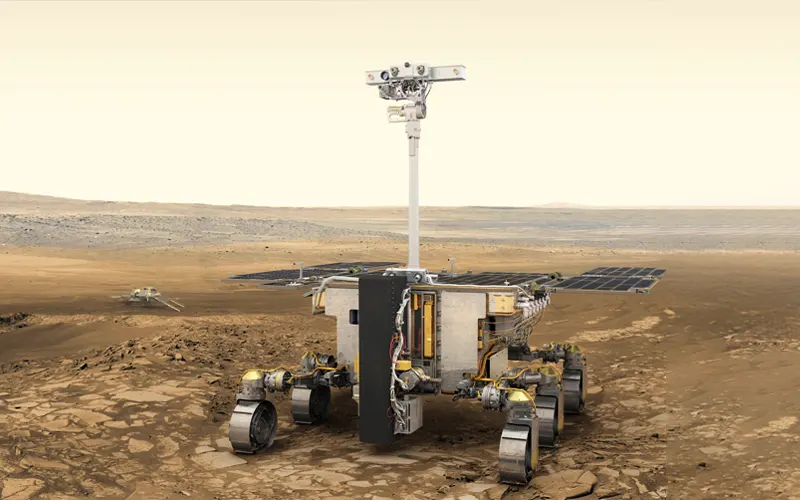
ESA’s Mars Rover to Launch Aboard SpaceX Falcon Heavy in 2028
NASA has selected a SpaceX Falcon Heavy to launch the Rosalind Franklin Mars rover for the European Space Agency no earlier than late 2028. This decision follows a partnership agreement from May 2024, with ESA independently developing the mission after cutting ties with Roscosmos. ESA awarded a €522 million contract to Thales Alenia Space on April 9, 2024, for mission elements.
Axiom Space’s Suit Set to Fly in 2027
Axiom Space announced its space suit is set for an in-space test in 2026, with potential deployment on Artemis III or the ISS. The suit features specialized boots for lunar and station environments. CEO Jonathan Cirtain emphasized the responsibility of being NASA's sole suit provider amid increasing competition. Partnerships include Prada and Gu Energy Labs for design and astronaut nutrition.
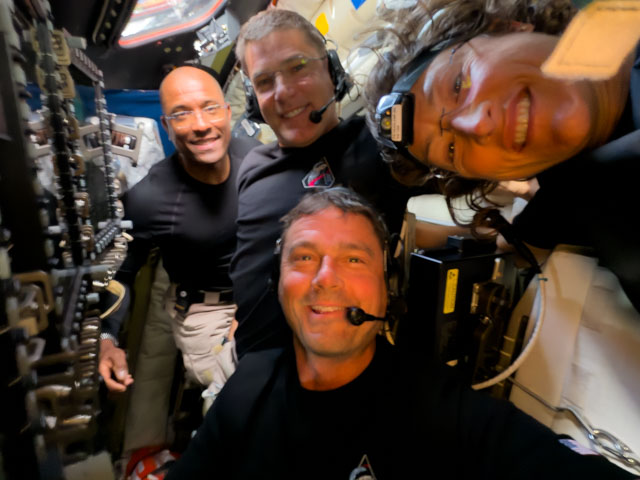
Artemis II Crew Says Lunar Landing Doable Soon
Artemis II crew members Reid Wiseman, Victor Glover, Christina Koch, and Jeremy Hansen expressed confidence in achieving a lunar landing soon after their successful mission. They emphasized the technical challenges ahead but noted that landing is feasible. The crew reflected on their experiences and the impact of the mission on future lunar exploration during a press conference post-splashdown.
Latvia to sign Artemis Accords
Latvia will sign the Artemis Accords on April 20, 2026, becoming the 62nd nation to join this American space alliance. The signing ceremony will take place at NASA Headquarters, hosted by NASA Administrator Jared Isaacman. This event marks the inclusion of all three Baltic states in the Artemis initiative, reflecting geopolitical shifts in the region.
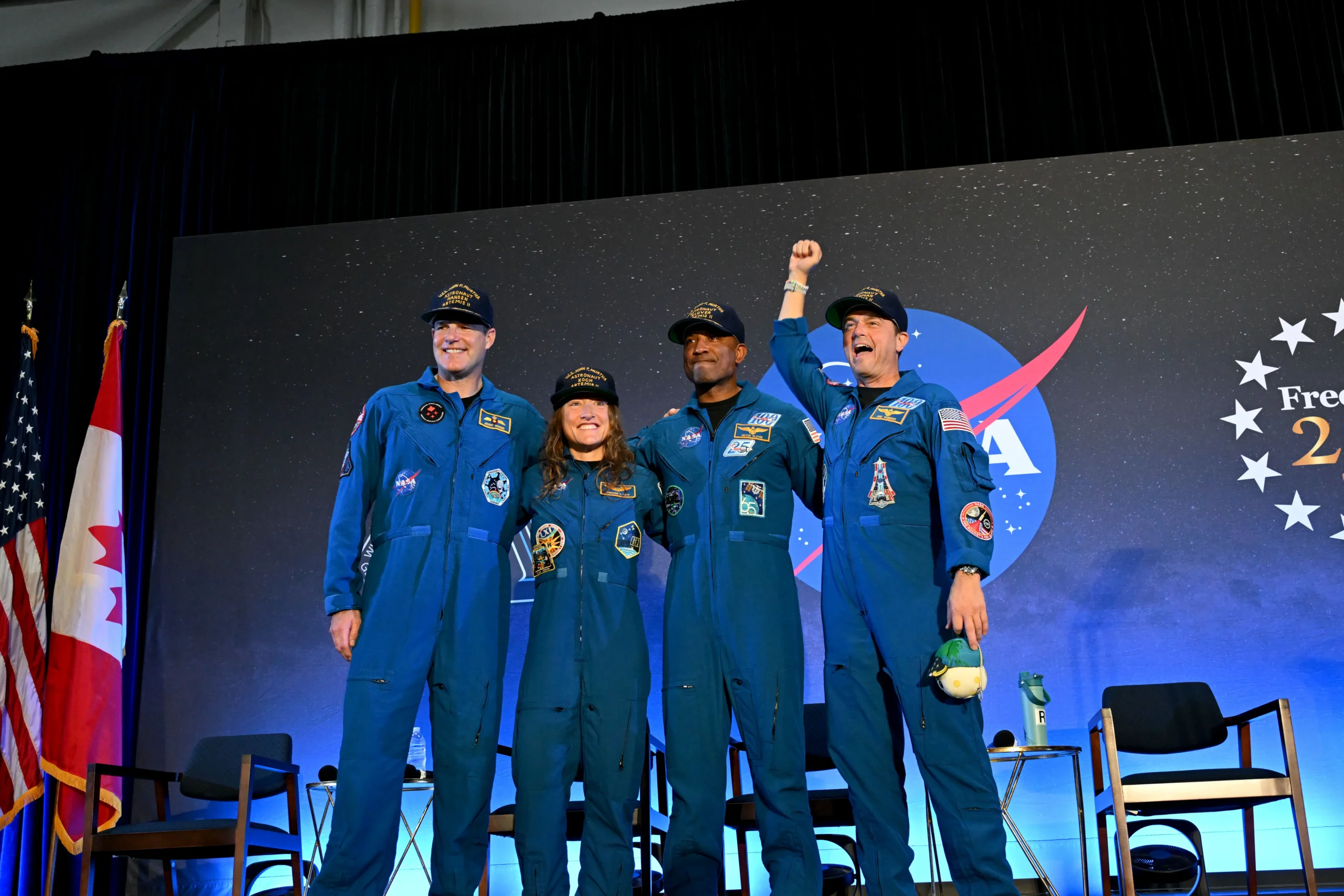
Artemis II astronauts praise Orion capsule, reflect on mission impact
NASA’s Artemis II crew praised the Orion capsule's performance post-mission, highlighting its smooth reentry and minor technical issues. Commander Reid Wiseman noted the capsule's readiness for Artemis III. The nine-day mission marked NASA's first crewed lunar flight since Apollo 17, with astronauts reflecting on its positive public impact during a press conference at NASA Johnson.
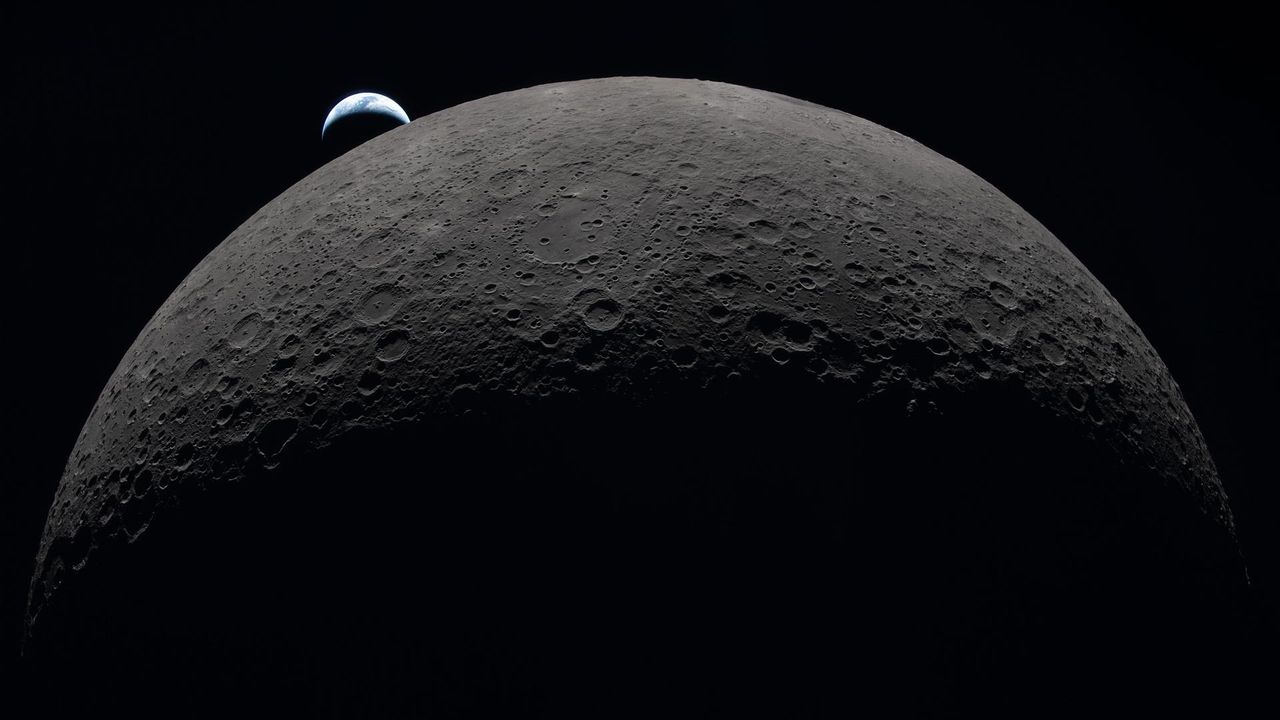
Landing astronauts on the moon 'is absolutely doable, and it's doable soon,' NASA's Artemis 2 commander says
NASA's Artemis 2 mission successfully demonstrated the Orion spacecraft's life support systems, completing a 10-day journey around the moon. Astronauts Reid Wiseman, Victor Glover, Christina Koch, and Jeremy Hansen reported positive performance, indicating readiness for future missions. The next mission, Artemis 3, is set for mid-2027, with potential lunar landings planned for 2028.
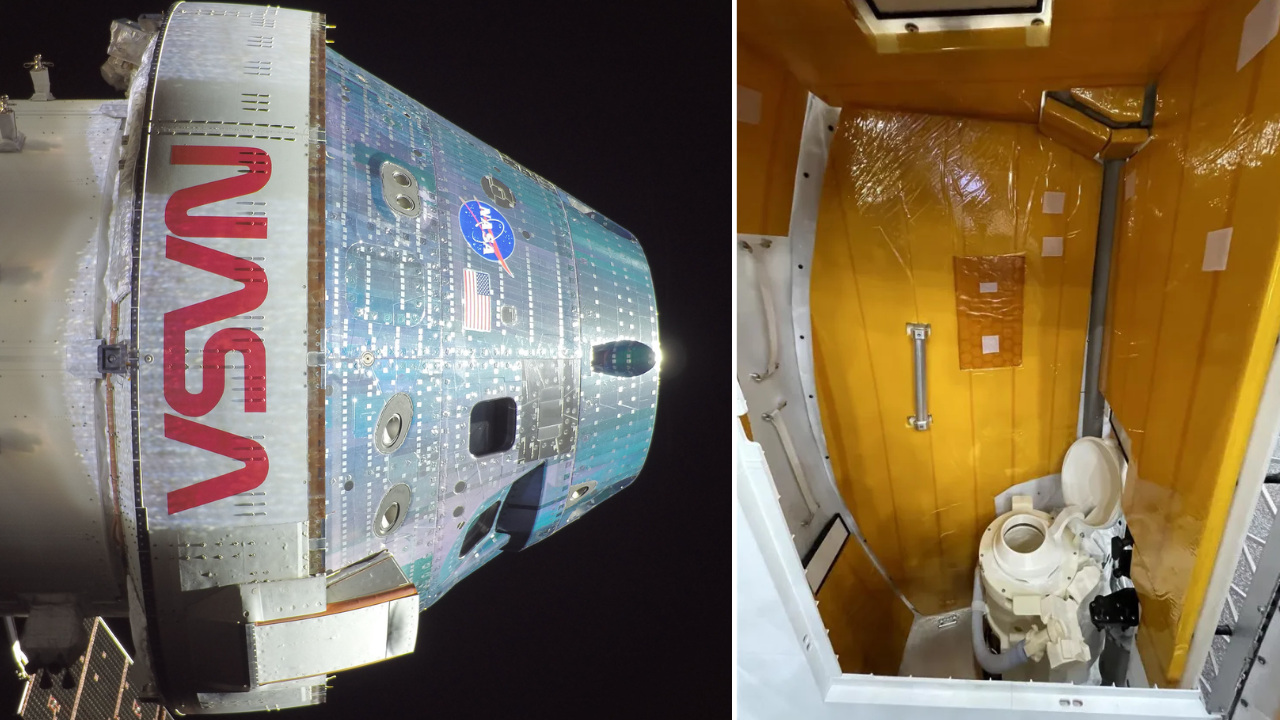
'That was a wonderful toilet': Artemis 2 commander defends mission's lunar loo
Artemis 2 commander Reid Wiseman defended the mission's space toilet, stating it functioned well despite some clogging issues. The toilet, a compact version from the International Space Station, faced vent line blockages during the mission. Wiseman praised the engineering team, emphasizing the toilet's advancements over previous lunar missions, where astronauts relied on handheld bags for waste disposal.

India’s space agency: In ’25 it did 20 maneuvers to avoid collisions in space
ISRO's annual Space Situational Report reveals that in 2025, the agency conducted 20 maneuvers to prevent collisions in space. This included 4 collision avoidance maneuvers for GEO satellites and 14 for LEO satellites, including one for NISAR. Additionally, ISRO shifted the orbit of Chandayaan-2 twice due to conflicts with NASA's Lunar Reconnaissance Orbiter.
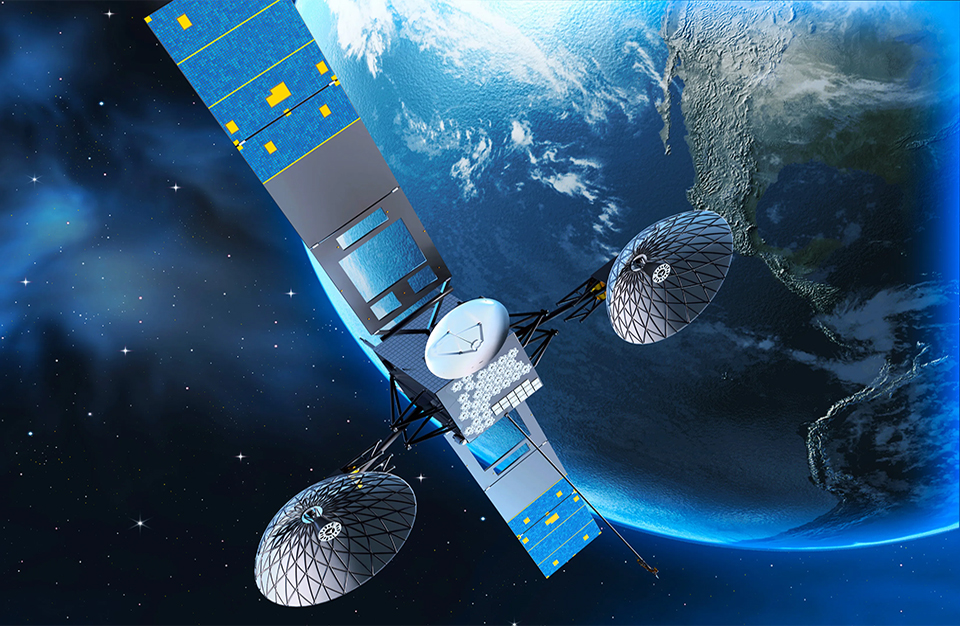
NASA Targets Commercial Relays to Replace Aging TDRSS Infrastructure
NASA's Project NEXUS aims to replace the aging TDRSS infrastructure with commercial relay solutions, ensuring user continuity and sustainability. This initiative addresses critical hardware deadlines and seeks to enhance communication capabilities for various missions. By leveraging commercial partnerships, NASA intends to modernize its relay systems, ultimately improving data transmission efficiency across its operational network.
The Moon Might Be More Prone To Fires
NASA researchers from Glenn Research Center and Johnson Space Center are investigating material flammability on the Moon through the Flammability of Materials on the Moon (FM2) experiment. Unlike Earth, lunar conditions may allow materials to burn longer due to slower oxygen flow, posing unique challenges for future crewed missions. This research aims to enhance fire safety protocols in spaceflight.
NASA Invites Media to Latvia Artemis Accords Signing Ceremony
NASA will host a signing ceremony for the Artemis Accords with the Republic of Latvia on April 20, 2026, at 9 a.m. EDT. Jared Isaacman, NASA Administrator, will welcome Latvian officials, including Dace Melbārde. This event marks Latvia as the 62nd country to join the accords, enhancing international cooperation in lunar exploration and activities.
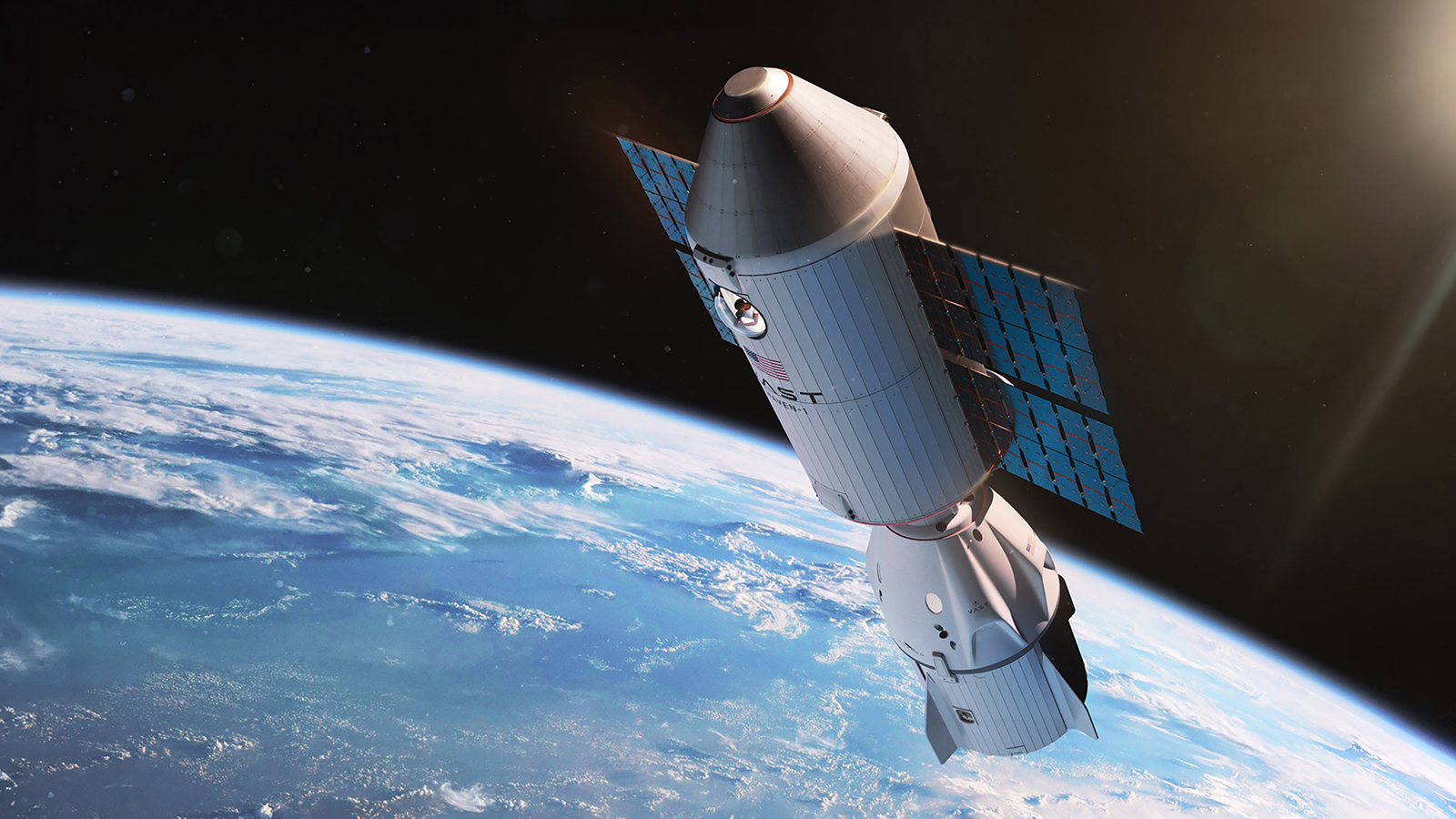
Commercial station builders counter NASA’s assessment of LEO market
Vast's CEO Max Haot and executives from Axiom Space and Starlab Space countered NASA's claim of an undeveloped commercial LEO market, asserting profitability by 2030. They highlighted revenue from private astronaut missions and payloads, with Axiom planning to operate its station by 2028. Their responses to NASA's feedback request included 390 pages of analysis supporting their position.

Iridium Unveils Core Role in Artemis II and Next-Gen PNT at Space Symposium 2026
Iridium Communications CEO Matt Desch outlined the company's pivotal role in NASA's Artemis II mission during the 41st Space Symposium. Iridium's satellite network will enhance positioning, navigation, and timing (PNT) capabilities, ensuring robust communication links for crewed lunar missions. This contribution underscores the importance of commercial partnerships in advancing space exploration objectives and operational reliability.
Why NASA’s Cheapest Missions Produce the Least Science
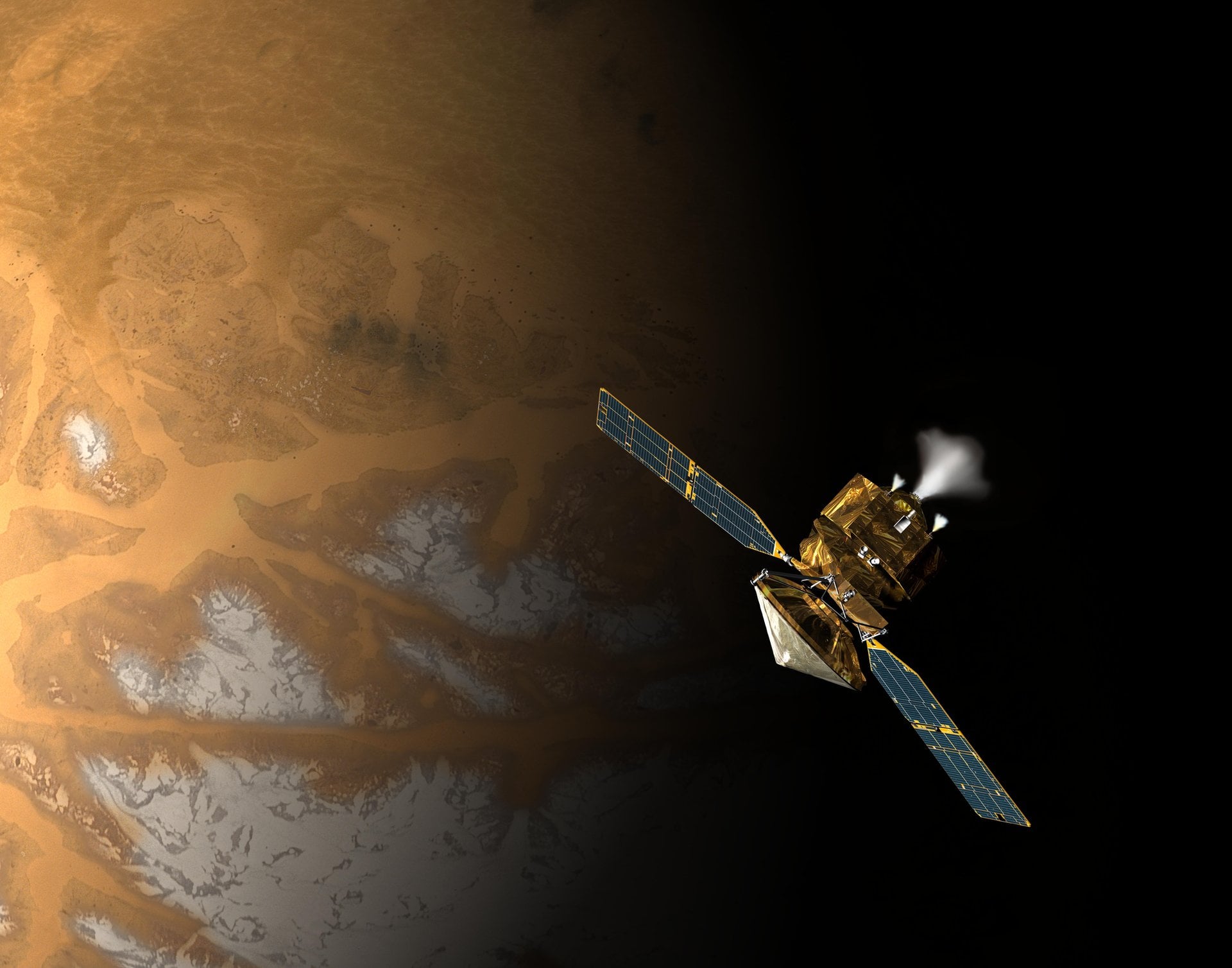
NASA has faced significant administrative changes, prompting concerns over a trend toward low-cost missions. A study analyzed 90 missions from 1994-2023, revealing that missions under $100M rarely yield high-impact science. The authors argue that the “move fast” approach fails in scientific contexts, as many low-cost missions do not produce valuable data or results. Failures are prevalent.
NASA’s Mobile Launcher Rolls Ahead of Artemis III Preparation
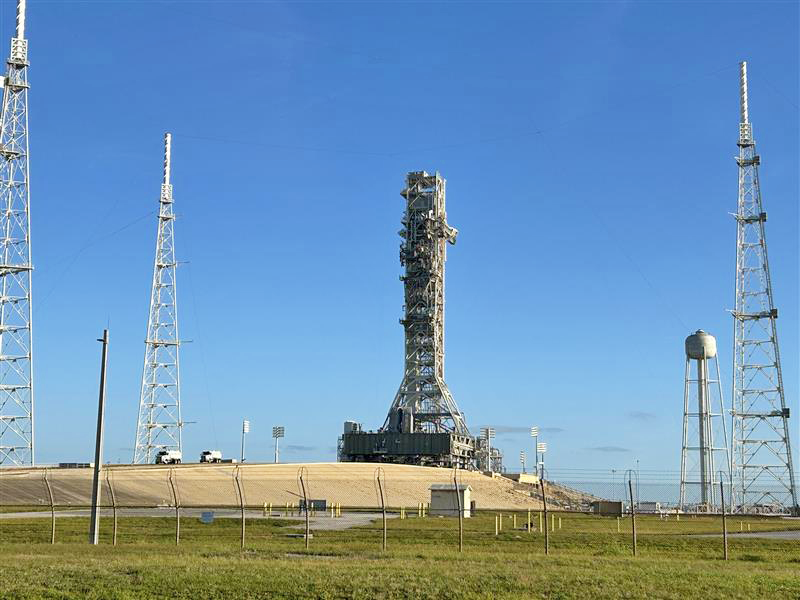
NASA’s mobile launcher 1 commenced its 4-mile journey from Launch Pad 39B to the Vehicle Assembly Building on April 16, 2026, in preparation for Artemis III. This transition follows the successful Artemis II mission, with teams set to perform inspections and repairs on the launcher post-mission. Operations will pause for team rest before resuming on April 17.
Ubotica and Open Cosmos Collaborate with NASA JPL to Demonstrate Autonomous Intelligent Satellite Network
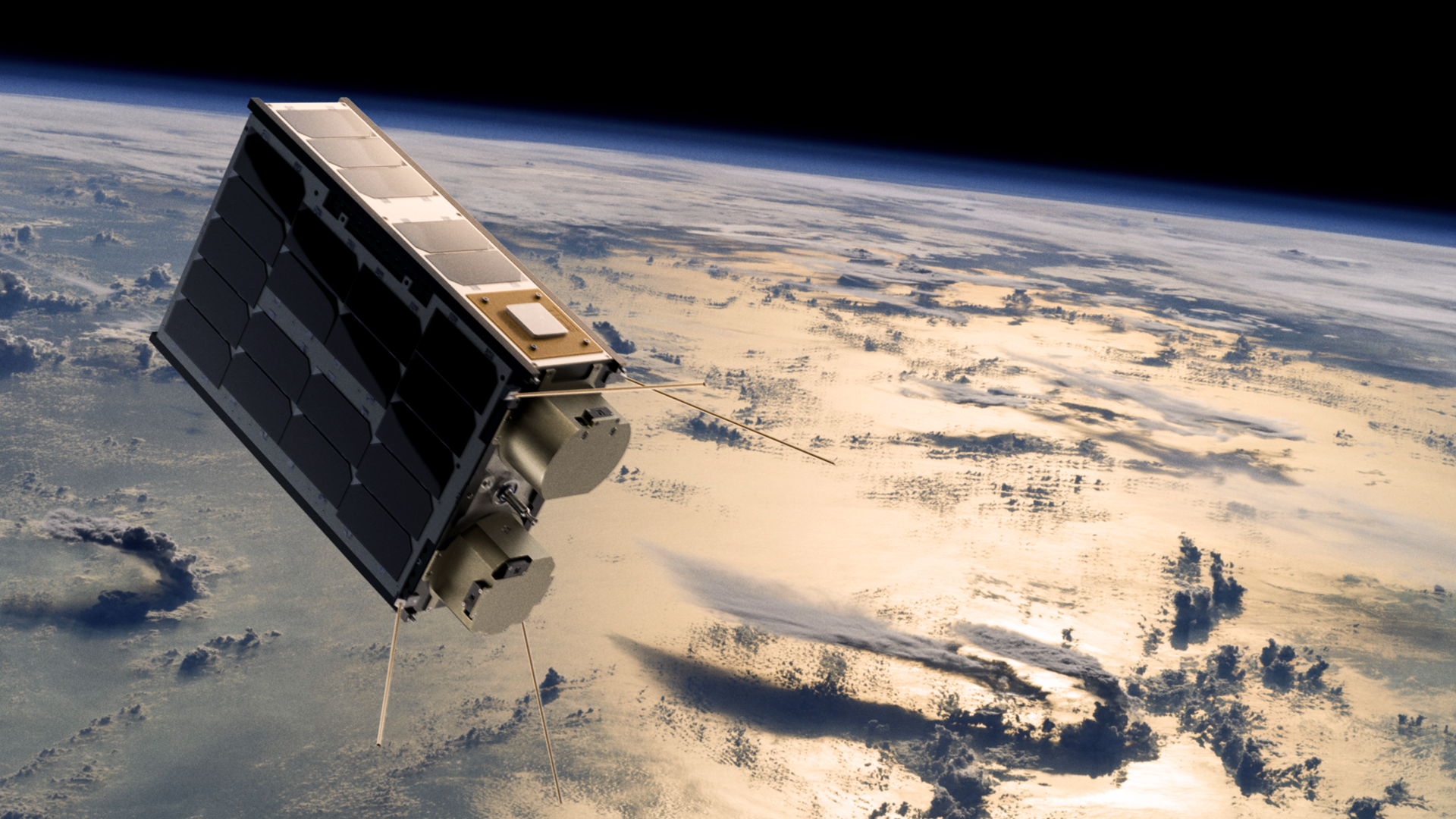
Ubotica and Open Cosmos are collaborating with NASA's Jet Propulsion Laboratory on the Flight Demonstration of Federated Autonomous MEasurement (FAME) program. This initiative aims to showcase an autonomous intelligent satellite network, enhancing measurement capabilities in space. The partnership underscores advancements in satellite autonomy and federated systems, potentially transforming future satellite operations and data collection methodologies.
NASA Contracts Voyager Technologies for 7th Private Astronaut Mission to the ISS
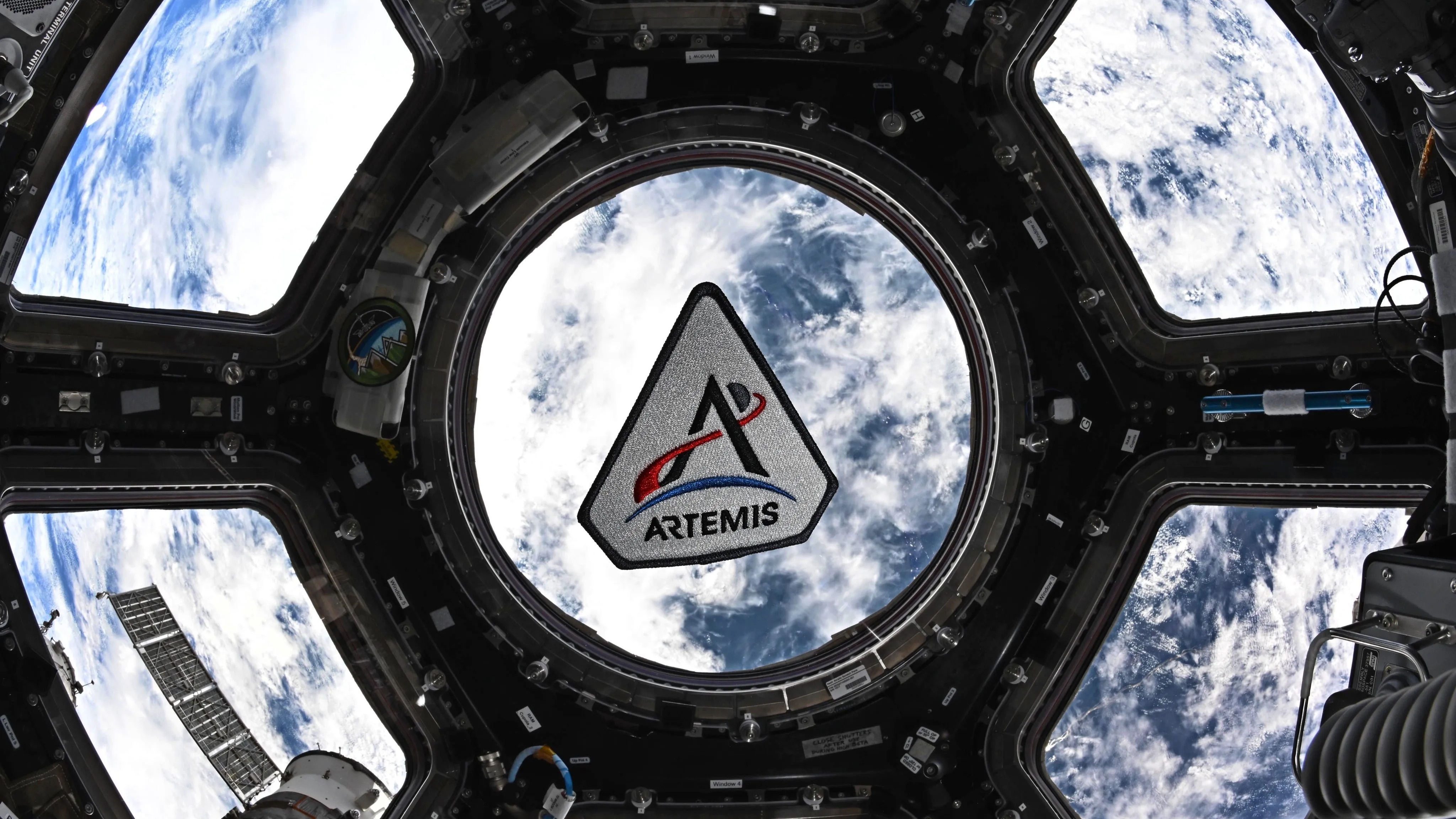
Voyager Technologies secured a contract with NASA for the seventh Private Astronaut Mission (PAM) to the International Space Station, scheduled for launch no earlier than 2028. This initiative underscores NASA's strategy to transition low-Earth orbit operations to private entities, enhancing commercial participation in human spaceflight and fostering a sustainable low-Earth orbit economy.

Eyeing the Richat Structure
NASA's Earth Observatory highlighted the Richat Structure, a 40-kilometer-wide geologic formation in Mauritania, in its April 16, 2026, image of the day. Captured by Landsat 8 and Landsat 9 on March 5 and 6, 2026, the structure showcases concentric ridges formed by erosion, revealing a complex geological history shaped by natural forces over millennia.

Where's the Dividing Line Between A Star and A Planet? Ask the JWST.
JWST directly imaged 29 Cygni b, a sub-stellar object approximately 15 times the mass of Jupiter, orbiting its A-type star at 2.4 billion km. This research, led by William Balmer from Johns Hopkins University, explores the deuterium burning limit, challenging definitions of stars and planets. Findings suggest 29 Cygni b formed in a protoplanetary disk, exhibiting both stellar and planetary characteristics.
I Am Artemis: Rebekah Tolatovicz
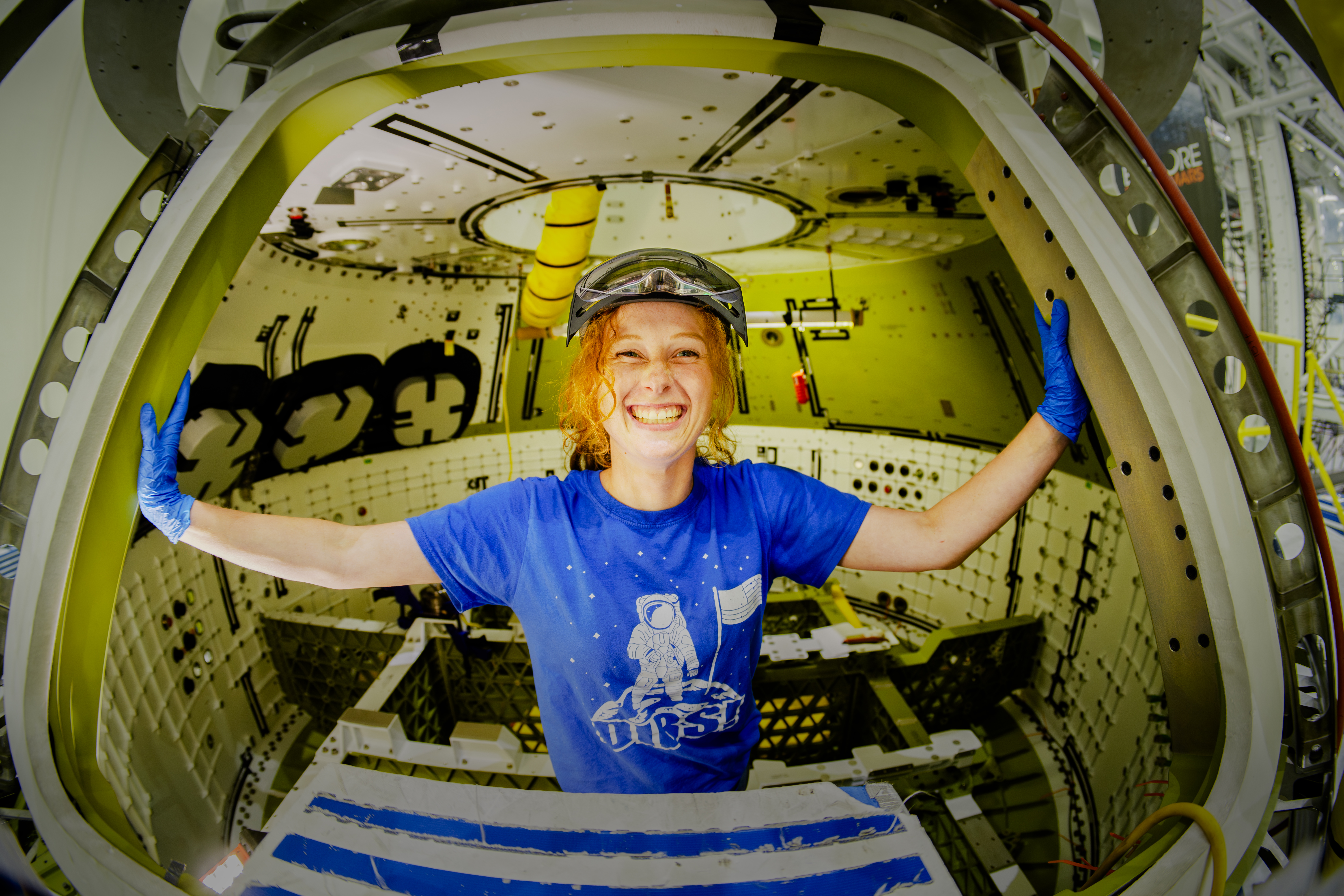
Rebekah Tolatovicz, a mechanical technician lead for Lockheed Martin, plays a crucial role in building and testing the Orion spacecraft at NASA's Kennedy Space Center. Her work supports the Artemis program, including the recent Artemis II mission. Tolatovicz emphasizes the importance of every task, mentoring newcomers and contributing to NASA's historic lunar exploration efforts.
NASA Selects Voyager for Seventh Private Mission to Space Station
NASA has selected Voyager Technologies for the seventh private astronaut mission to the International Space Station, named VOYG-1, targeting a launch no earlier than 2028. This mission will last up to 14 days, with Voyager proposing four crew members for NASA's review. The partnership aims to enhance commercial space capabilities and support future deep space exploration efforts.
NASA Launches Six CubeSats to International Space Station
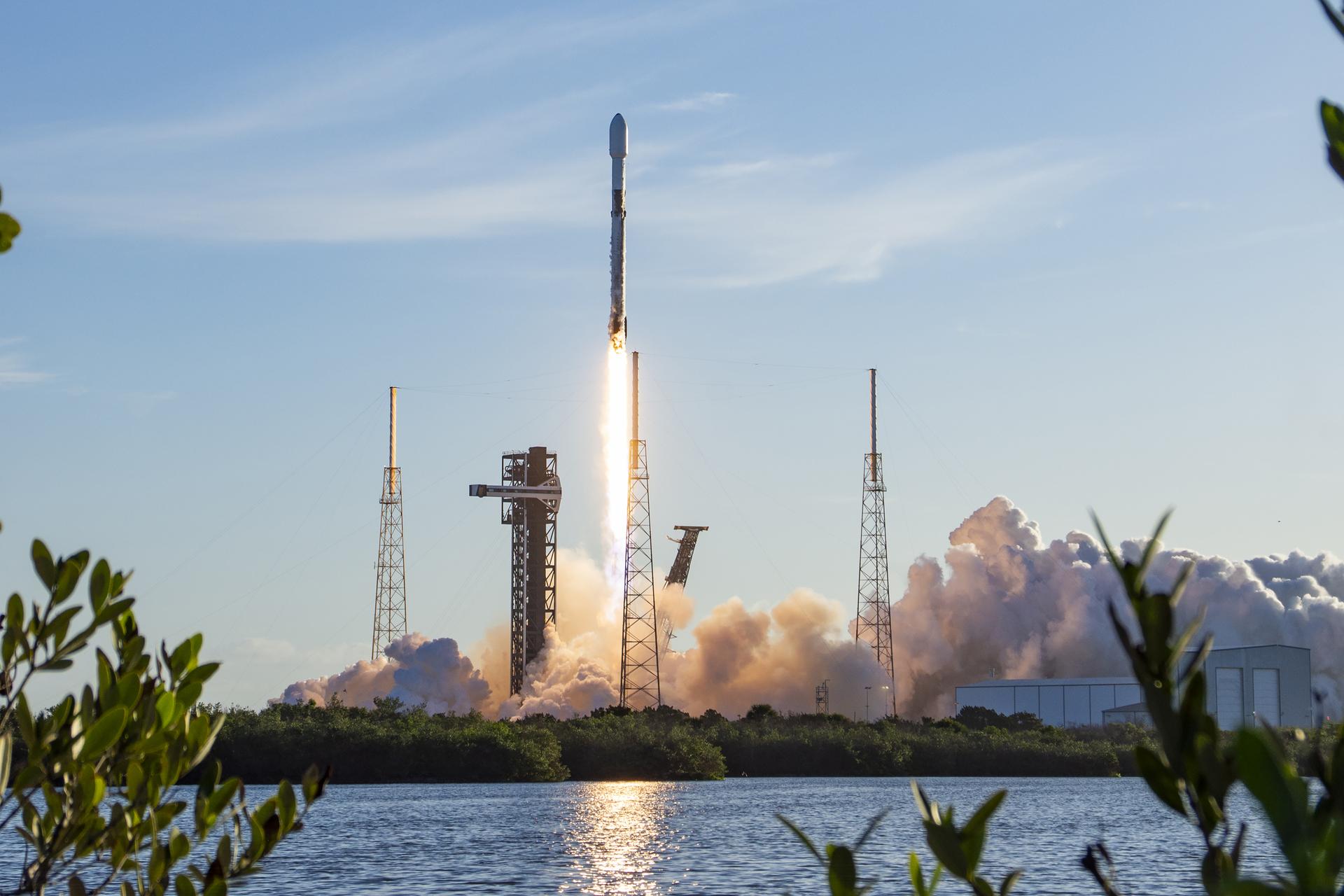
NASA launched six CubeSats to the International Space Station on April 11, 2026, as part of the Northrop Grumman Commercial Resupply Services 24 mission. The approximately 11,000 pounds of cargo included CubeSats from U.S. educational institutions and non-profits, such as Coconut, HUCSat, LEOPARDSat-1, and three PROVES CubeSats, which will deploy to conduct experiments.
The World Welcomes the Crew of Artemis II Home!
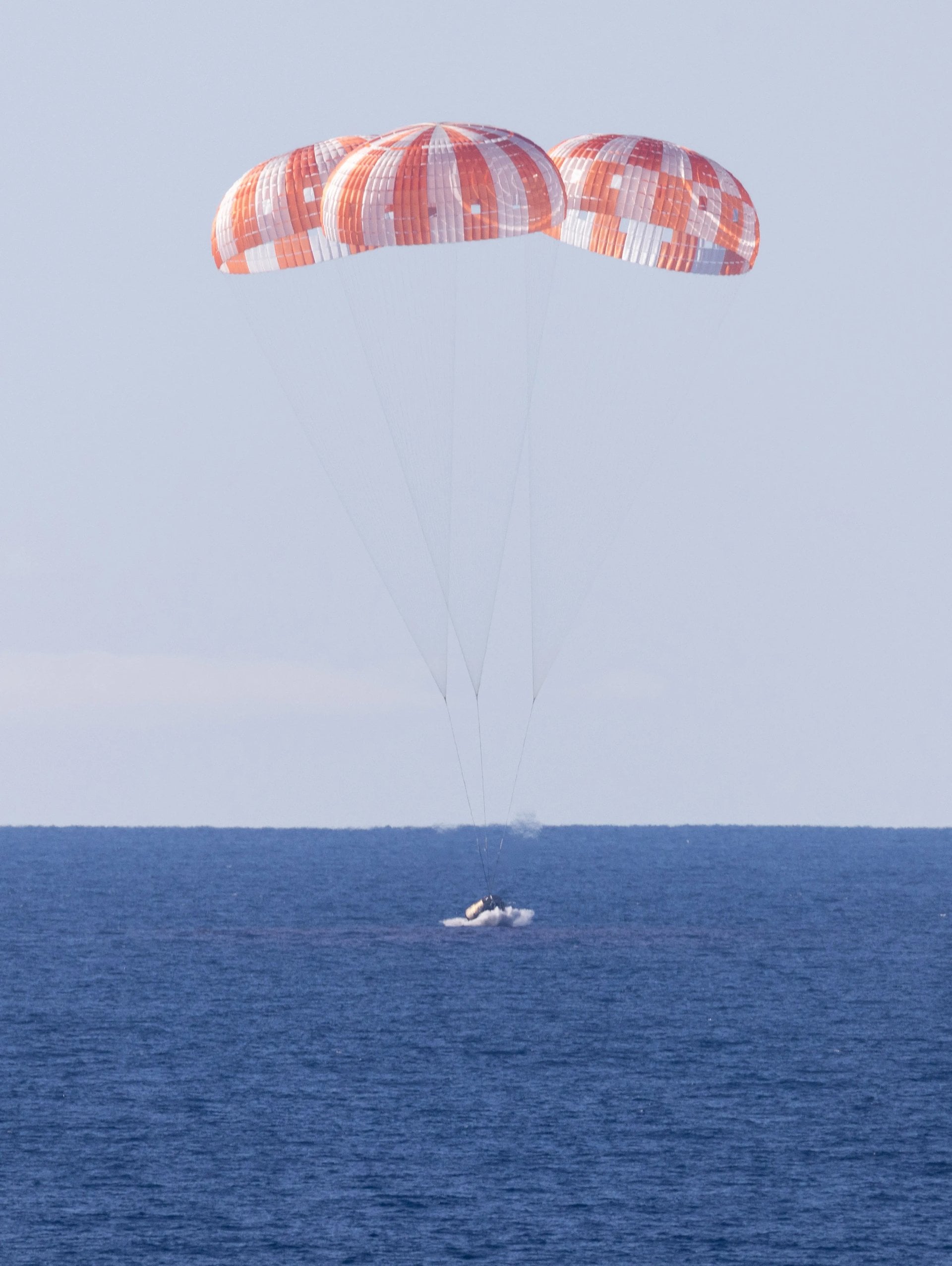
NASA's Artemis II mission successfully splashed down on April 10, 2026, at 5:07 p.m. PDT, marking the return of the first astronauts to the Moon in over fifty years. The Orion capsule traveled 1,117,660 km, setting a record for crewed spacecraft distance. The crew, including Reid Wiseman, Victor Glover, Christina Koch, and Jeremy Hansen, is reported healthy post-mission.

2026 NSTA Hyperwall Schedule
NASA will showcase its Hyperwall at the NSTA conference from April 16-18, 2026, featuring storytelling sessions by experts. Topics include the Artemis Mission, the NISAR Satellite Mission, and educational programs like the NASA Solar System Ambassador Program. Attendees can engage with various presentations aimed at enhancing science education and utilizing NASA resources in classrooms.

NASA Shifts Focus to Permanent Lunar Base and Nuclear Propulsion
NASA's Administrator Jared Isaacman announced a strategic shift towards establishing a permanent lunar base and advancing nuclear propulsion technologies during his keynote at the 41st Space Symposium. This pivot aims to enhance America's capabilities in deep space exploration, focusing on sustainable lunar operations and innovative propulsion systems to support future missions beyond the Moon.
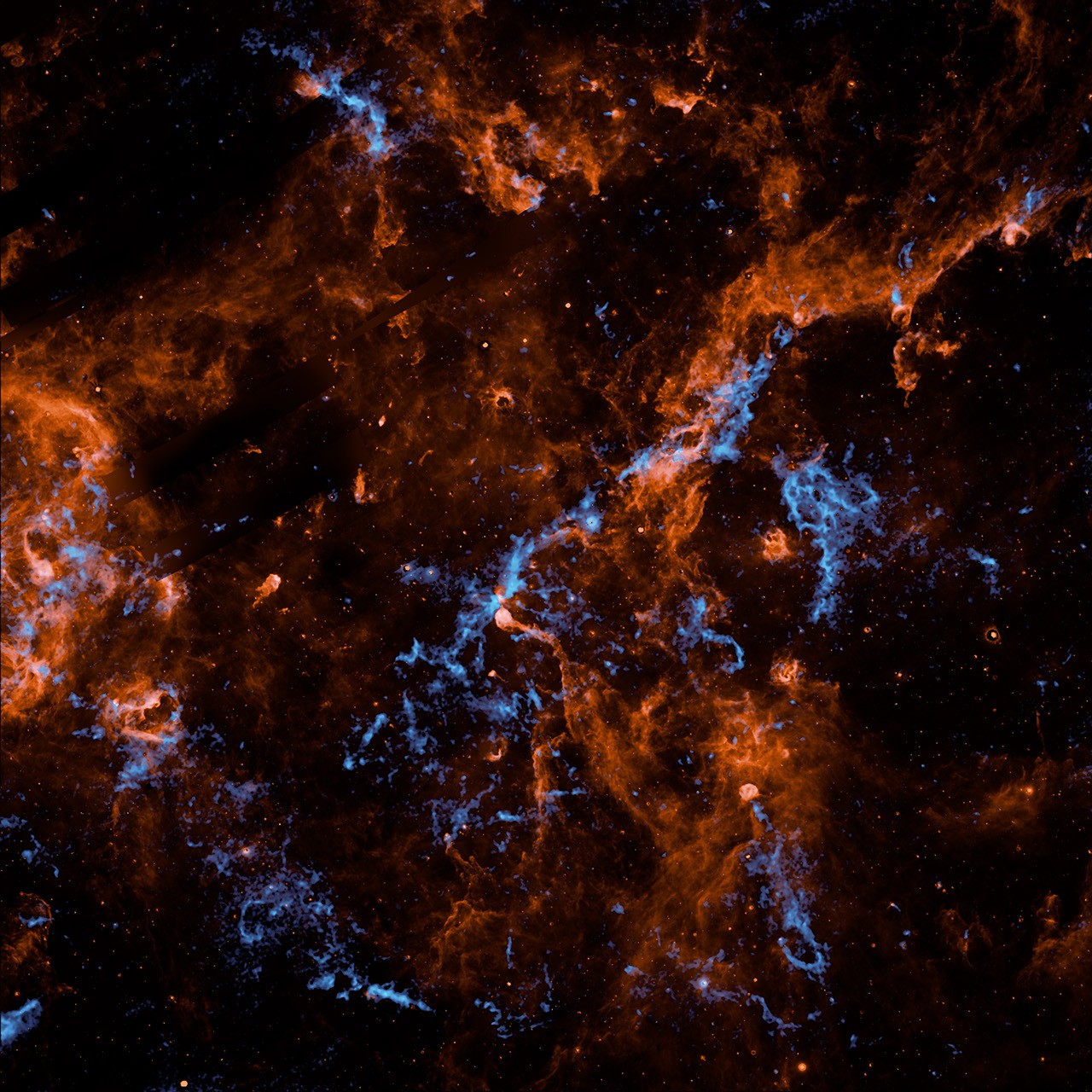
NASA’s SPHEREx Mission Maps Water Ice Throughout Cygnus X
NASA’s SPHEREx mission has successfully mapped water ice in Cygnus X, revealing chemical signatures of water ice and polycyclic aromatic hydrocarbons. This observation, published on April 15, 2026, supports the hypothesis that interstellar ice forms on dust particles, shielding it from ultraviolet radiation. SPHEREx, launched on March 11, 2025, is the first infrared mission to survey the entire sky.
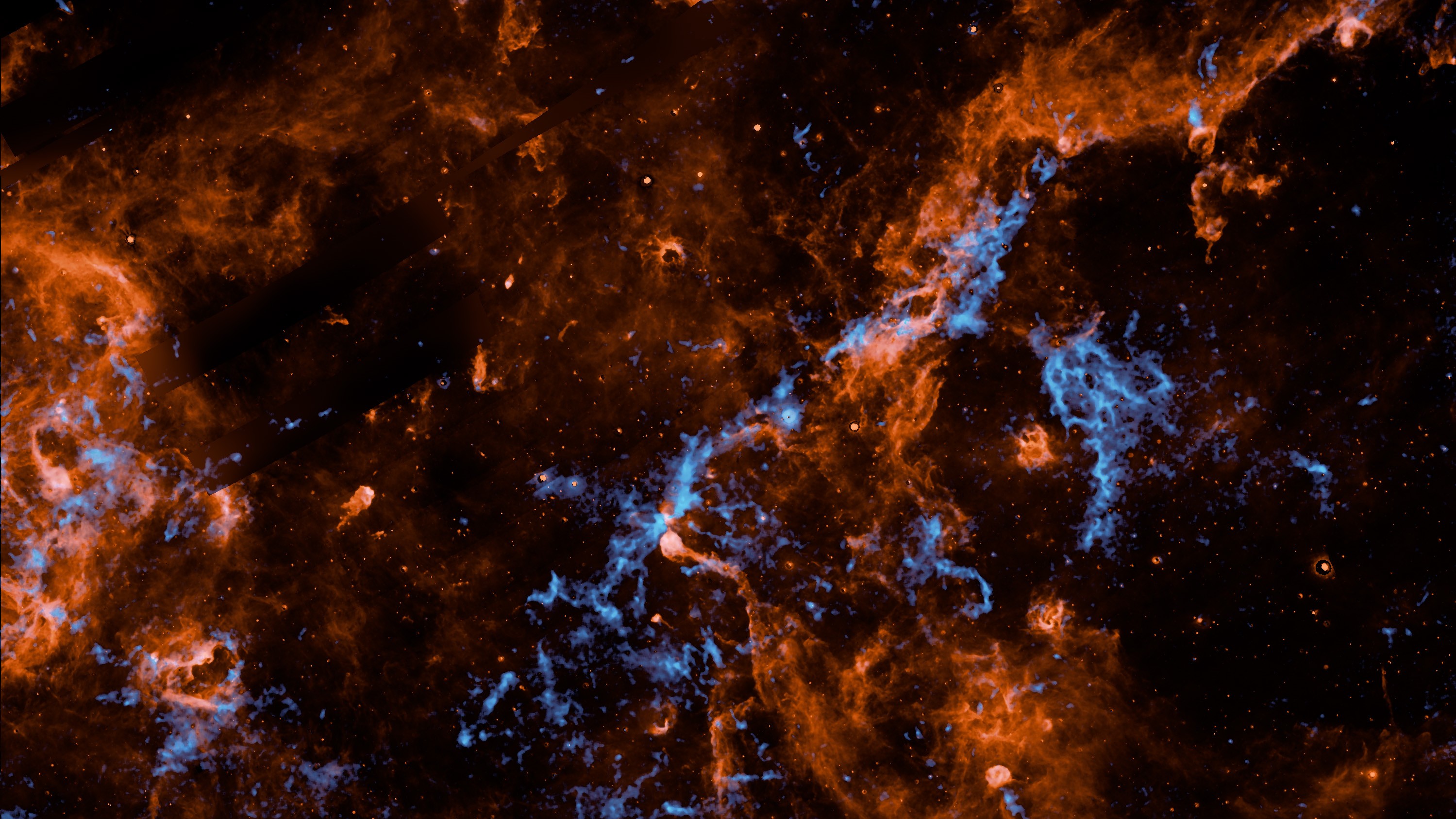
‘Interstellar Glaciers’: NASA’s SPHEREx Maps Vast Galactic Ice Regions
NASA's SPHEREx mission has mapped vast interstellar ice regions in the Cygnus X star-forming region, revealing water ice and interstellar dust complexes over 600 light-years. This unprecedented survey aims to identify chemical signatures of vital molecules, potentially supporting future life by delivering water to new solar systems. Findings published in The Astrophysical Journal highlight the significance of these 'interstellar glaciers'.
‘Interstellar Glaciers’: NASA’s SPHEREx Maps Vast Galactic Ice Regions
NASA’s SPHEREx mission has mapped interstellar ice across regions over 600 light-years in the Milky Way, revealing vital molecules like water and carbon dioxide. This unprecedented survey, launched on March 11, 2025, aims to understand the origins of water and life. Researchers believe these ice reservoirs could supply water to new solar systems, supporting future life.

Ubotica and Open Cosmos collaborate with NASA JPL to demonstrate autonomous intelligent satellite network
Ubotica and Open Cosmos announced a collaboration with NASA JPL for the Flight Demonstration of Federated Autonomous MEasurement (FAME), aiming to link over 50 spacecraft for autonomous Earth observation. The demonstration will begin in summer 2026, utilizing Ubotica's SPACE:AI platform and Open Cosmos's Hammer and Accenture-1 satellites to enhance real-time data processing and response capabilities.
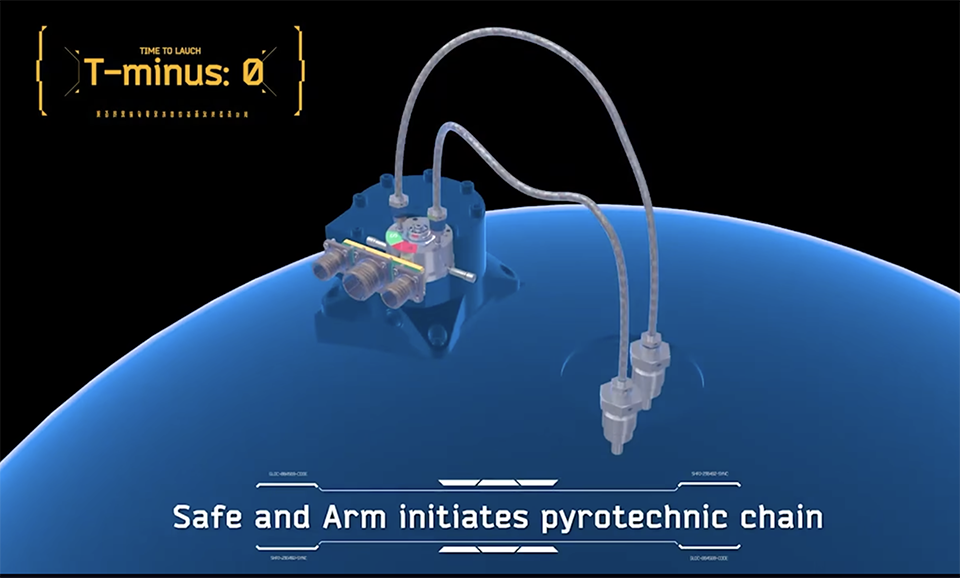
Ensign-Bickford Hardware Supports Successful Artemis II Lunar Mission
Ensign-Bickford Aerospace & Defense confirmed successful operation of its separation and initiation hardware during NASA's Artemis II mission. This critical hardware played a vital role in ensuring mission success, marking a significant milestone in lunar exploration. The mission concluded on April 13, 2026, demonstrating the reliability of EBAD's systems in demanding space environments.

NASA Administrator Jared Isaacman On Artemis, Budget, And Establishing a Lasting Space Vision
Jared Isaacman, NASA Administrator, emphasized the importance of financial modeling in shaping the agency's budget for Artemis. He noted the enthusiasm of the scientific community but questioned their experience in budget execution. Isaacman's insights highlight the need for a sustainable financial strategy to support long-term space exploration goals and ensure effective resource allocation.
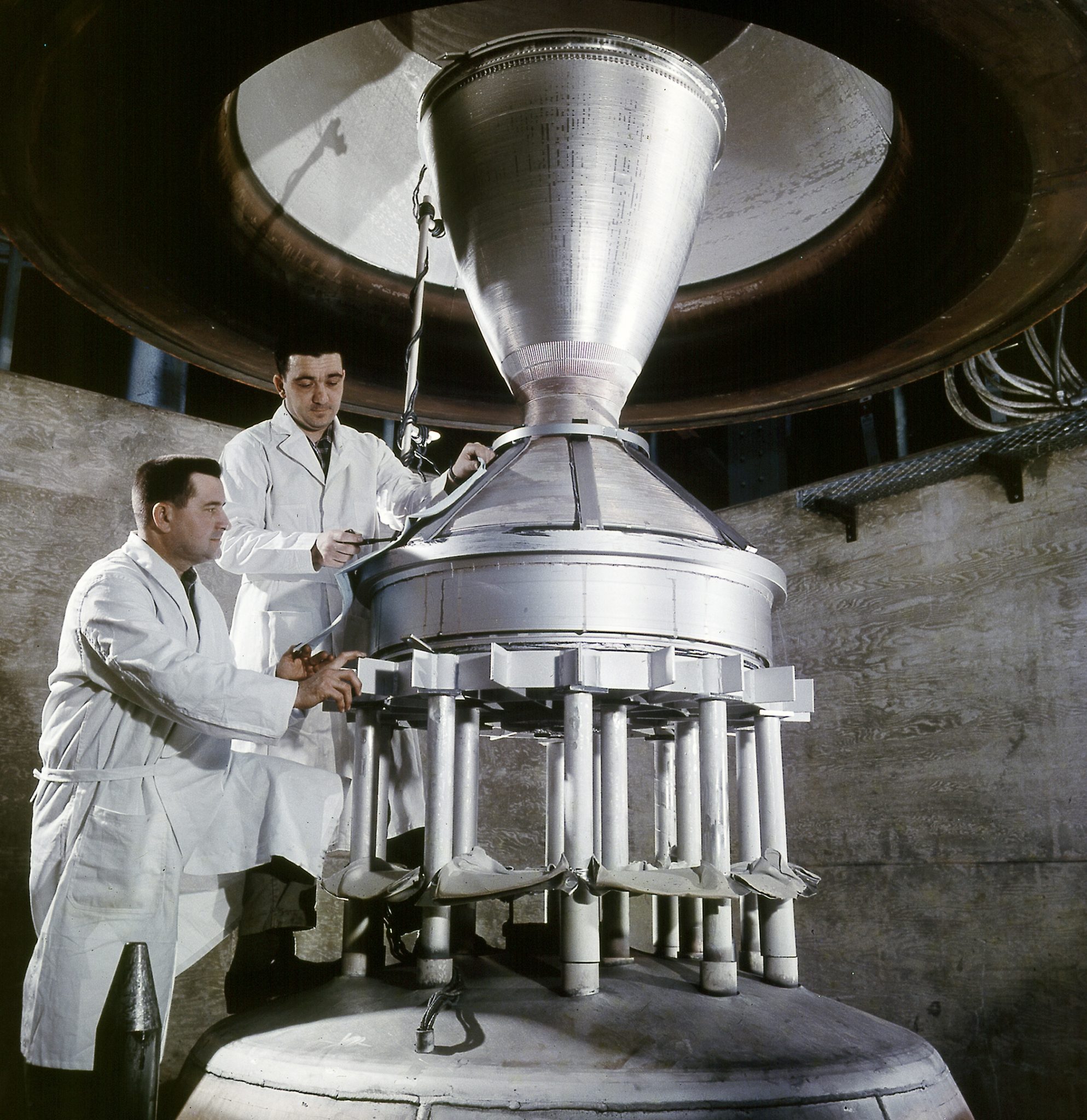
White House wants Pentagon to demo nuclear space power by 2031
Pentagon and NASA will collaborate on design competitions under the National Initiative for American Space Nuclear Power, aiming to demonstrate space-based nuclear power by 2031. This initiative seeks to enhance U.S. capabilities in nuclear energy for space applications, with both agencies working in parallel to develop innovative solutions that could transform future space missions and operations.

CLD Companies Say NASA Is Wrong. NASA Says Prove It.
CLD providers, including Isaacman, expressed disagreement with NASA's recent statements regarding their capabilities. Isaacman challenged the agency to substantiate its claims, indicating a contentious relationship between commercial launch developers and NASA. This exchange highlights ongoing tensions in the evolving landscape of commercial spaceflight and regulatory oversight, particularly in the context of CLD operations and expectations.
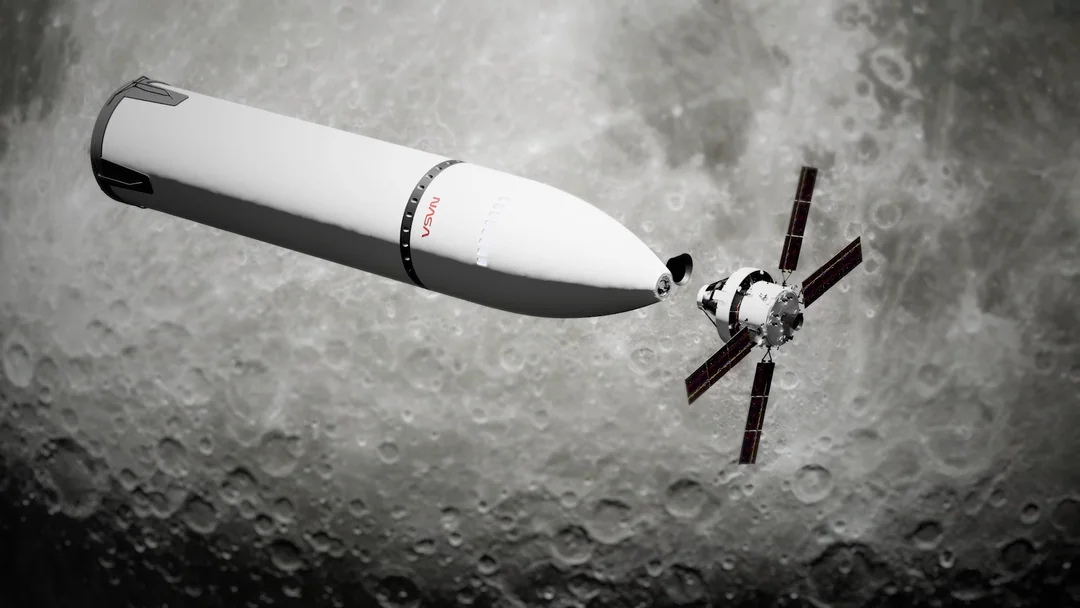
Isaacman ‘gaining confidence’ both landers will participate in Artemis III
NASA is increasingly optimistic that both lunar lander providers, SpaceX and Blue Origin, will participate in the Artemis III test next year. Administrator Jared Isaacman expressed growing confidence during a recent interview. The test will involve an Orion crew capsule practicing rendezvous and docking with the landers, aiming for two lunar landings in 2028.
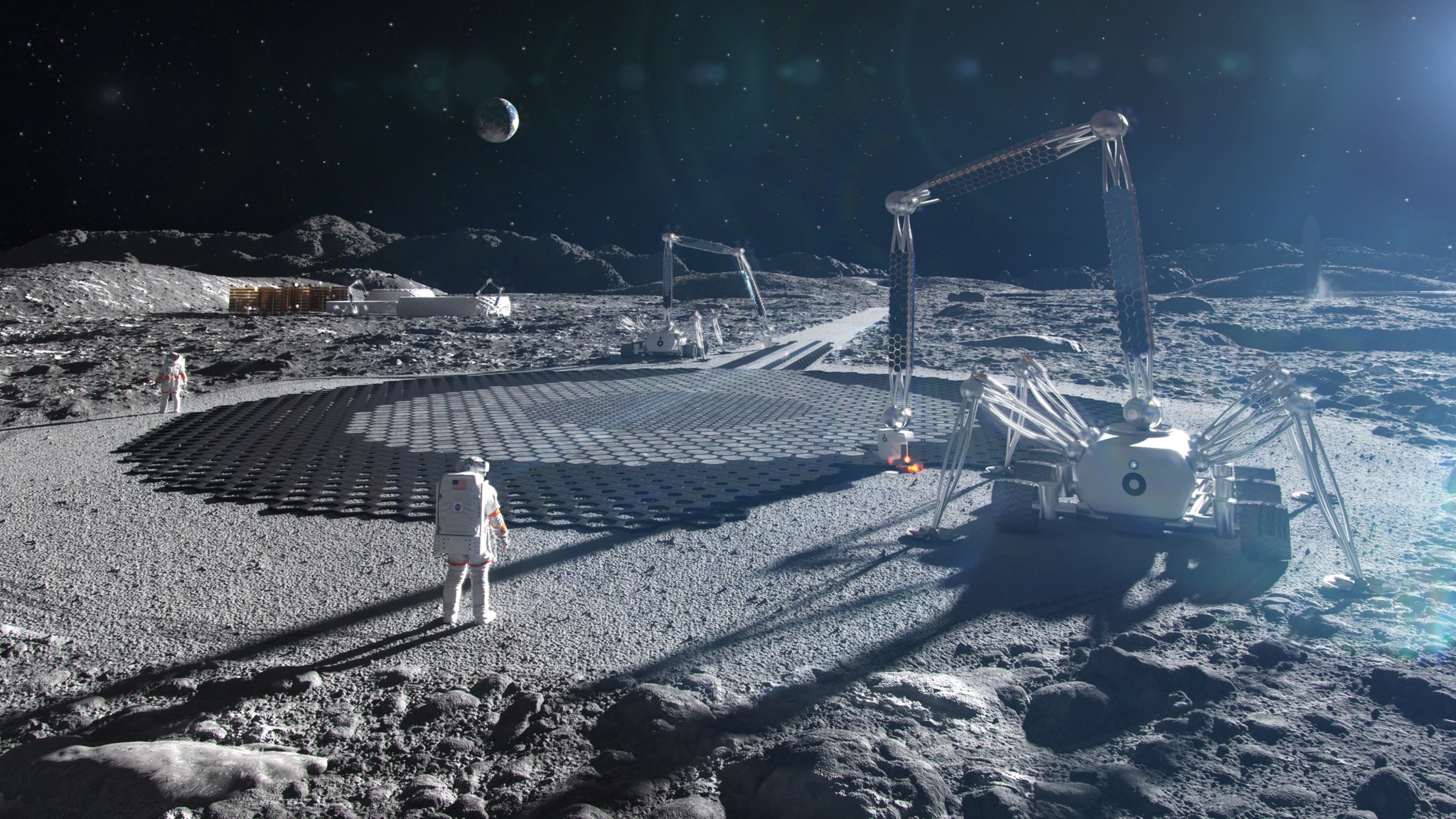
ICON Prime Launches, Led By Former TX Rep
ICON announced the launch of ICON Prime, a new business unit focused on collaboration with the Pentagon and NASA. This initiative aims to leverage robotic construction technologies for potential applications in defense and space sectors. The establishment of ICON Prime reflects a strategic move to enhance partnerships within government agencies, emphasizing ICON's commitment to innovative construction solutions.
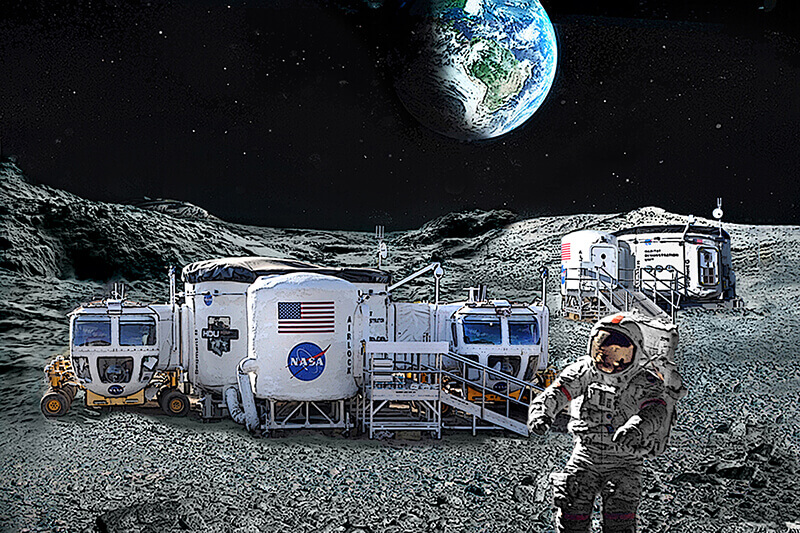
This AI prediction model could help shield future lunar habitats against micrometeorites
NASA has begun analyzing data from the Artemis II mission, revealing six micrometeorite impacts during its April 6 lunar flyby. Researchers, including Arturo Montoya, developed an AI-based damage prediction system funded by a $15M NASA grant. This artificial neural network (ANN) aims to enhance lunar habitat designs against micrometeorite threats, improving upon previous prediction methods.

Artemis II moonshot reflects a spacefaring vision of Jules Verne’s 1865 novel
NASA's Artemis II mission is set to launch on April 1, 2026, marking humanity's return to the Moon after 50 years. This mission reflects themes from Jules Verne's 1865 novel, emphasizing the political, social, and economic contexts of space exploration. The crew's journey echoes Verne's vision of a unifying human achievement, drawing global attention and support.
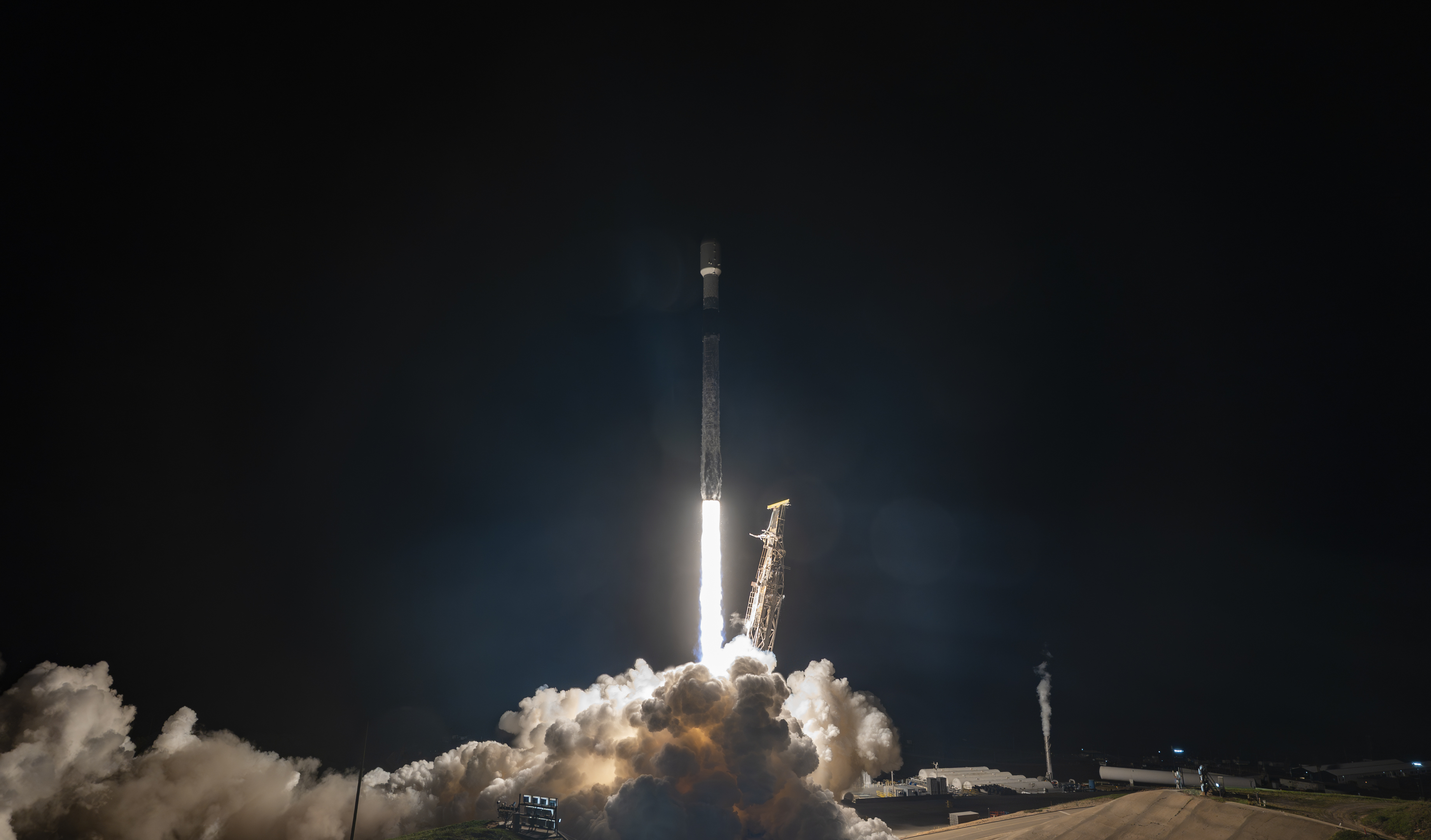
Space Station captures, berths Cygnus XL ’S.S. Steven R. Nagel’ cargo spacecraft
SpaceX's Falcon 9 successfully launched the Cygnus XL S.S. Steven R. Nagel cargo spacecraft from Cape Canaveral on April 11. The spacecraft was captured by the ISS's Canadarm2 on April 13 at 12:19 pm CT, facilitating resupply operations. This mission underscores the ongoing collaboration between commercial launch providers and NASA for ISS logistics and support.
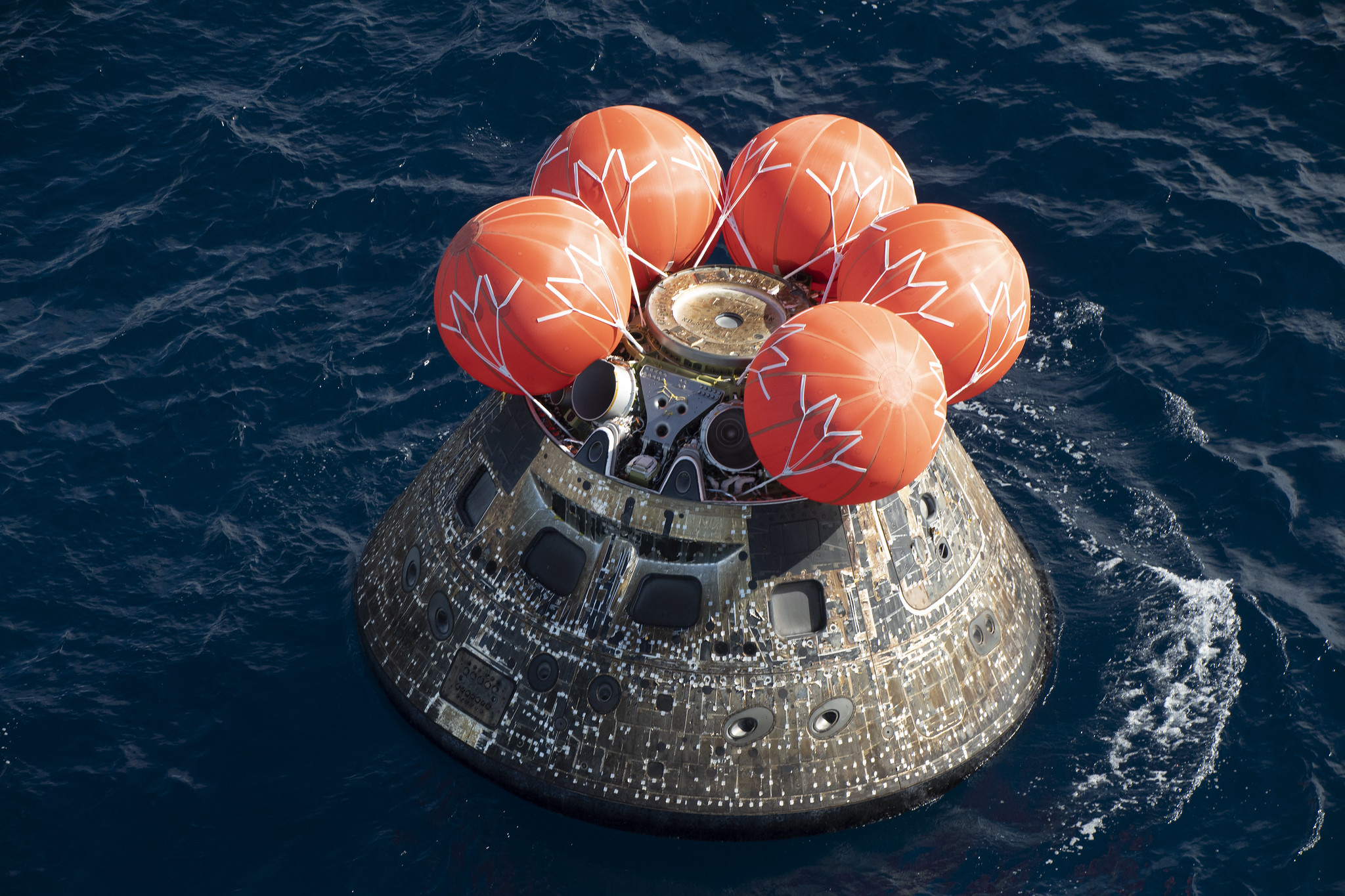
Artemis II astronauts gazed at our Moon with joy, curiosity, and reverence. Through finer robotic orbital views, so can you.
Orion spacecraft with Artemis II astronauts returned to Earth on April 10 after a lunar flyby on April 6. The crew, including Christina Koch, Victor Glover, Jeremy Hansen, and Reid Wiseman, experienced peak gravitational loads during reentry. The mission achieved significant milestones, showcasing lunar features like the Orientale basin and numerous crater chains, enhancing lunar exploration understanding.
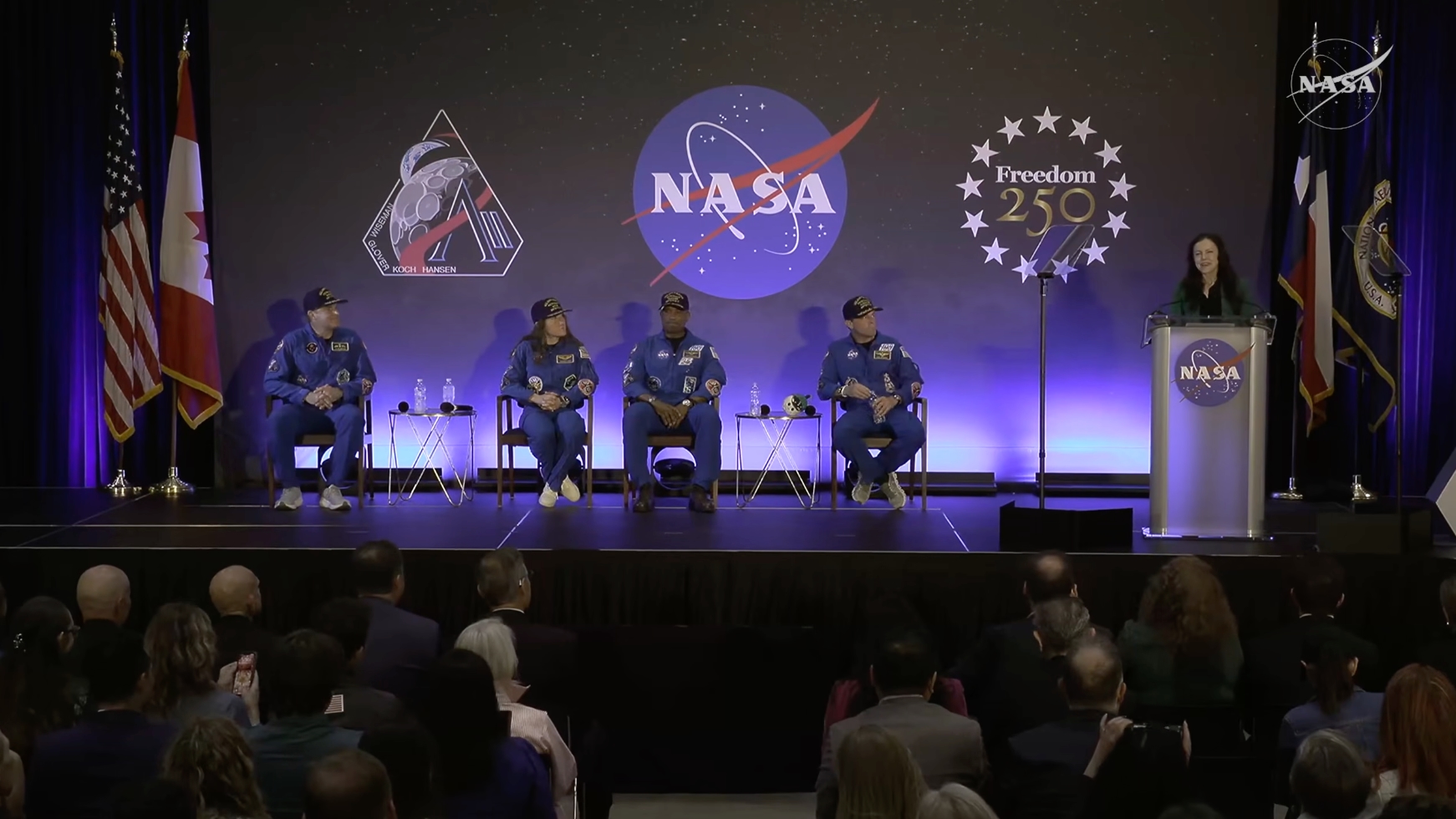
Artemis 2 crew returns to Houston, passing the baton
NASA's Artemis 2 crew, comprising astronauts Reid Wiseman, Victor Glover, Christina Koch, and Jeremy Hansen from the Canadian Space Agency, returned to Houston less than 24 hours post-splashdown in the Pacific Ocean. This marks a significant milestone in the Artemis program, transitioning responsibilities as the mission prepares for future lunar exploration endeavors and crew training activities.

Ship 39 and Booster 19 Roll out for Static Fire Testing
Artemis program preparations advance as Ship 39 and Booster 19 roll out for static fire testing. This critical phase follows the successful return of the Orion spacecraft, marking a significant milestone in the ongoing development of NASA's lunar exploration efforts. The testing will validate the performance of the integrated systems ahead of future missions.
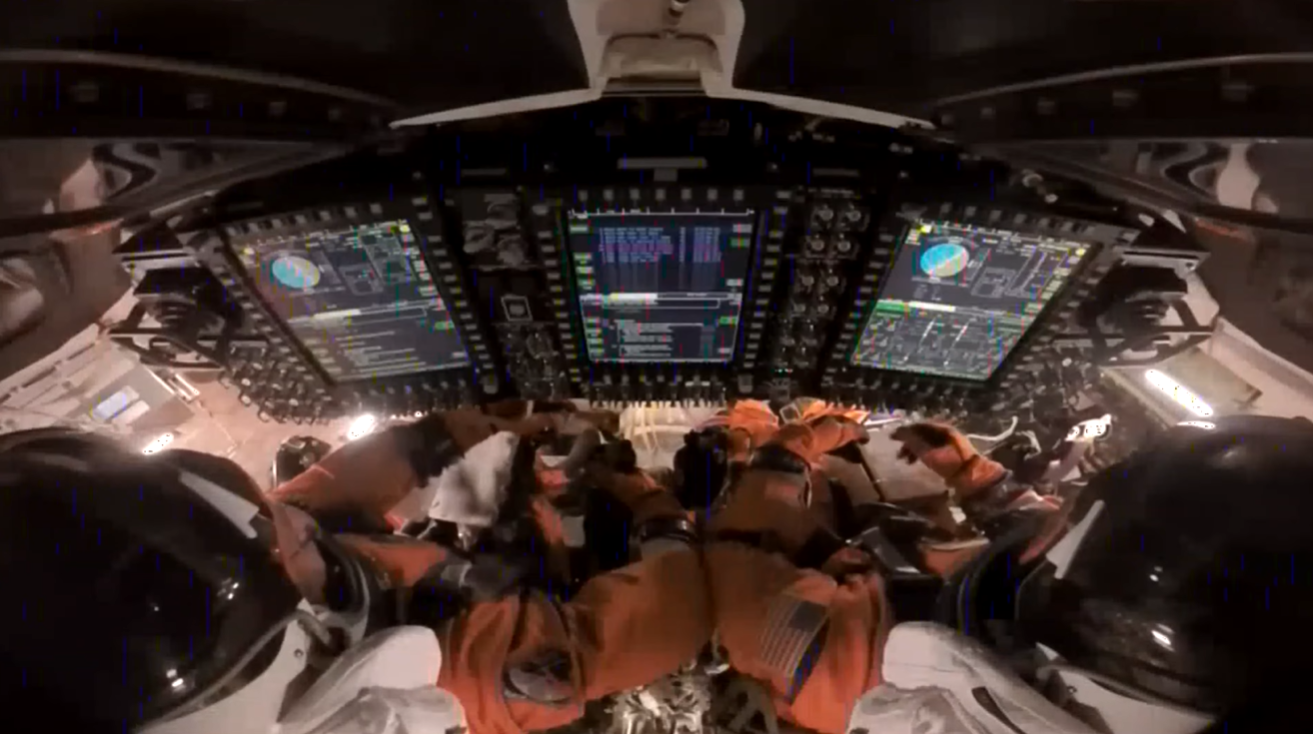
Artemis II Crew Joyously Back Home in Houston
NASA's Artemis II crew successfully completed their lunar flyby and returned to Earth, splashing down in the Pacific Ocean. The recovery operation was conducted by the USS John P. Murtha, which transported the astronauts back to Houston. This mission marks a significant milestone in NASA's lunar exploration efforts, showcasing advancements in crewed spaceflight technology.
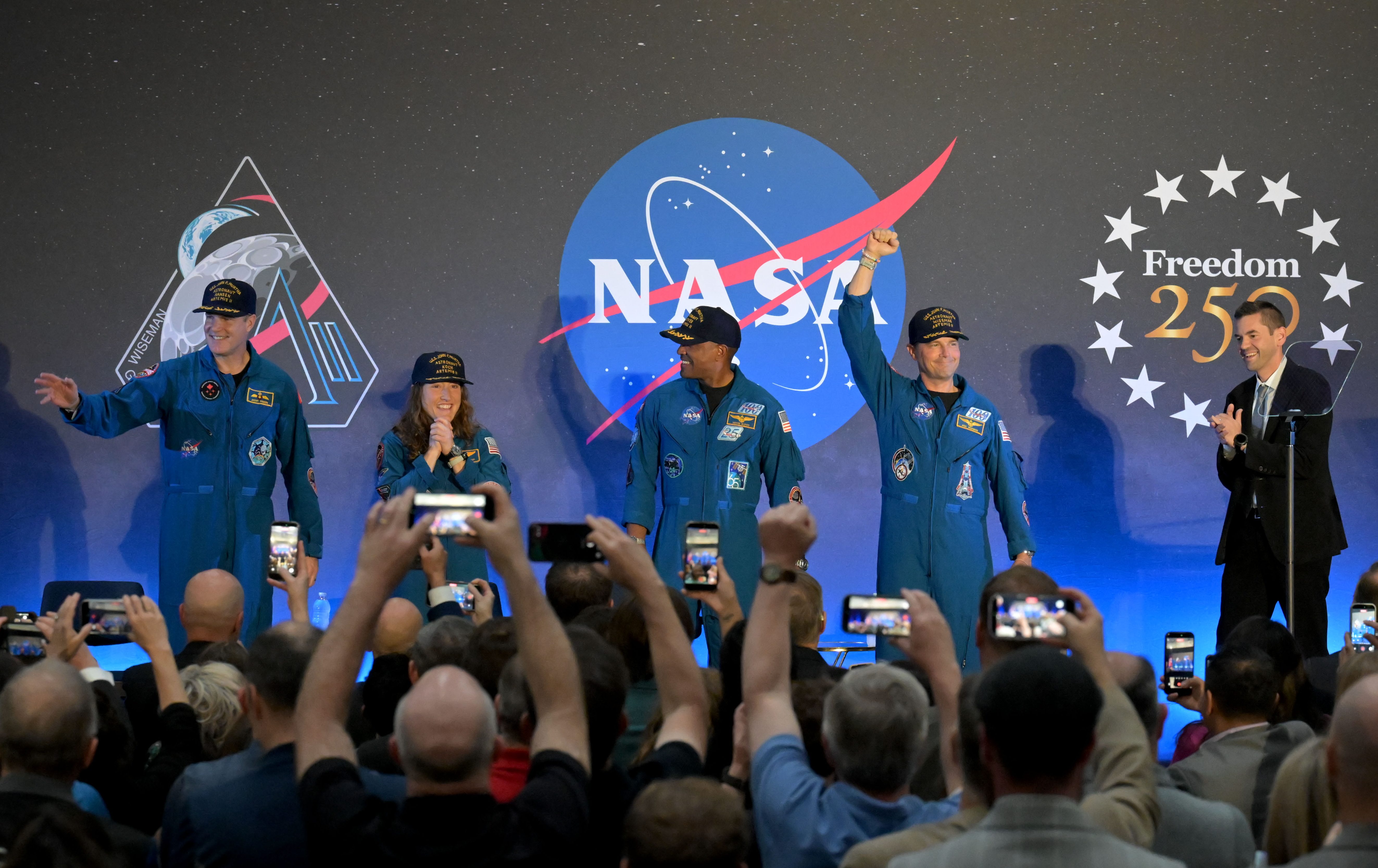
Artemis II Astronauts Back in Houston, Reunite with Families
NASA's Artemis II crew, including astronauts Reid Wiseman, Victor Glover, Christina Koch, and CSA's Jeremy Hansen, returned to Houston after their historic 10-day lunar flyby mission. The crew splashed down in the Pacific Ocean on April 10, 2026, completing the first crewed flight to the Moon in over 50 years, and underwent post-mission evaluations upon arrival.
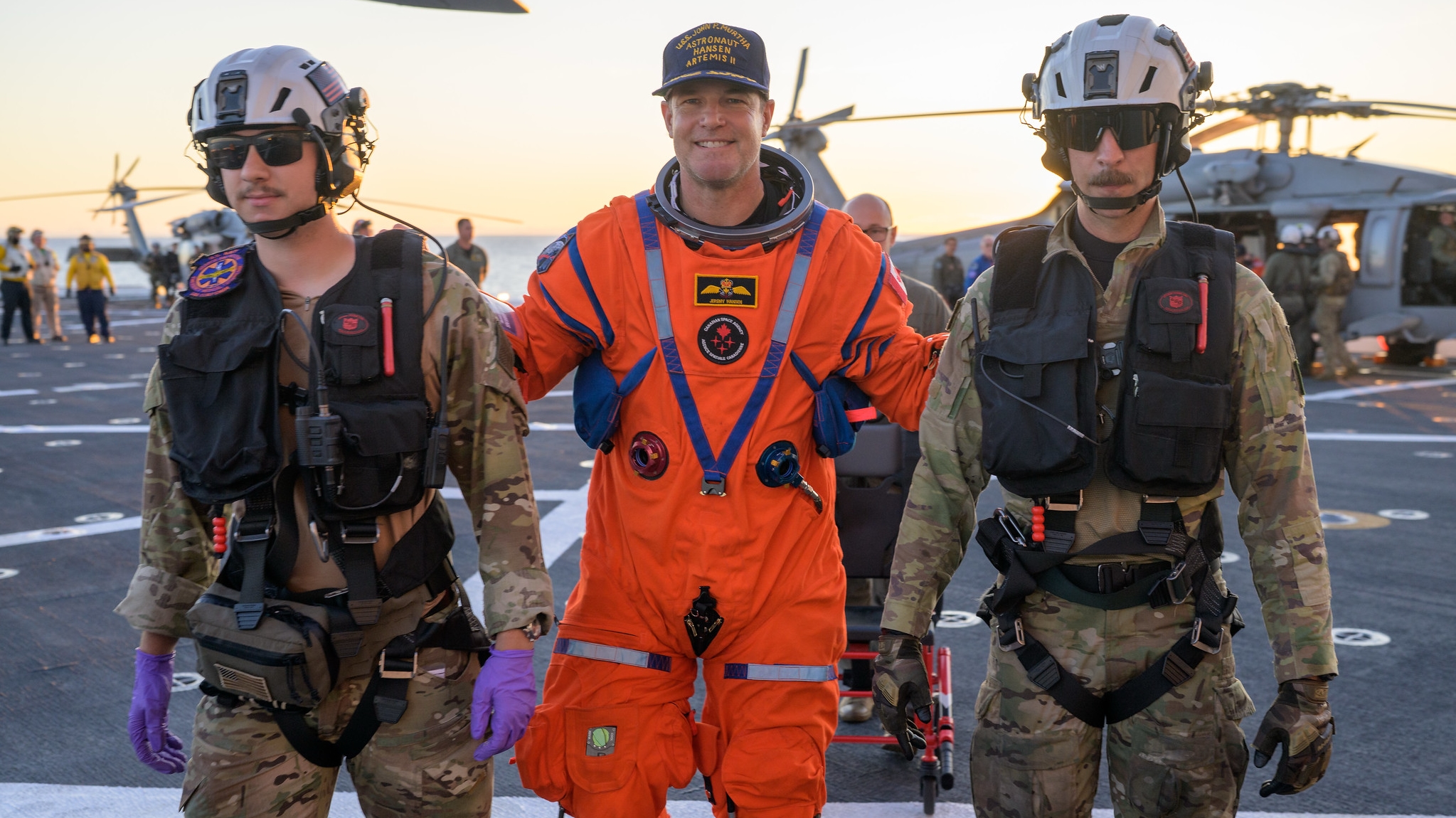
Canada’s historic role in Artemis 2 and NASA managers detail pinpoint reentry
NASA mission managers hailed the Artemis 2 flight test as a success, emphasizing the Orion spacecraft's precision during reentry. They acknowledged the contributions of the international workforce involved in its development. This mission marks a significant milestone for Canada's participation in lunar exploration, showcasing collaborative efforts in advancing space technology and international partnerships.

Falcon 9 launches CRS NG-24 cargo ship to ISS
Falcon 9 successfully launched the CRS NG-24 cargo ship to the ISS, continuing its role in resupply missions. This launch follows the conclusion of Northrop Grumman's Cygnus S.S. William McCool's CRS NG-23 mission. The ongoing partnership between NASA and Northrop Grumman enhances ISS operations and logistics, ensuring a steady flow of supplies and experiments to the orbiting laboratory.

Space Worms! UK scientists launch microscopic crew into orbit to support future Moon missions
UK Space Agency funded a pioneering experiment launching C. elegans nematode worms to the International Space Station aboard NASA's Northrop Grumman CRS-24 Mission. This project, led by the University of Exeter and engineered by the University of Leicester, aims to study biological responses to microgravity, supporting future Moon missions and astronaut health during long-duration space travel.
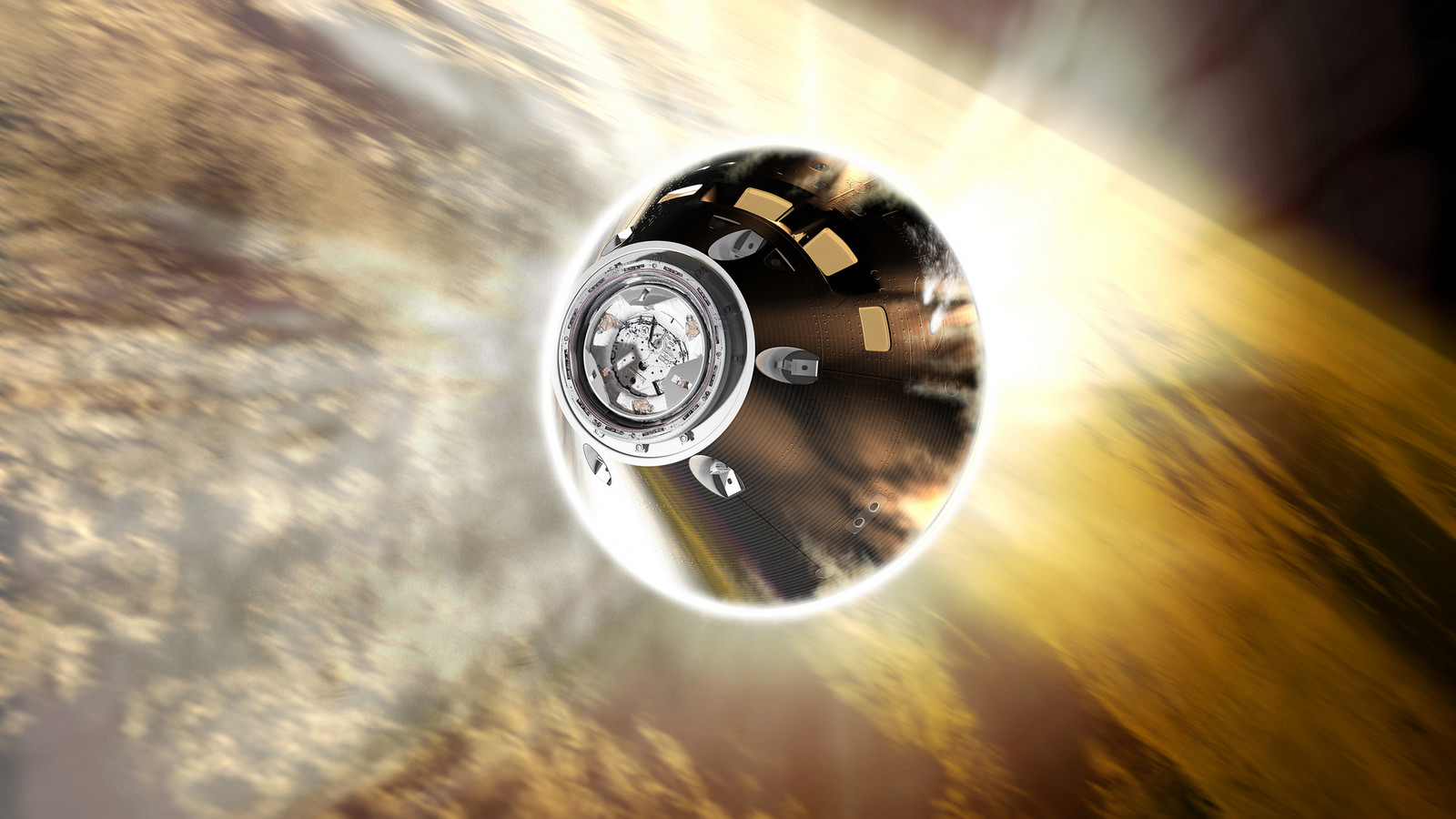
Artemis II Day 10: Orion Returns to Earth, Completing First Crewed Lunar Mission in Over 50 Years
NASA's Artemis II mission concluded on 10 April as the Orion spacecraft successfully returned its crew to Earth, marking the first human mission to the vicinity of the Moon since 1972. This milestone signifies a pivotal moment in NASA's strategy for deep space exploration and paves the way for future lunar and Martian endeavors in the Artemis program.

NASA Cheers First Successful Moon Mission Since 1972
NASA's Artemis II crew successfully completed a 9-day lunar mission, marking the agency's first crewed Moon mission since 1972. Administrator Jared Isaacman celebrated the crew's return aboard the recovery ship USS John P. Murtha, highlighting the mission's significance for future lunar exploration. This achievement underscores NASA's commitment to sustainable lunar operations and crewed spaceflight.
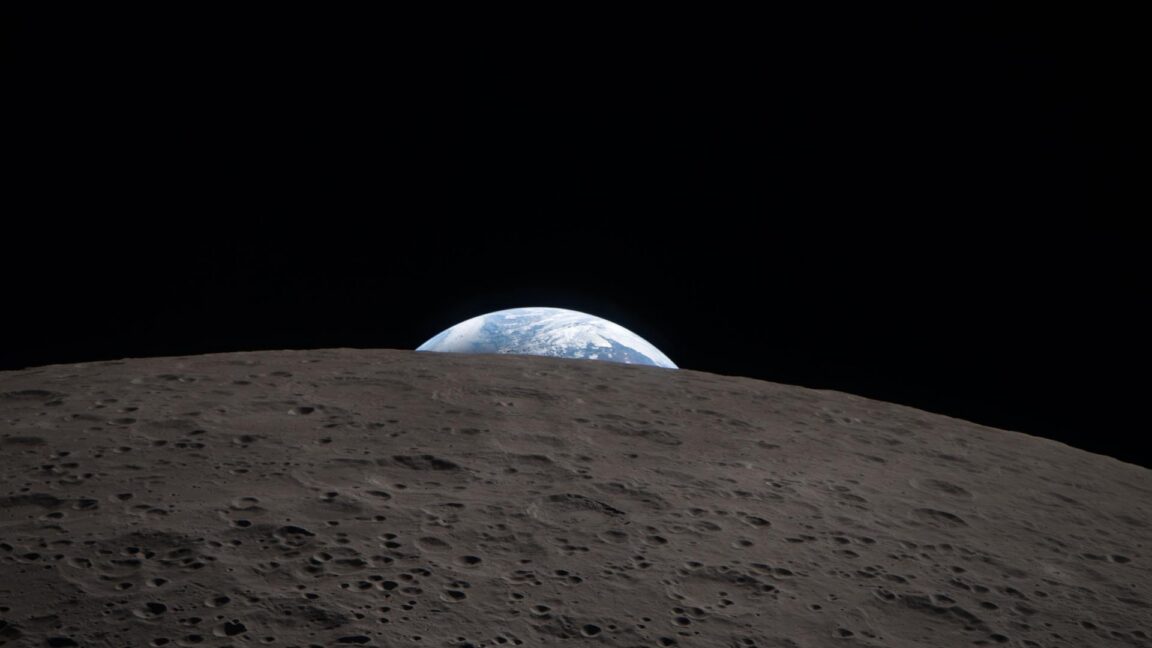
The Artemis II mission has ended. Where does NASA go from here?
The Artemis II mission has concluded, prompting discussions on NASA's future direction. Emphasis is placed on the challenges and opportunities that lie ahead, as the agency prepares for subsequent phases of lunar exploration and potential Mars missions. Strategic planning and resource allocation will be critical in shaping the next steps for NASA's ambitious exploration agenda.

They’re Home! Artemis II is Back on Earth
NASA's Artemis II crew, including astronauts Reid Wiseman, Victor Glover, and Christina Koch, successfully returned to Earth after completing the first lunar flyby since 1972. This mission marks a significant milestone in lunar exploration, showcasing advancements in crewed spaceflight and international collaboration with the Canadian Space Agency. The mission's success sets the stage for future lunar endeavors.
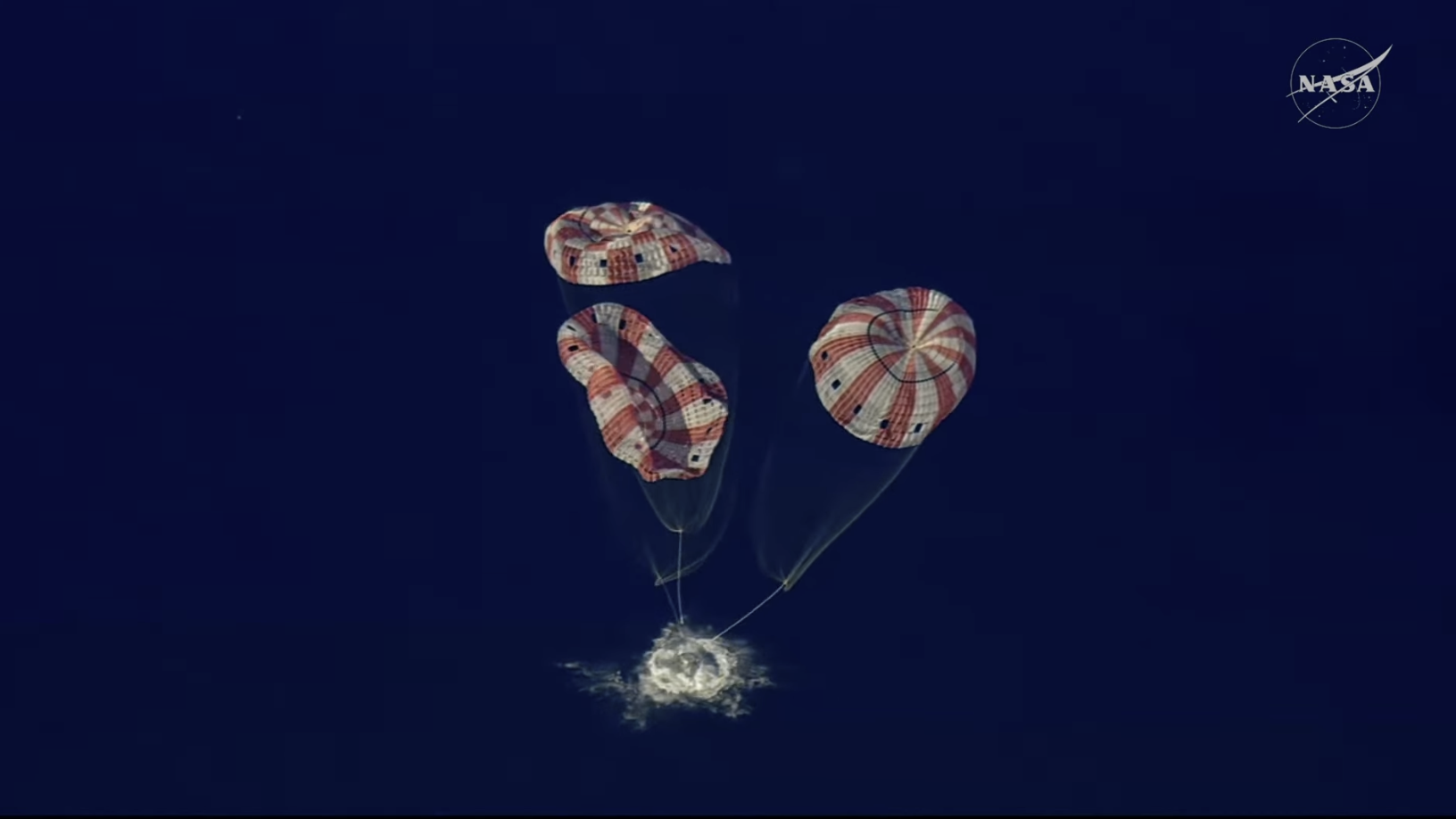
Artemis 2 “is back on Earth”
Artemis 2 crew successfully returned to Earth following a planned splashdown of the Orion capsule. This event marks a significant milestone for NASA in its lunar exploration program, demonstrating the capsule's capabilities and operational readiness for future missions. The mission's execution aligns with NASA's objectives for crewed lunar exploration and deep space missions.
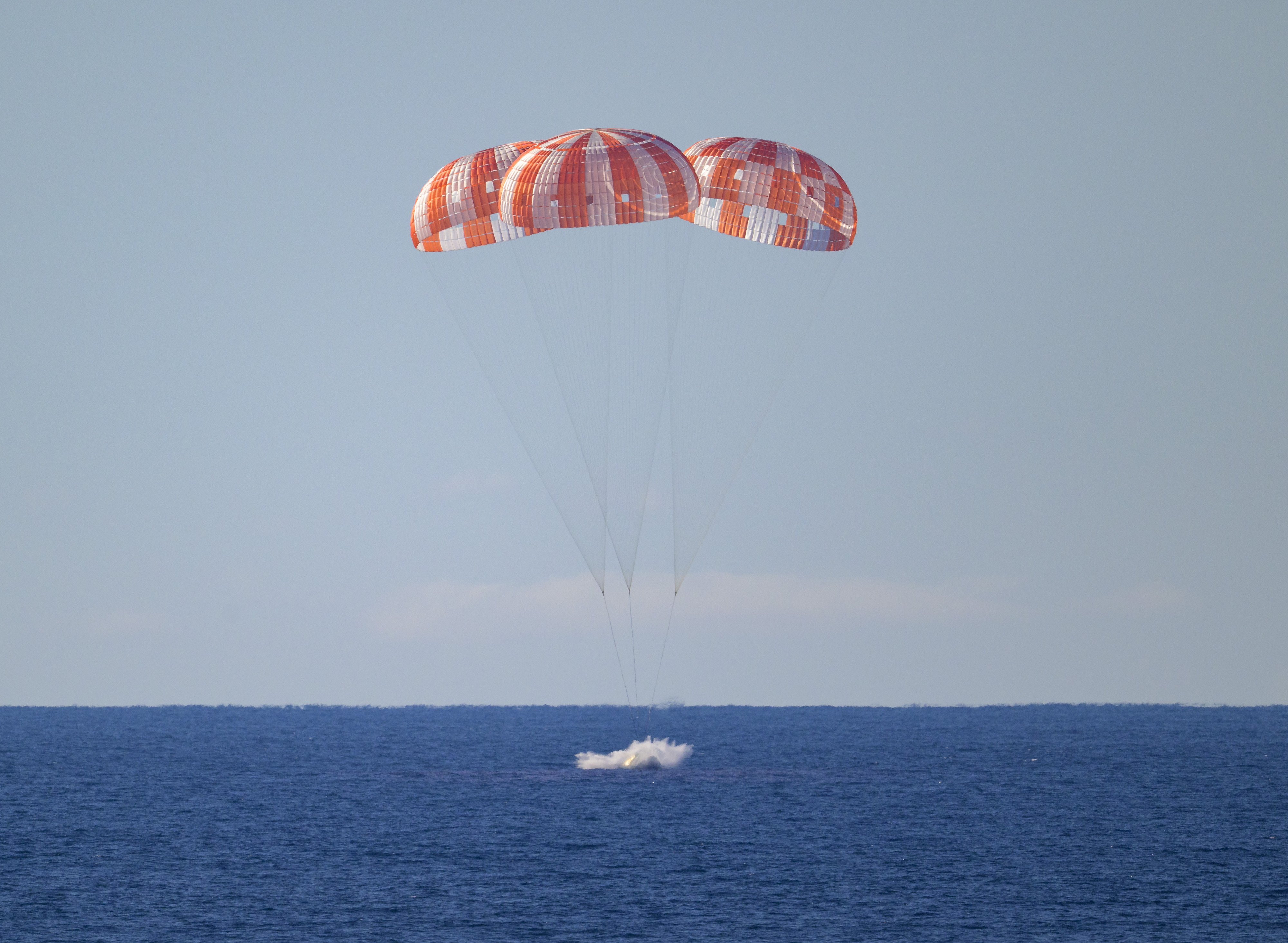
Artemis II Flight Day 10: Live Re-Entry Updates
NASA's Orion spacecraft successfully splashed down in the Pacific Ocean at 8:07 p.m. EDT on April 10, 2026, concluding the Artemis II mission with astronauts Reid Wiseman, Victor Glover, Christina Koch, and Jeremy Hansen aboard. Recovery teams are now transporting the crew to USS John P. Murtha for medical evaluations before returning to NASA's Johnson Space Center in Houston.

How to watch NASA’s Artemis II splash back down to Earth
NASA's Artemis II mission has traveled farther from Earth than any mission before. Here's how to watch the crew's return landing in the Pacific Ocean.
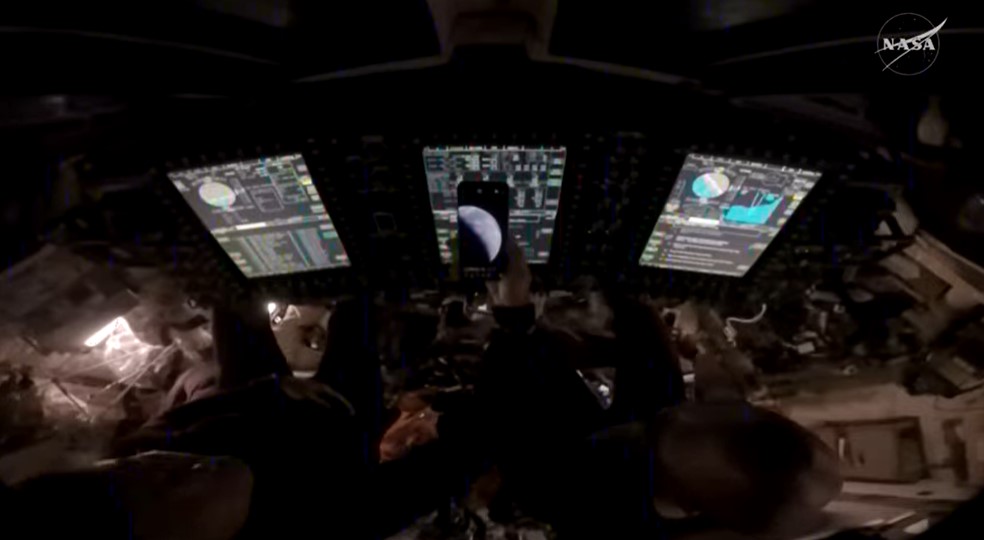
Artemis II Flight Day 10: Crew Completes Final Burn Before Splashdown
NASA astronauts Reid Wiseman and Victor Glover completed a final thruster burn on Orion for 8 seconds, achieving a 4.2 feet-per-second velocity change, guiding Artemis II toward Earth. Splashdown is scheduled for 8:07 p.m. EDT off San Diego, with recovery operations by NASA's team and the Department of War personnel awaiting the crew's return.
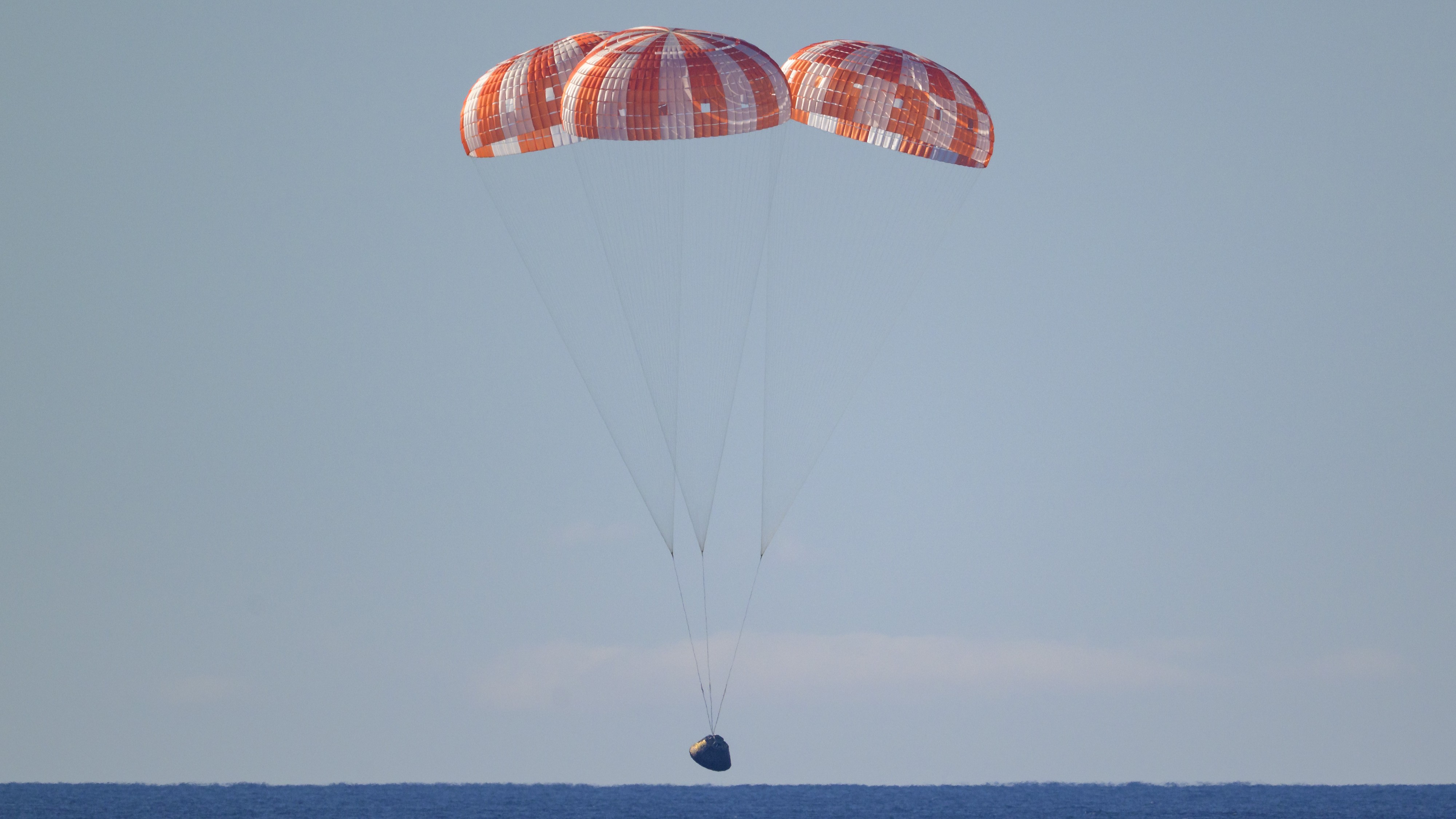
NASA confident Artemis 2 heat shield will protect crew during re-entry
NASA's Artemis 2 Orion crew capsule is expected to re-enter Earth's atmosphere at 24,000 mph from 75 miles above the Pacific Ocean. Engineers express confidence in the heat shield's ability to protect the crew during this critical phase. The mission aims to demonstrate advanced technologies for future lunar exploration and crew safety during high-speed re-entries.

NASA updates final Orion engine burn and spashdown timeline
NASA updated the final Orion engine burn timeline, confirming a targeted splashdown at 8:07 p.m. EDT off the coast of San Diego. This marks a critical phase in the mission, ensuring the spacecraft's safe return after its operational objectives. The engine burn is essential for trajectory adjustments leading to the planned recovery sequence.
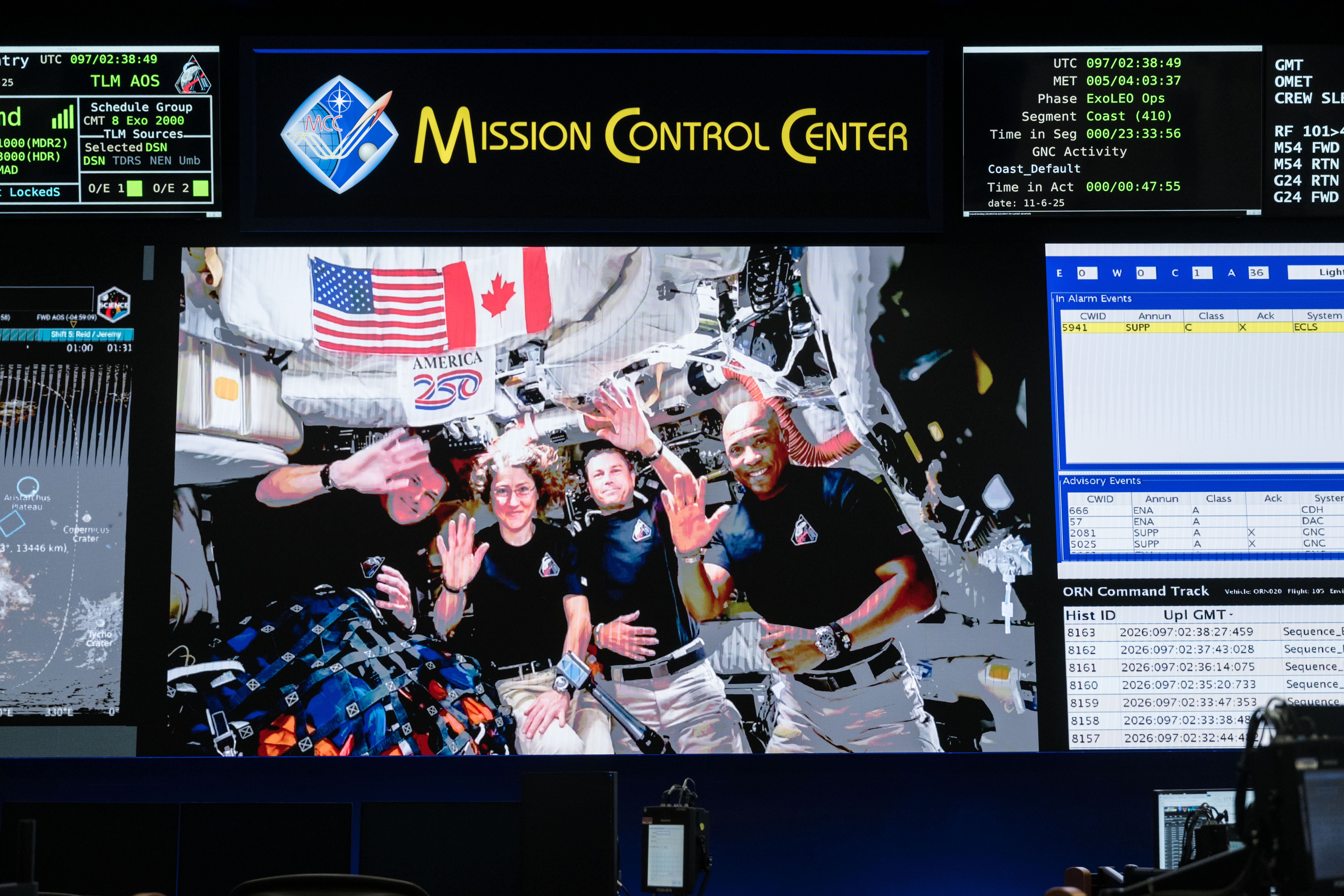
Artemis II Flight Day 10: Crew Sets for Final Burn, Splashdown
Artemis II crew, including NASA astronauts Christina Koch, Reid Wiseman, and Victor Glover, along with Jeremy Hansen from the Canadian Space Agency, prepared for their final burn and splashdown on April 10, 2026. Splashdown is targeted for 8:07 p.m. EDT off San Diego after a 694,481-mile journey, marking a significant milestone in lunar exploration.

Artemis II returns to Earth after historic 10-day mission around the Moon
Artemis II successfully concluded its 10-day mission, covering over 800,000 km and achieving a historic lunar flyby. This mission marks a significant milestone in NASA's lunar exploration efforts, paving the way for future crewed missions to the Moon. The spacecraft's performance during the mission will inform subsequent phases of the Artemis program and lunar Gateway development.

Moog’s “Tip to Tail” Contributions to the Artemis II Flight
Moog supplies over 100 hardware components for the Artemis II mission, integrating into the Orion system. Their contributions span the entire vehicle, enhancing performance and reliability. This extensive involvement underscores Moog's critical role in supporting NASA's lunar exploration objectives. The collaboration reflects a commitment to advancing aerospace technology and ensuring mission success through robust engineering solutions.
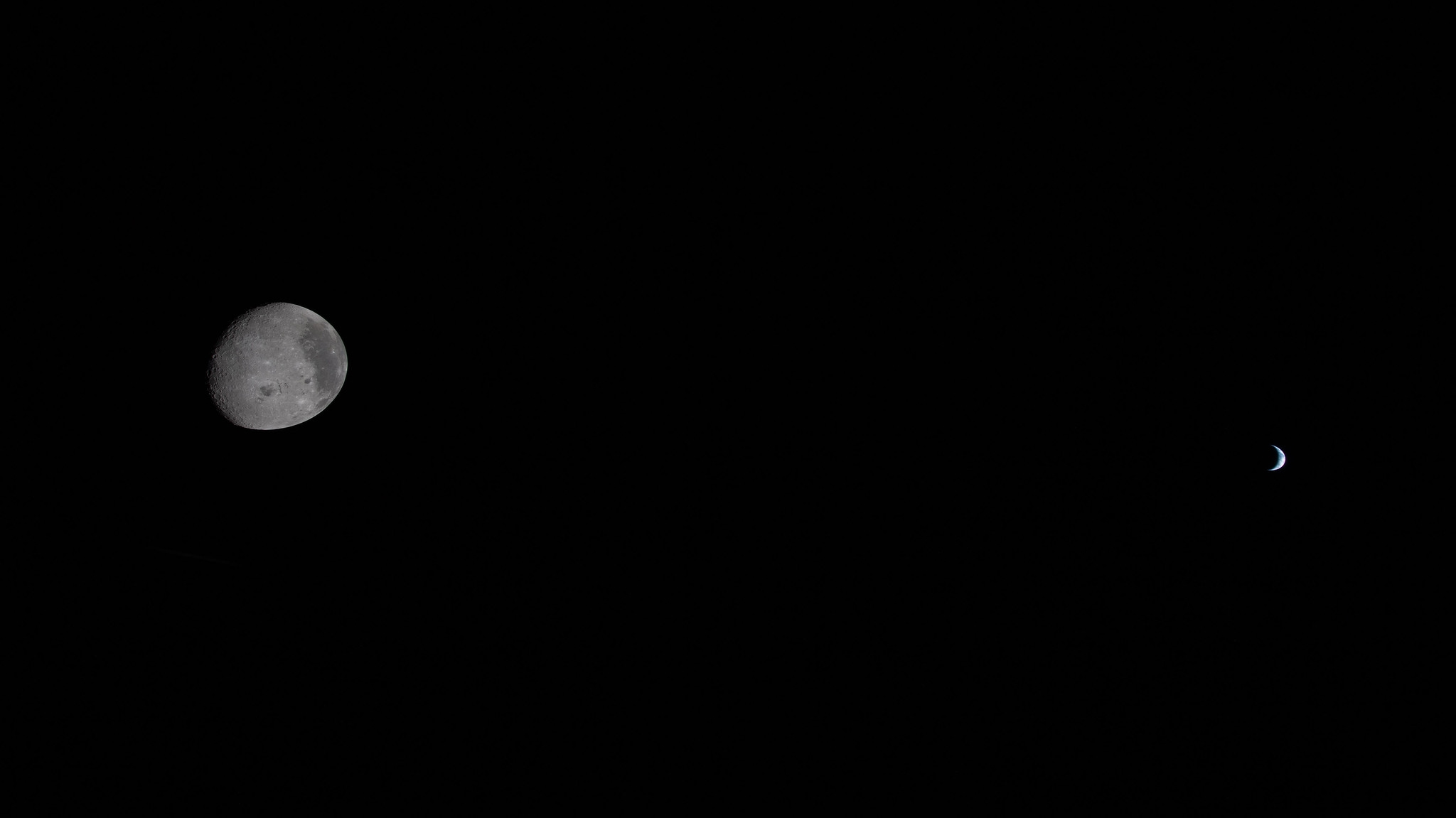
NASA managers outline Artemis 2 reentry and address propulsion issue ahead of splashdown
NASA mission managers confirmed the Artemis 2 Orion spacecraft's thermal protection system is ready for reentry, ensuring safe splashdown for the four-person crew. They detailed the reentry sequence and addressed propulsion issues, emphasizing confidence in the spacecraft's performance. This briefing precedes the critical final phase of the mission, highlighting operational readiness for Earth return.

Artemis II closing in on Earth return
Artemis II is nearing its Earth return after a historic 10-day mission, marking the farthest humans have traveled from Earth. This mission demonstrates critical capabilities for future lunar exploration and paves the way for subsequent Artemis missions. The successful completion of this mission is a significant milestone in NASA's lunar exploration strategy and human spaceflight program.
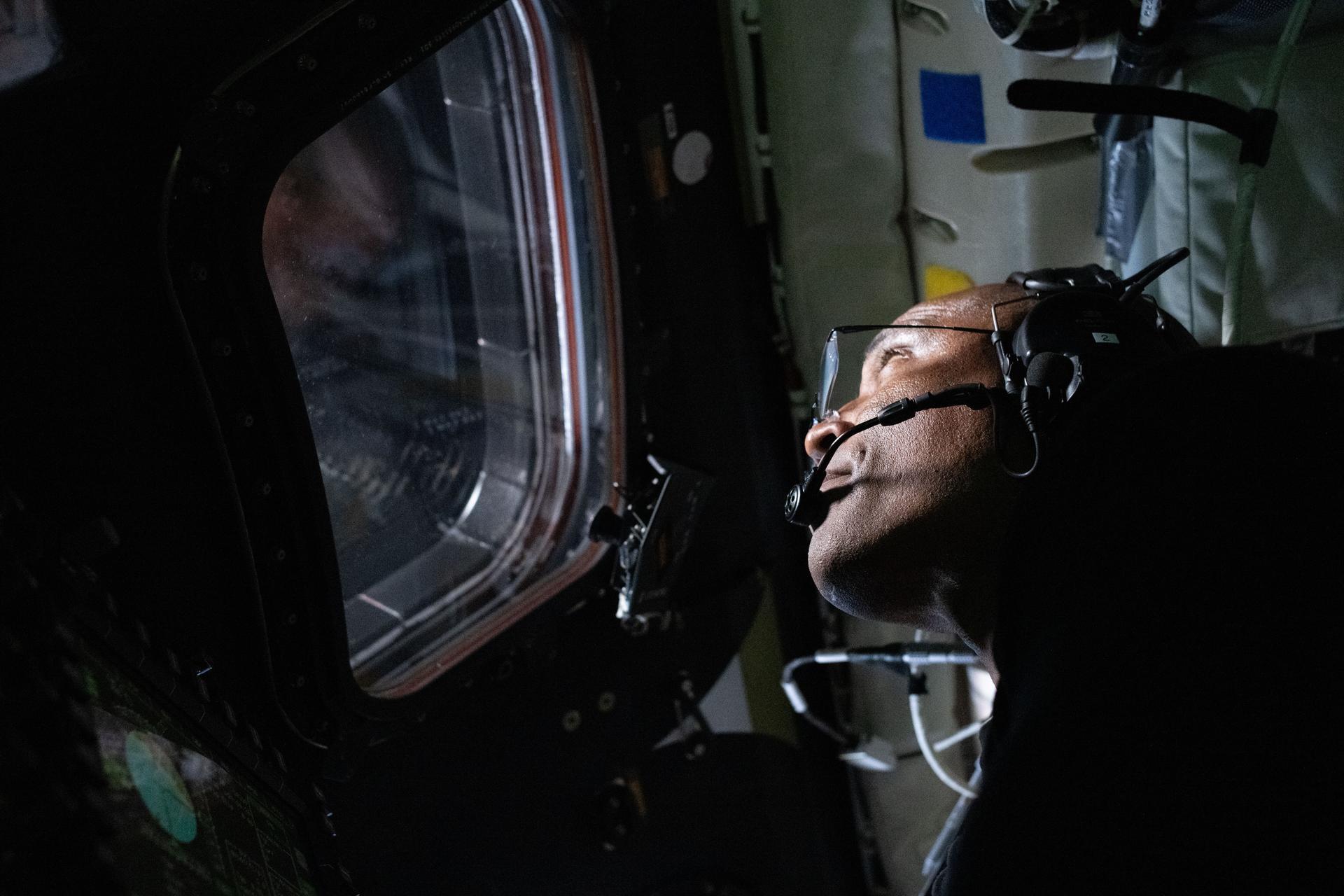
Artemis II Flight Day 9: Second Return Correction Burn Complete
NASA's Orion spacecraft completed its second return correction burn, igniting thrusters for 9 seconds, achieving a velocity change of 5.3 feet-per-second. Victor Glover and crew captured data during their lunar flyby, coming within 4,067 miles of the Moon. The next trajectory burn is scheduled for April 10, targeting splashdown at 8:07 p.m. off San Diego.
Artemis II Getting Ready For Splashdown Tomorrow
Artemis II's crew is preparing the Orion capsule for reentry, scheduled for splashdown off San Diego at 8:07 pm ET. NASA Associate Administrator Amit is overseeing final configurations to ensure a safe return. This mission marks a significant milestone in lunar exploration, demonstrating capabilities for future crewed missions to the Moon and beyond.
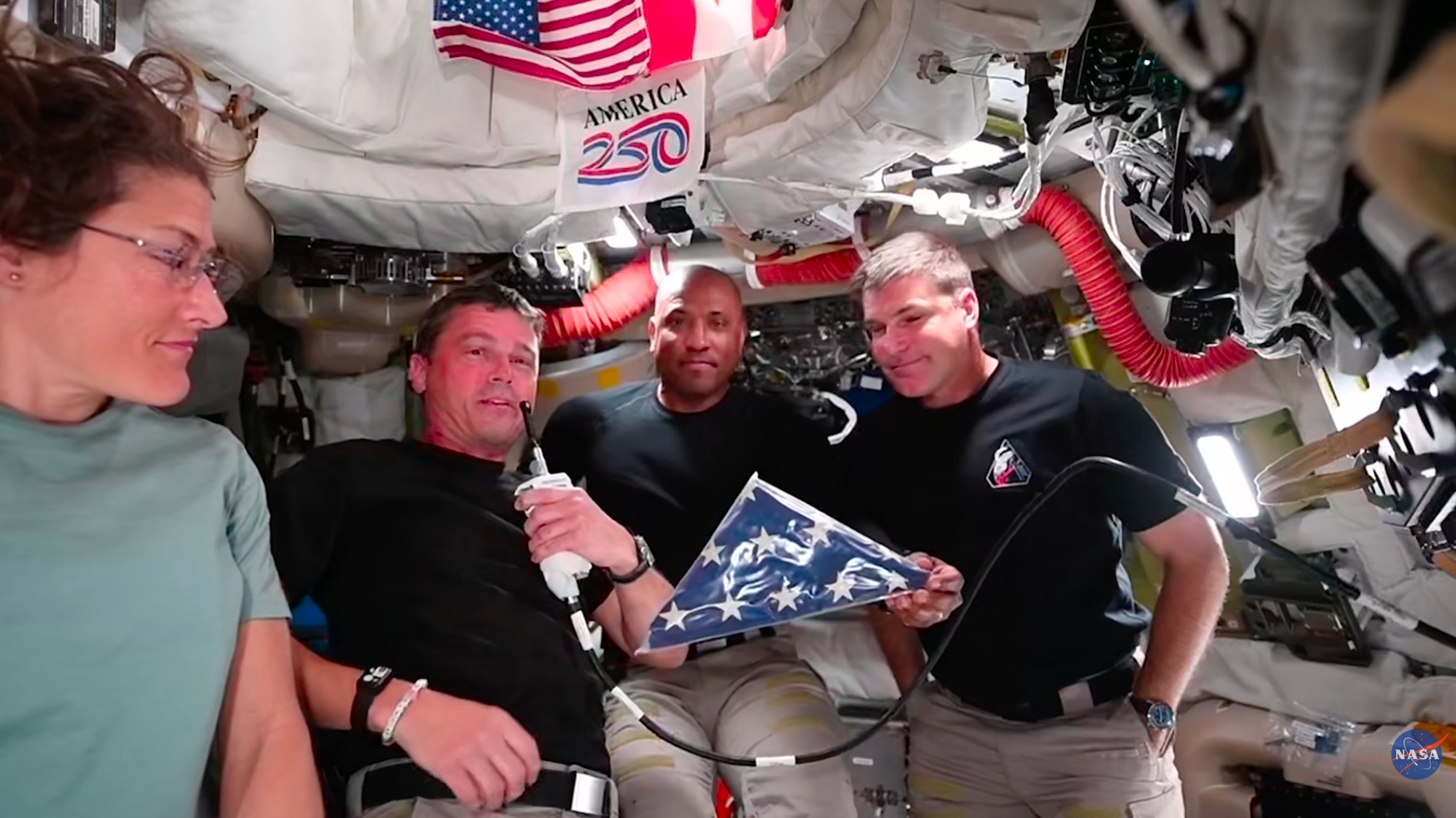
Video: Artemis 2 flight day 8 highlights – Orion crew packs up and unveils Apollo 18 flag
Artemis 2 crew on Orion spacecraft prepared for Friday's Pacific Ocean splashdown, marking Flight Day 8. The team shifted focus from lunar operations to final preparations, including packing up equipment and unveiling the Apollo 18 flag. This mission continues to demonstrate NASA's commitment to deep space exploration and crewed lunar missions, enhancing operational readiness for future endeavors.
Artemis II Flight Day 9: Crew Prepares to Come Home
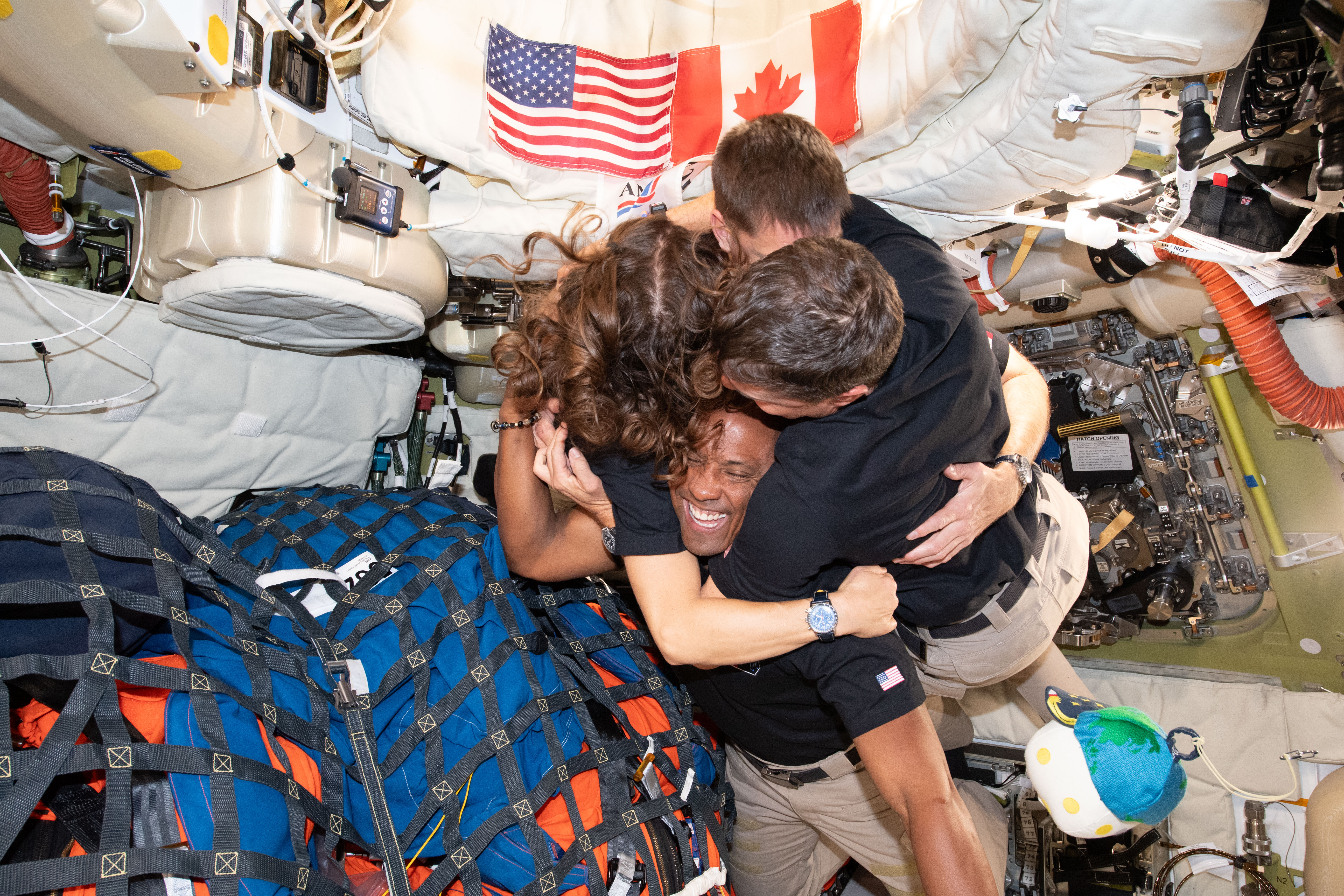
NASA's Artemis II crew, including Christina Koch, Reid Wiseman, Victor Glover, and Jeremy Hansen, prepares for splashdown on April 10, 2026. Following a lunar swing, they exited the Moon's influence on April 7. The crew is conducting re-entry procedures, including trajectory correction burns, and will splash down in the Pacific Ocean near San Diego at 8:07 p.m. EDT.

What returning to lunar space means for human health
NASA is preparing for Artemis II, marking the first return to lunar space since Apollo, focusing on human health impacts from spaceflight. Risks include radiation exposure and lunar dust, which can cause respiratory issues. Advances in health monitoring and research, such as TRISH and SENTINEL, aim to mitigate these risks and enhance astronaut safety during missions beyond LEO.
Artemis II Flight Day 8: Crew Conducts Key Tests on Return to Earth
Artemis II crew members Christina Koch, Reid Wiseman, Victor Glover, and Jeremy Hansen conducted key tests aboard the Orion spacecraft, including orthostatic intolerance garment evaluations and manual piloting demonstrations. Following their lunar flyby, they are preparing for splashdown on April 10, 2026, off the coast of San Diego, ensuring all systems are ready for re-entry.
Artemis II Flight Day 7: First Return Correction Burn Complete
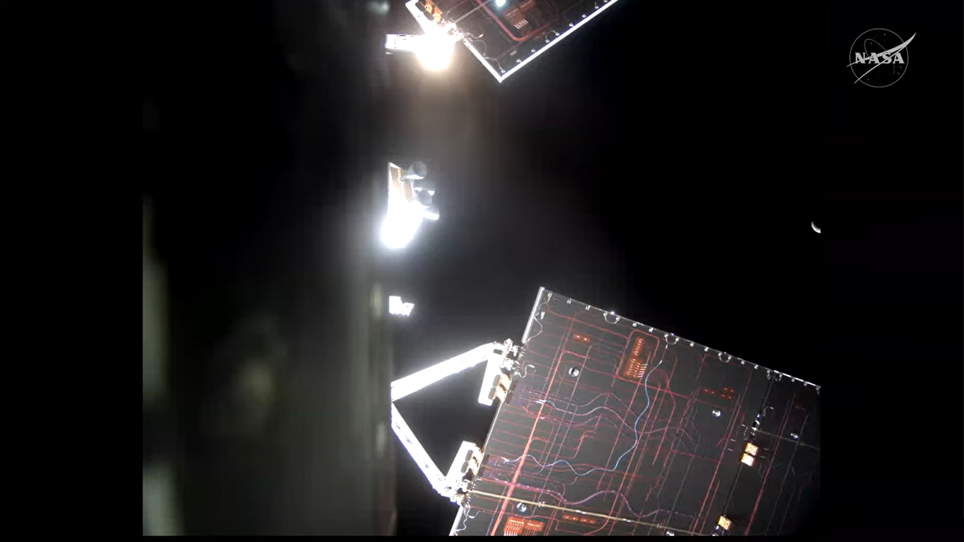
NASA's Orion spacecraft, named Integrity, successfully completed its first return correction burn on Flight Day 7, igniting thrusters for 15 seconds at 8:03 p.m. EDT, achieving a velocity change of 1.6 feet-per-second. Christina Koch and Jeremy Hansen monitored the spacecraft's systems, while the crew prepares for upcoming flight test objectives and return tasks on April 8.

Stunning Images, A Chat with Friends — Another Great Day for Artemis II
Artemis II crew has completed their lunar swing and is returning to Earth, capturing stunning images of the Moon and Earth during the mission. The downlink of these images showcases the mission's success and highlights the capabilities of the crewed spacecraft. This marks a significant milestone in NASA's lunar exploration efforts.
Artemis II Flight Day 7: Crew Makes Long‑Distance Call, Begins Return
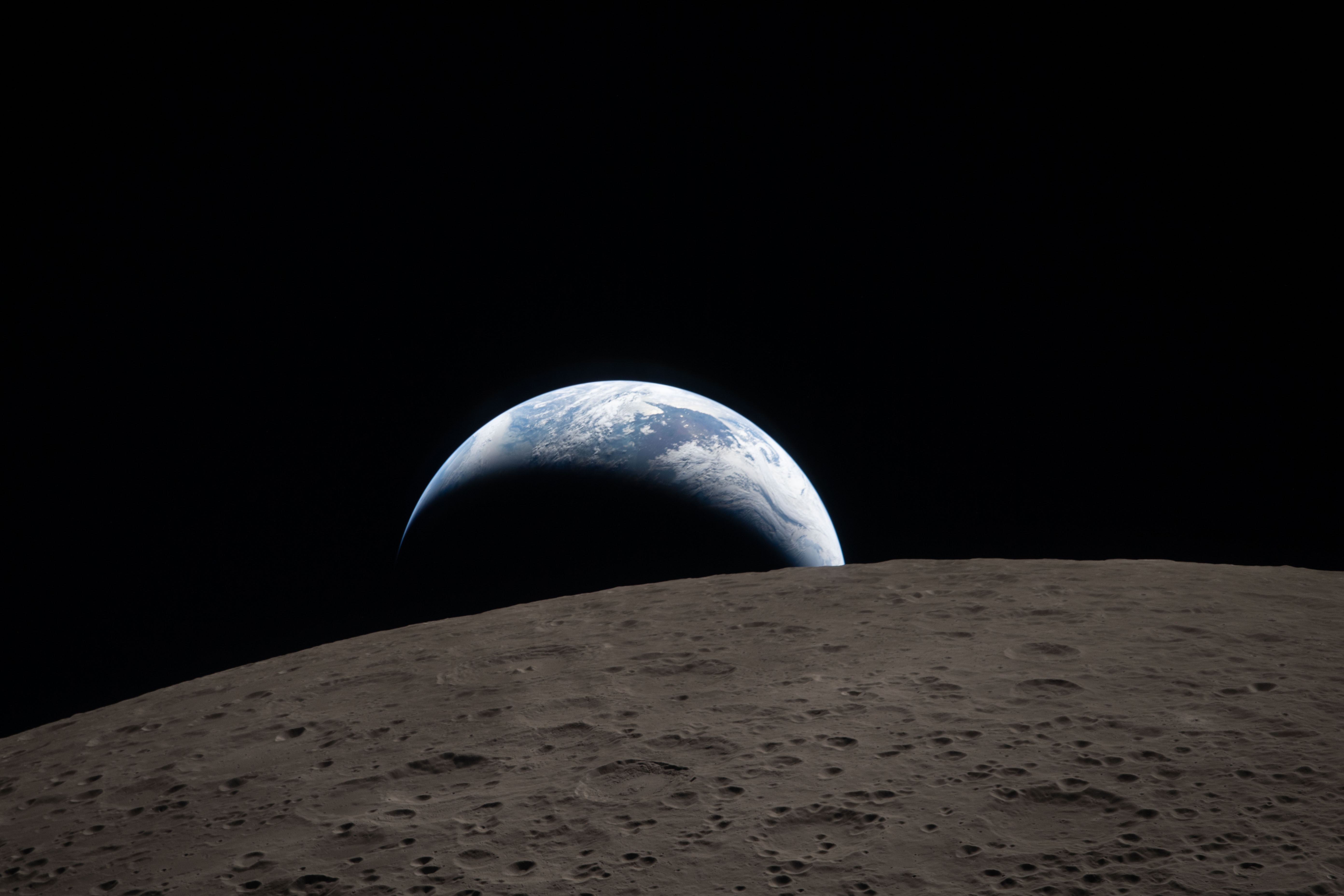
NASA's Artemis II crew, including astronauts Reid Wiseman, Victor Glover, Christina Koch, and Jeremy Hansen, began their return journey after a lunar flyby on April 6, 2026. They will exit the Moon's gravity at 1:23 p.m. EDT, followed by a call with ISS astronauts at 2:40 p.m. and a trajectory correction burn at 9:03 p.m.

Artemis II Day 6: Lunar Flyby, Distance Record and Deep Space Operations Mark Historic Mission Phase
NASA's Artemis II mission achieved a significant milestone on Flight Day 6, with the Orion spacecraft successfully executing a lunar flyby. This operation marks a historic distance record as the crew navigated around the far side of the Moon, demonstrating critical deep space operational capabilities essential for future lunar exploration missions and paving the way for subsequent Artemis objectives.

Artemis II breaks record, conducts lunar flyby
Orion spacecraft Integrity, with astronauts Reid Wiseman, Victor Glover, Christina Koch, and Jeremy Hansen, achieved a record-breaking lunar flyby during the Artemis II mission. This milestone demonstrates significant progress in NASA's lunar exploration efforts, paving the way for future crewed missions to the Moon and beyond, enhancing capabilities in deep space operations and crew safety.

Why haven’t humans gone back to the Moon no longer a valid question thanks to NASA Artemis II lunar flyby
NASA's Artemis II successfully launched on April 1, 2026, marking humanity's return to the Moon after five decades. The crew, including Victor Glover, Christina Koch, Reid Wiseman, and Jeremy Hansen, completed a lunar flyby on April 6. This mission alleviates doubts about lunar exploration and showcases the Orion spacecraft's capabilities, enhancing public interest in future lunar missions.

Launch Preview: Falcon 9 to loft Cygnus to ISS, Minotaur IV to launch from California
NASA's Artemis II mission progresses as Falcon 9 prepares to launch the Cygnus spacecraft to the ISS. This mission highlights ongoing advancements in crewed spaceflight and resupply operations. Additionally, the Minotaur IV is set for a launch from California, further demonstrating the diverse capabilities of current launch vehicles in supporting various missions.

NASA's Moon ship and rocket seem to be working well, so what about the landers?
NASA's lunar program shows promising progress with Blue Origin and SpaceX demonstrating commitment to lander development. Lori Glaze emphasized the importance of collaboration in achieving mission objectives. As the lunar landers are crucial for upcoming Artemis missions, their successful integration with the SLS and Orion systems will be vital for sustained lunar exploration efforts.

The moon base has a hardware plan. It needs a software strategy, too.
NASA's plans for a permanent lunar base emphasize the need for a robust software strategy alongside hardware development. Isaacman advocates for a comprehensive approach that integrates advanced software systems to support complex operations. The current software landscape, rooted in outdated architectures, must evolve to meet the demands of modern lunar missions and ensure sustained human presence on the Moon.

Today’s the Day! Artemis II Crew Ready for Lunar Flyby
Artemis II's crew of four astronauts is set to fly around the Moon, marking the first lunar flyby since 1972. This historic mission underscores NASA's commitment to lunar exploration and paves the way for future Artemis missions. The crew's journey will enhance our understanding of lunar environments and support upcoming lunar base initiatives.

President Trump Prioritizes Lunar Exploration Amidst Funding Cuts in NASA’s FY2027 Budget Request
White House proposed a $5.6B budget cut for NASA in FY2027, emphasizing lunar surface infrastructure and establishing a permanent American presence on the Moon. This strategic shift aims to prioritize lunar exploration despite overall funding reductions, reflecting a commitment to long-term goals in space exploration amidst fiscal constraints. The focus remains on sustainable lunar operations.

Artemis astronauts send down Easter message, prep for lunar fly around Monday
Artemis II astronauts transmitted Easter greetings while approaching the Moon, observing unexpected surface details. This flyby will provide critical data for lunar exploration, with a planned pass over the far side scheduled for Monday evening. The mission's insights will enhance scientific understanding and prepare for future lunar operations, marking a significant milestone in NASA's Artemis program.
Day 4 Artemis II: Crew Conducts Manual Piloting Tests Ahead of Lunar Flyby
NASA's Artemis II crew members Christina Koch and Jeremy Hansen executed a 41-minute manual piloting demonstration, assessing Orion's handling capabilities in preparation for the upcoming lunar flyby. This mission aligns with NASA's evolving strategy towards establishing a phased lunar base, reflecting significant operational transitions within the broader Artemis program framework.
Artemis II is going so well that all we're left to talk about is frozen urine
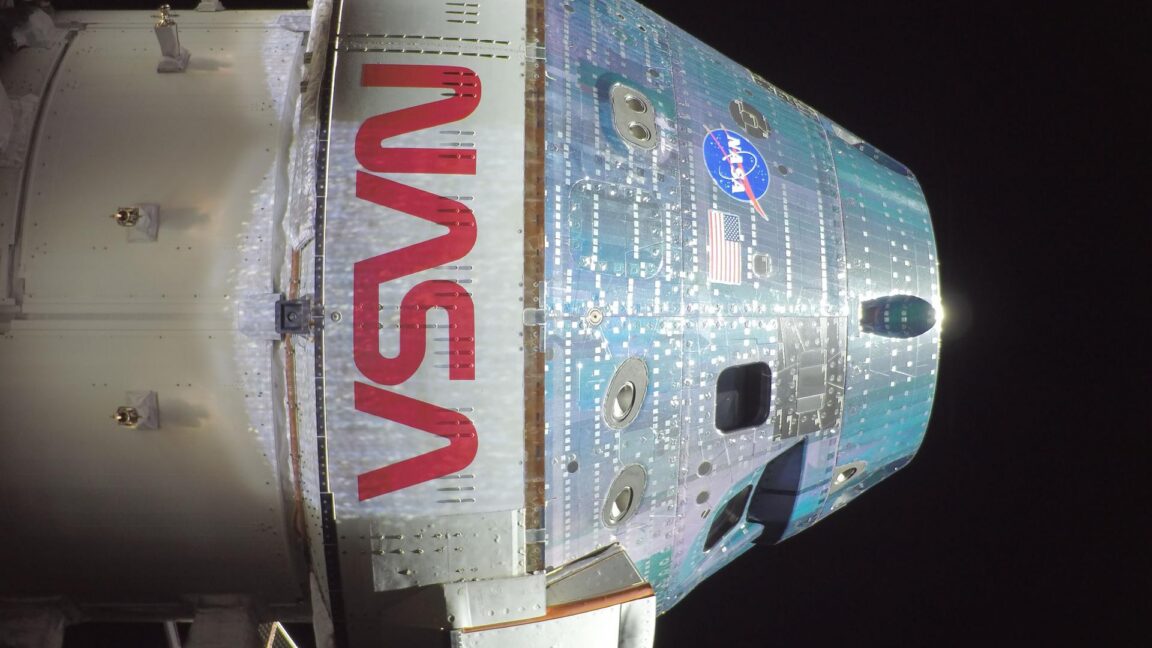
Artemis II's progress has sparked discussions, notably around the Environmental Control and Life Support Systems (ECLSS), including waste management. The focus on the toilet reflects human nature's tendency to fixate on mundane aspects of space missions. However, the operational success of NASA's Artemis II remains the primary achievement, overshadowing these trivial concerns.

Orion Spacecraft Races Toward Historic Lunar Flyby in Artemis II Mission
NASA's Artemis II mission progresses as the Orion spacecraft approaches a historic lunar flyby. This mid-flight phase is critical for validating systems and ensuring crew safety. The mission marks a significant step in lunar exploration, paving the way for future Artemis missions aimed at sustainable lunar presence and eventual Mars exploration. Key systems are under evaluation.
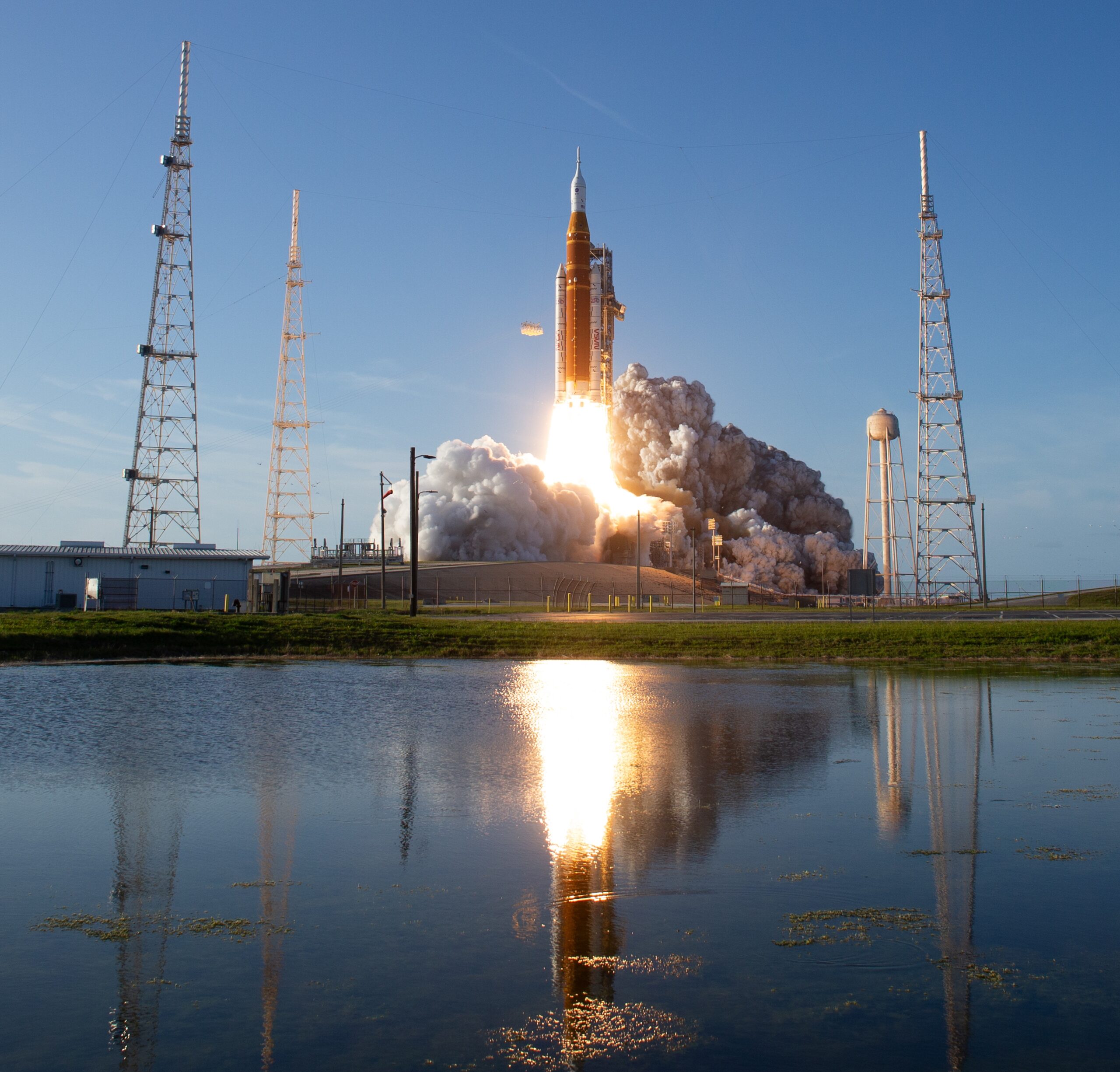
Witnessing lift off of first humans to venture to the Moon since 1972
NASA’s Artemis II mission successfully launched on April 1, 2026, carrying four astronauts aboard the SLS rocket from Kennedy Space Center. This historic flight marks the first crewed lunar mission since 1972, featuring Jeremy Hansen, Christina Koch, and Victor Glover. The mission includes a 10-day journey around the Moon, showcasing significant milestones for space exploration.
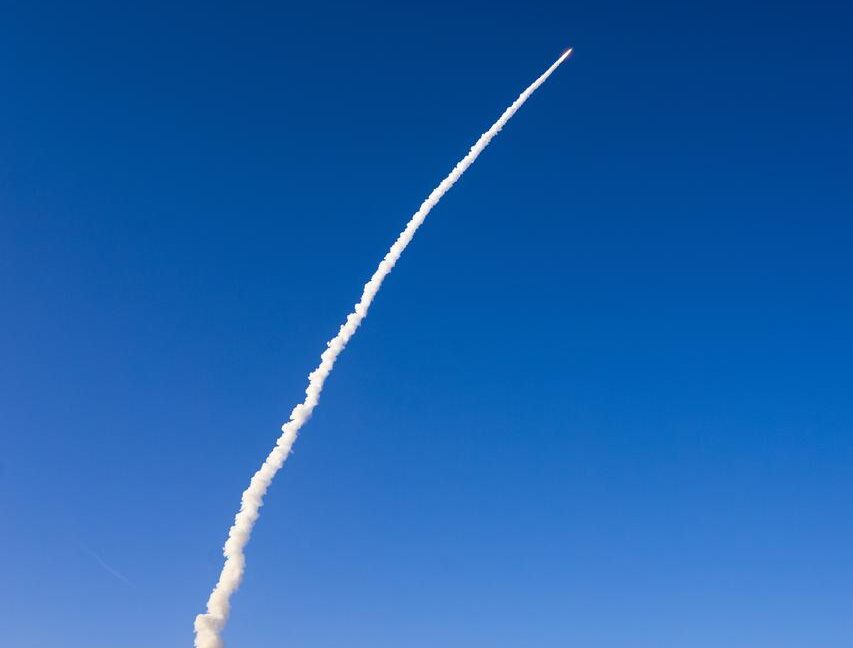
Four astronauts are now inexorably bound for the Moon
Four astronauts are now bound for the Moon, marking a significant milestone in lunar exploration. This mission is part of the ongoing Artemis program, which aims to return humans to the lunar surface. The crew's selection reflects NASA's commitment to advancing human spaceflight capabilities and preparing for future missions beyond the Moon.
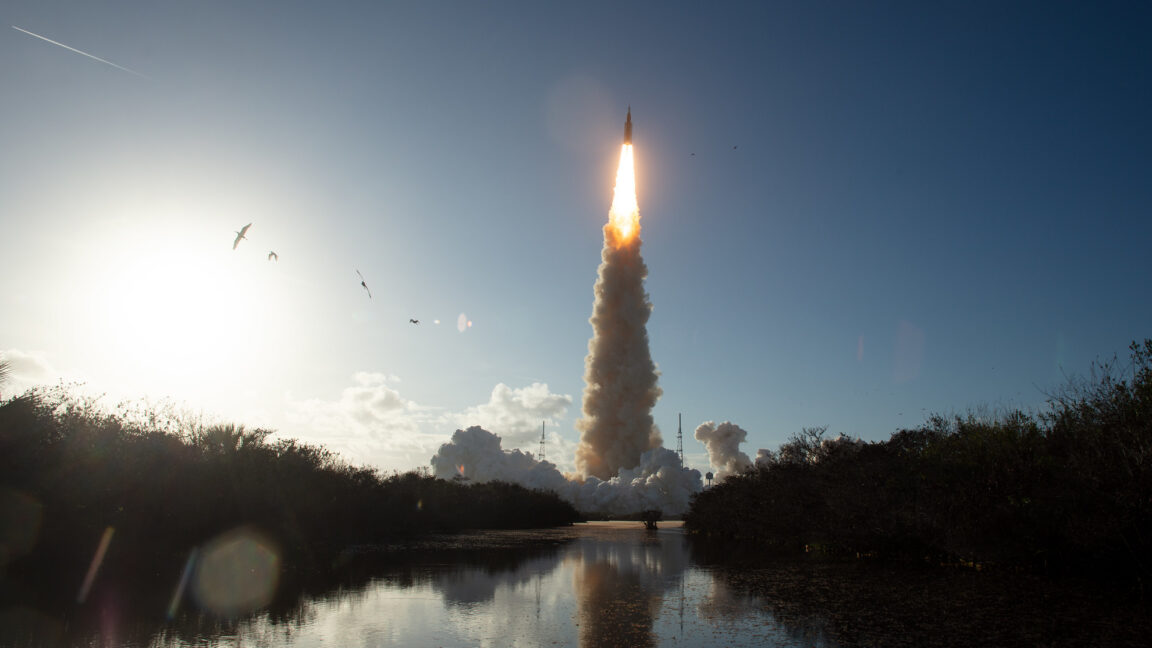
Why is NASA bothering to go back to the Moon if we've already been there?
NASA has struggled to deal with the widespread sentiment that NASA has 'been there, done that.'
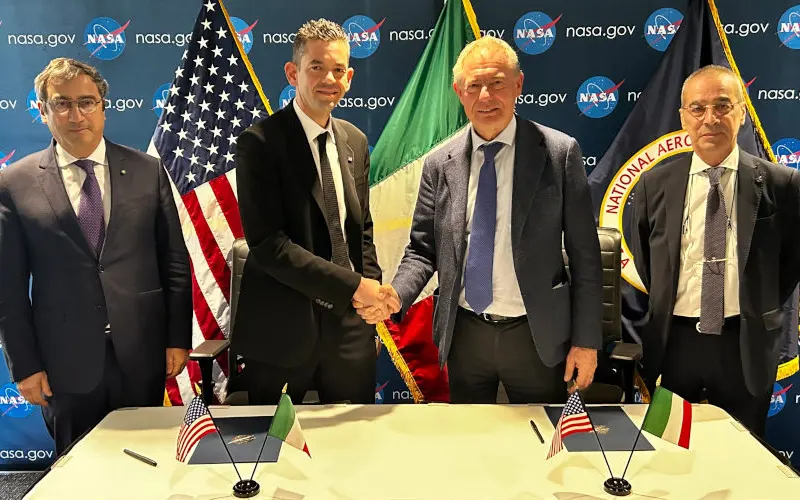
Italy Signs Agreement with NASA to Cooperate on Moon Base
Italy and NASA have formalized a cooperation agreement for the development of a U.S.-led lunar surface base. This initiative builds on previous bilateral efforts, including a June 2022 agreement where Italy was designated to lead the design of a multi-purpose lunar habitation module. The collaboration emphasizes shared goals in lunar exploration and habitat development.

Meet the Crew of Artemis II
NASA's Artemis II crew, including Reid Wiseman, Christina Koch, Victor Glover, and Jeremy Hansen, will embark on a 10-day lunar mission aboard the Orion spacecraft atop the Space Launch System (SLS) rocket. This mission will validate deep space systems and pave the way for future lunar surface exploration, including landing the first woman and person of color on the Moon.

Redwire’s Advanced Imaging and Navigation Technology Will Enable NASA’s Historic Artemis II Mission
Redwire Corporation's advanced optical imaging and sun sensor technology will be integrated into the Orion spacecraft for NASA's Artemis II mission, marking a significant milestone as the first crewed mission in the Artemis program. This collaboration with Lockheed Martin underscores Redwire's commitment to enhancing space exploration capabilities through innovative technology solutions.

Live coverage: NASA to launch Artemis 2, its first Moon-bound mission with astronauts since 1972
NASA's Artemis II mission will launch four astronauts aboard the Orion spacecraft for over nine days, aiming to surpass Apollo 13's distance record. Liftoff is set from Launch Complex 39B on April 1 at 6:24 p.m. EDT. This marks the first crewed lunar mission since 1972, revitalizing human exploration of the Moon.
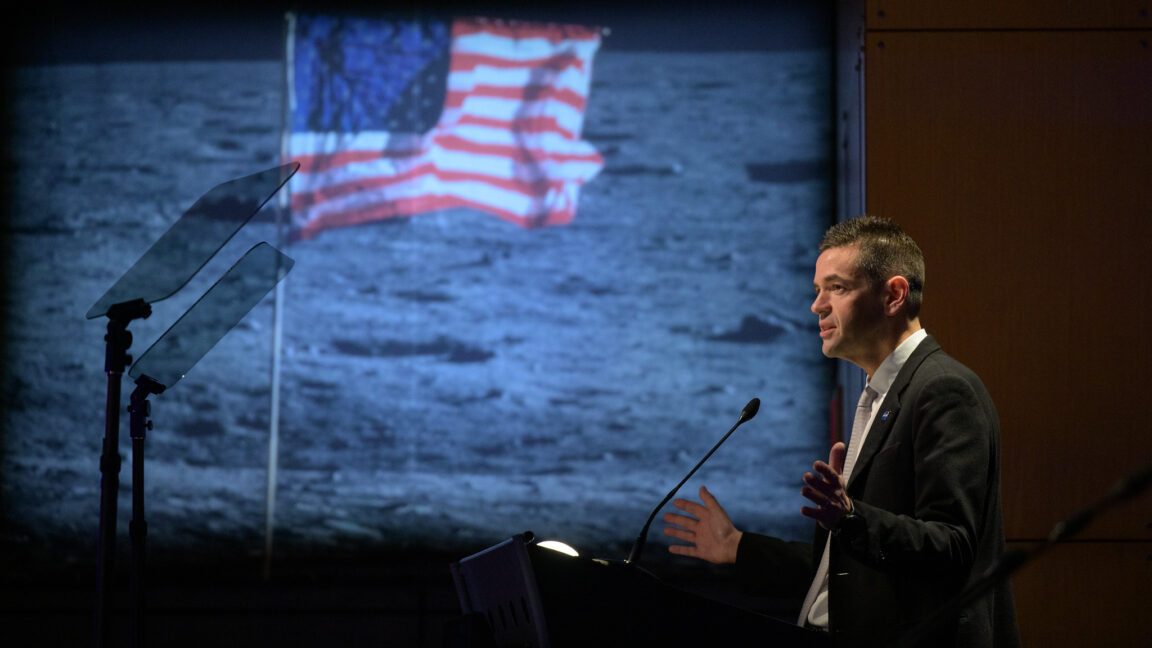
This is my third Orion launch, but it feels totally different
NASA's Orion program has undergone significant changes, leading to a more promising trajectory compared to its initial launches. The sentiment surrounding the program reflects a newfound confidence in its direction and objectives, suggesting that the lessons learned from previous missions are being effectively integrated into future plans.
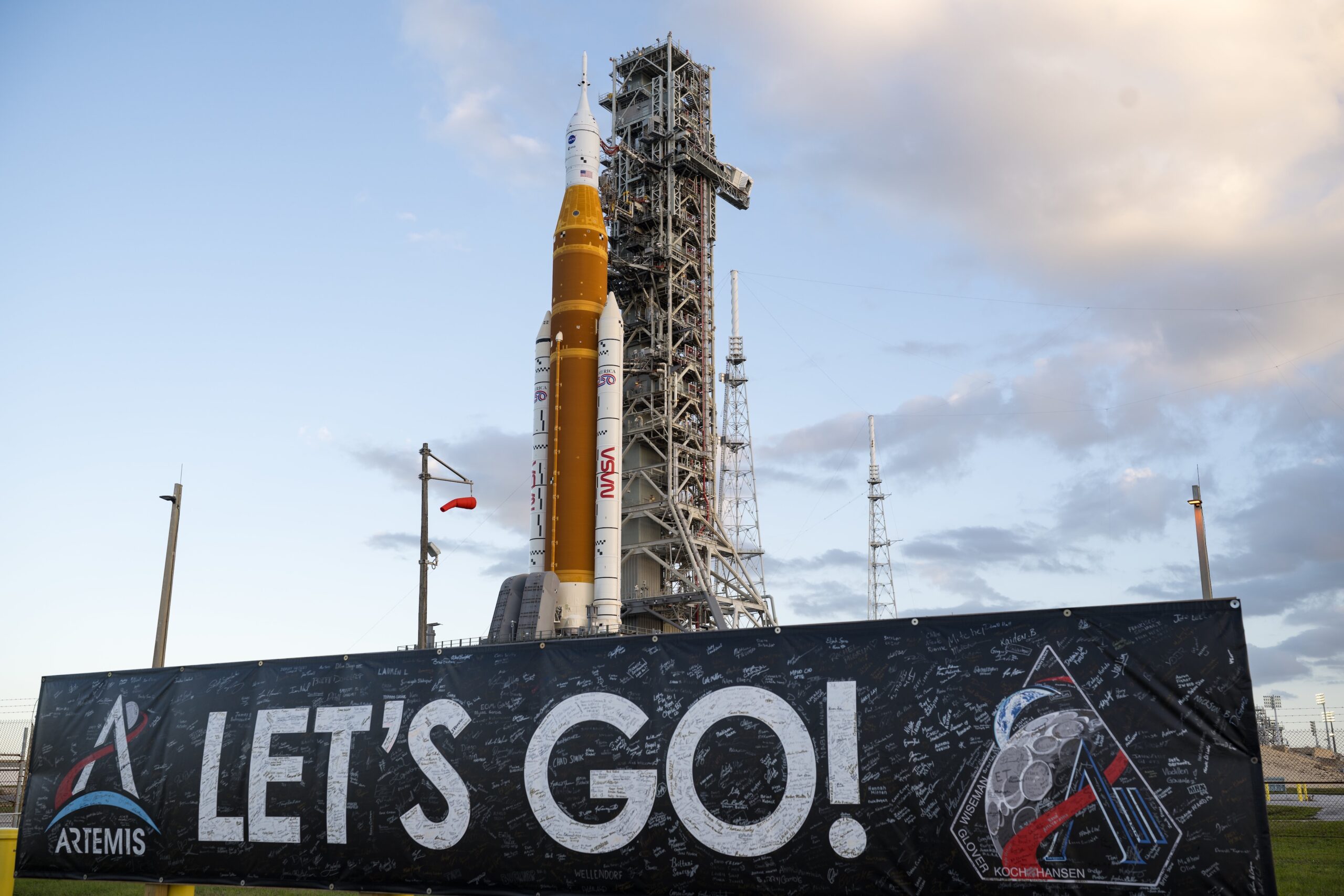
The long road to launch of the Artemis II mission
NASA's Artemis II mission is set for April 1, 2026, utilizing the Space Launch System to launch the Orion crewed capsule into orbit. Four astronauts will embark on a 10-day journey around the Moon, assessing critical systems including the environmental control and life support system, essential for crew safety during the mission's translunar injection phase.

Ignition, not yet liftoff, of NASA’s ambitious Artemis Moonbase plans | Moon Monday #268
NASA announced plans for a $30 billion Moonbase under the Artemis program, aiming for completion within a decade. The Gateway program is paused, with its power module repurposed for the Space Reactor-1 mission to Mars in 2028. This shift allows SpaceX and Blue Origin to develop crewed landers without Gateway's orbit constraints, improving lunar landing prospects.
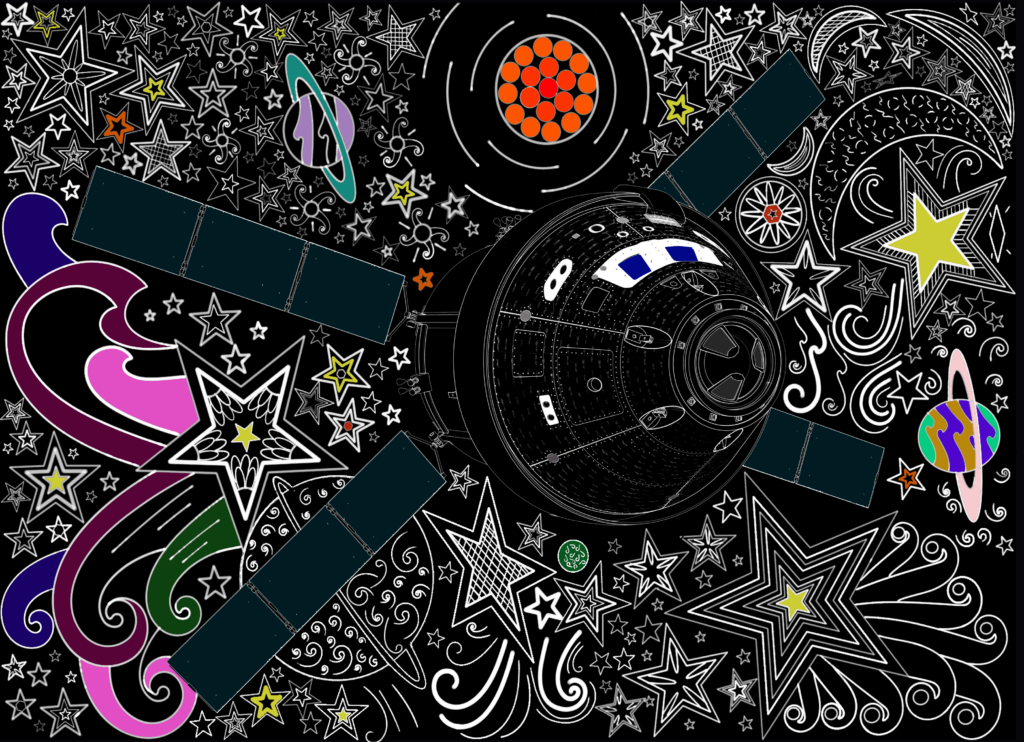
Artemis II Fun Activities
NASA’s Artemis II mission is set to launch as early as April 1, 2026, marking humanity's return to lunar orbit since 1972. Activities for youth include building models of the Orion spacecraft and SLS rocket, alongside drawing guides. The Orion Crew Survival System suit ensures astronaut safety during missions, while the Lunar Terrain Vehicle enhances exploration capabilities.
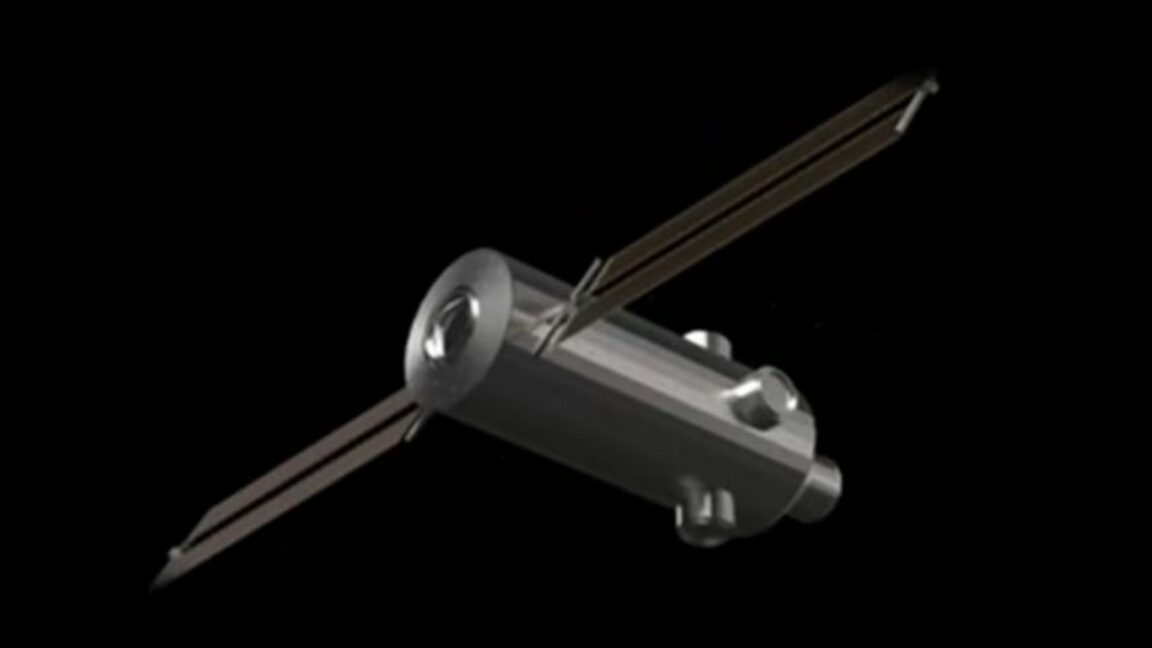
No one is happy with NASA's new idea for private space stations
NASA's new strategy for private space stations has faced widespread criticism, with stakeholders expressing dissatisfaction. Concerns revolve around the feasibility and reliability of the proposed model, drawing comparisons to past disappointments in space initiatives. The agency's approach appears to lack clarity and confidence, raising questions about its long-term viability and alignment with commercial interests.

Artemis 2 astronauts arrive in Florida ahead of April 1 launch attempt
Artemis 2 astronauts are set to arrive in Florida at 2:30 p.m. EDT ahead of the April 1 launch attempt. The earliest launch opportunity is scheduled for 6:24 p.m. EDT, marking the start of a six-day launch window. This mission will be pivotal for NASA's lunar exploration objectives and crewed spaceflight capabilities moving forward.
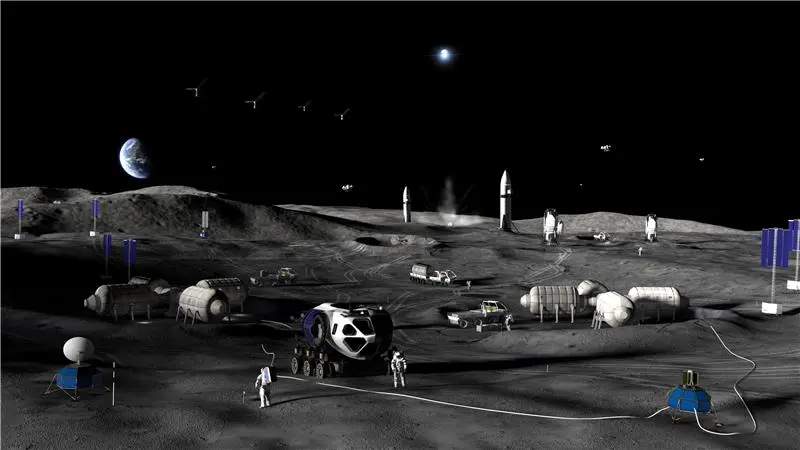
NASA Unveils Initiatives to Achieve America’s National Space Policy
NASA announced initiatives at its “Ignition” event aimed at fulfilling President Donald J. Trump’s National Space Policy. Key actions include establishing a Moon Base, enhancing U.S. presence in low Earth orbit, and advancing nuclear power and propulsion technologies. The Jet Propulsion Laboratory will support these efforts, emphasizing the urgency and opportunity for transformative science and discovery.

NASA Research Proposes Technology to Seek Earth-Like Exoplanets
NASA is advancing technologies to locate and explore Earth-like exoplanets beyond our solar system. A significant challenge is detecting faint reflected light from these planets due to the brightness of nearby stars. The Hybrid Observatory for Earth-like Exoplanets (HOEE) concept proposes using an orbiting starshade with a ground-based telescope to enable direct imaging of exoplanets.

NASA-ISRO Satellite Captures Pacific Northwest Through Clouds
NISAR captures detailed radar imagery of the Pacific Northwest on November 10, 2025, enabling scientists to monitor environmental changes and natural hazards. This NASA-ISRO collaboration utilizes L-band radar to penetrate cloud cover, revealing insights into urban development, vegetation, and geological activity. The mission's frequent observations enhance resource management and disaster preparedness in the region.

See NASA’s GUARDIAN Catch a Tsunami
GUARDIAN (GNSS Upper Atmospheric Real-time Disaster Information and Alert Network) is an experimental NASA technology that detects tsunami hazards by analyzing satellite navigation signal distortions. During the Kamchatka earthquake on July 29, 2025, GUARDIAN provided early warnings, flagging an incoming tsunami 32 minutes before it reached Kauai, enhancing existing early warning systems for communities at risk.
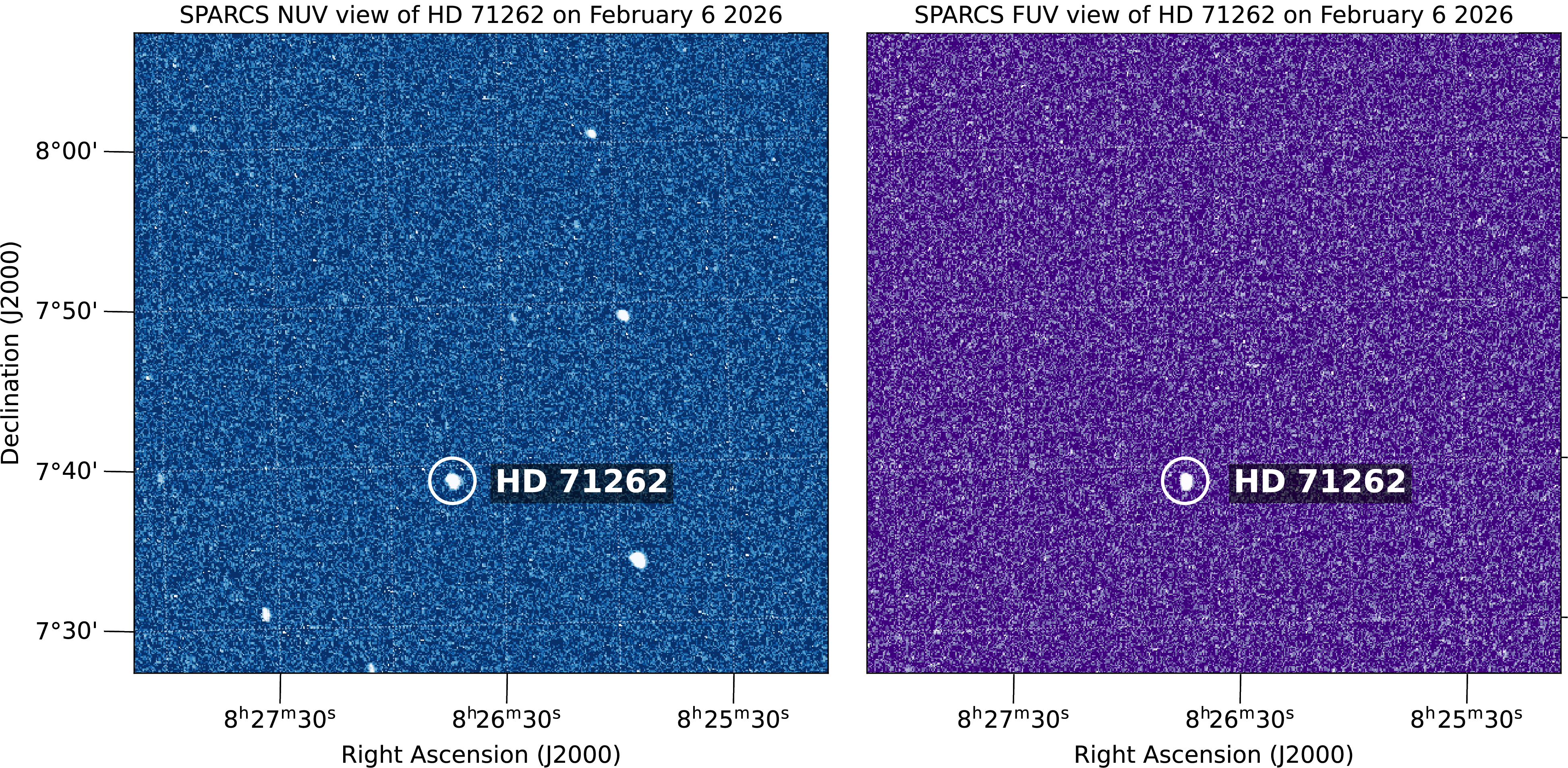
Tiny NASA Spacecraft Delivers Exoplanet Mission’s First Images
NASA's SPARCS spacecraft has successfully delivered its first ultraviolet images, marking a critical milestone for the mission. Launched on January 11, SPARCS will monitor low-mass stars to assess their impact on potential exoplanet habitability. The mission utilizes advanced detector technologies developed at JPL, paving the way for future UV missions like the Habitable Worlds Observatory.
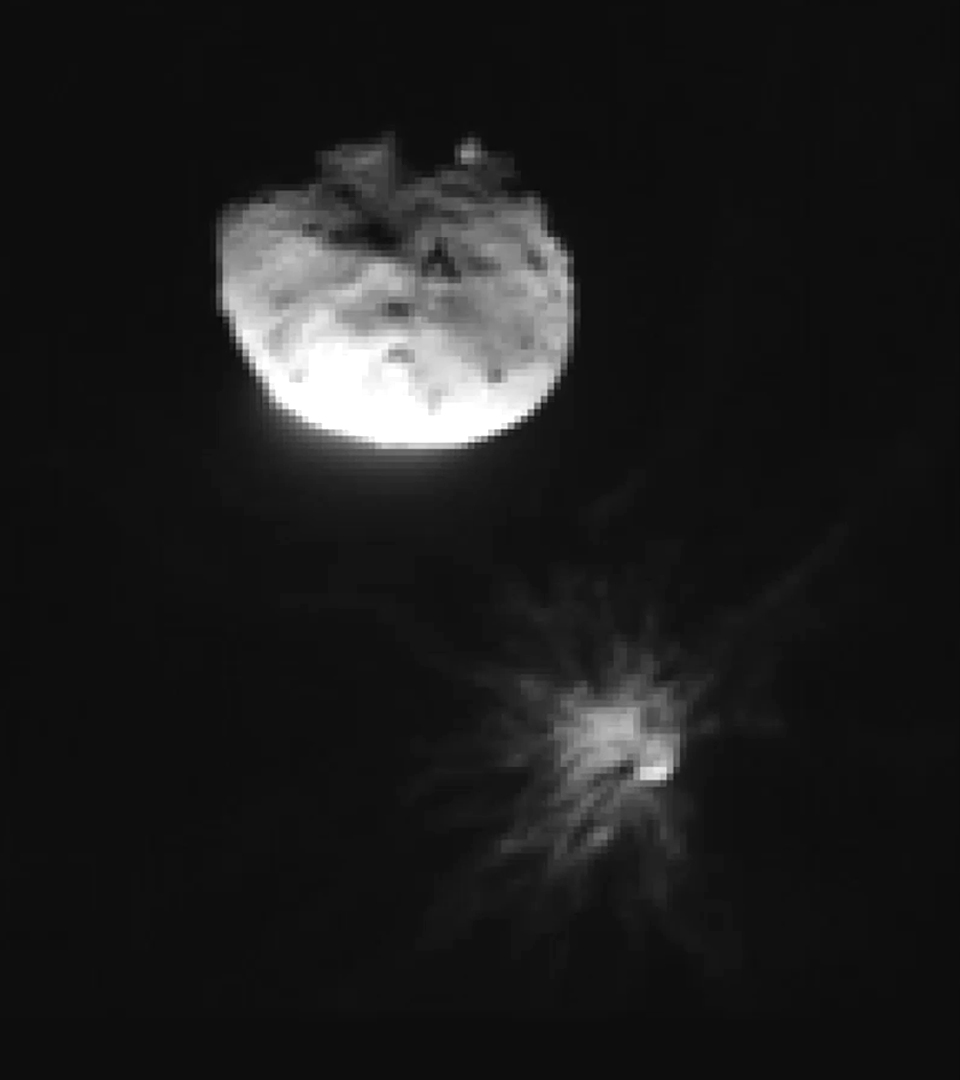
NASA’s DART Mission Changed Orbit of Asteroid Didymos Around Sun
NASA’s DART mission impacted the asteroid moonlet Dimorphos in September 2022, altering both its orbit and that of its larger companion, Didymos, around the Sun. This change, measured at 0.15 seconds, marks the first instance of a human-made object affecting a celestial body’s solar orbit, validating kinetic impact as a planetary defense technique against asteroid threats.
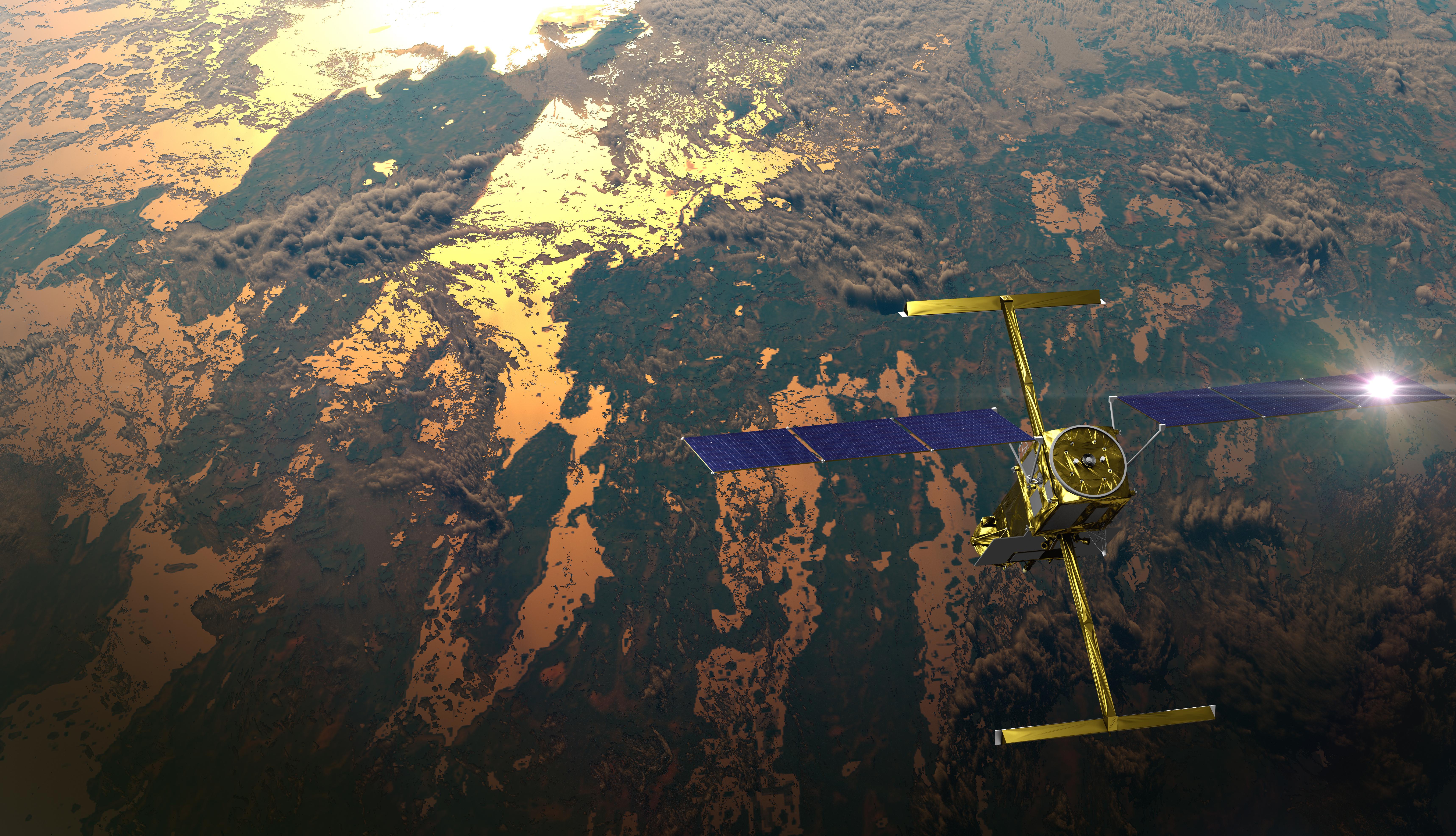
US-French Satellite Takes Stock of World’s River Water
NASA and CNES's SWOT satellite tracked global river dynamics, revealing a 28% reduction in volume variability compared to prior estimates. Analyzed data from October 2023 to September 2024 showed significant changes in rivers like the Amazon, which fluctuated by over 45 trillion gallons. This mission enhances understanding of river topography and hydrology, addressing longstanding uncertainties.
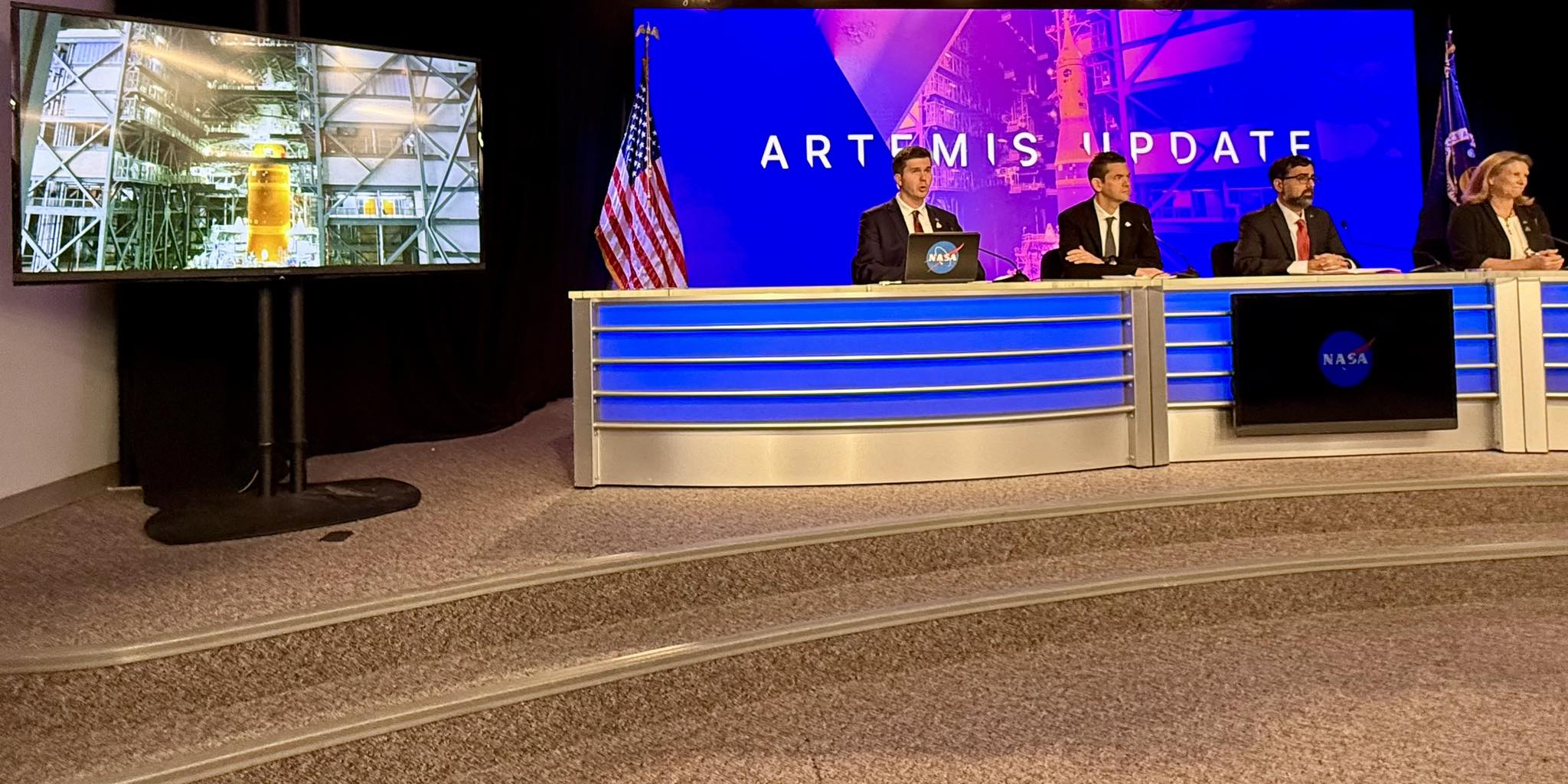
NASA announces major changes to Artemis lunar mission plans
NASA Administrator Jared Isaacman announced significant changes to Project Artemis during a news conference on February 27, 2026. The agency plans to increase the SLS and Orion flight cadence, adding a test flight to enhance reliability. Artemis III will now focus on docking with a commercial lunar lander, with missions IV and V planned for 2028 and beyond.
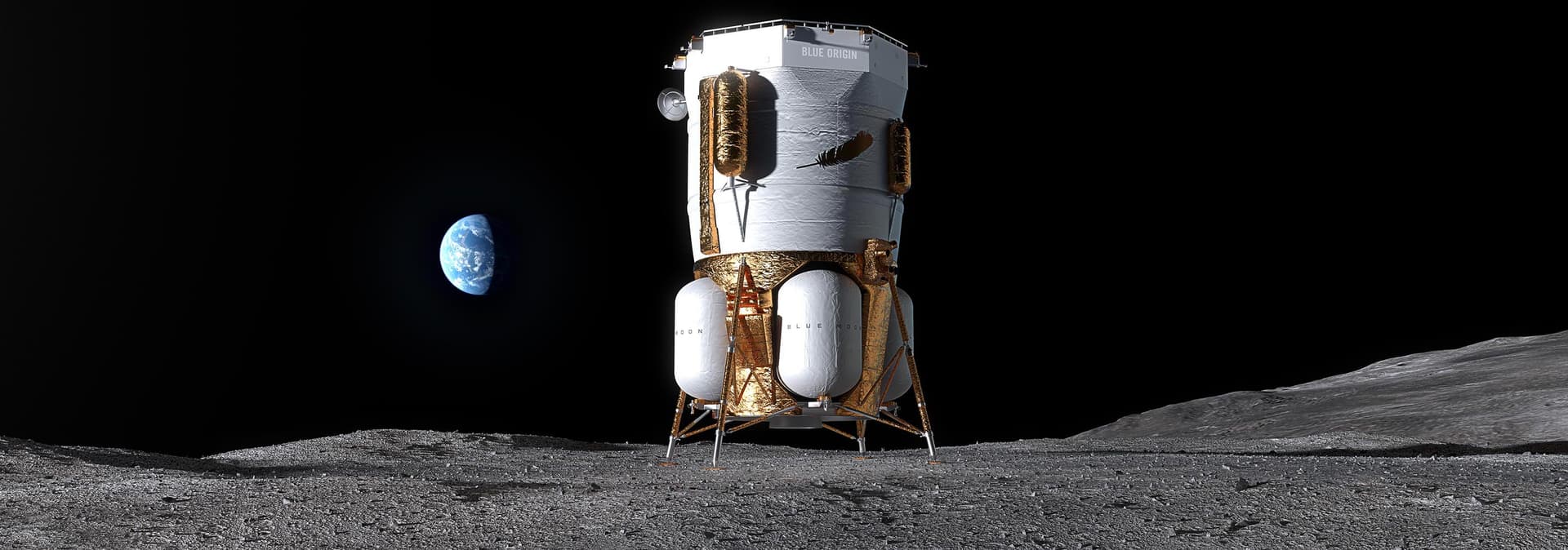
2026 is poised to be an exciting year for space exploration
NASA’s Artemis II mission will send astronauts around the Moon in 2026, marking humanity's return since 1972. Concurrently, Blue Origin’s Blue Moon MK1 will test a cargo lander for lunar missions. The Nancy Grace Roman Space Telescope aims to launch by fall 2026, mapping galaxies and exoplanets, while ESA’s PLATO mission will search for rocky planets in December 2026.
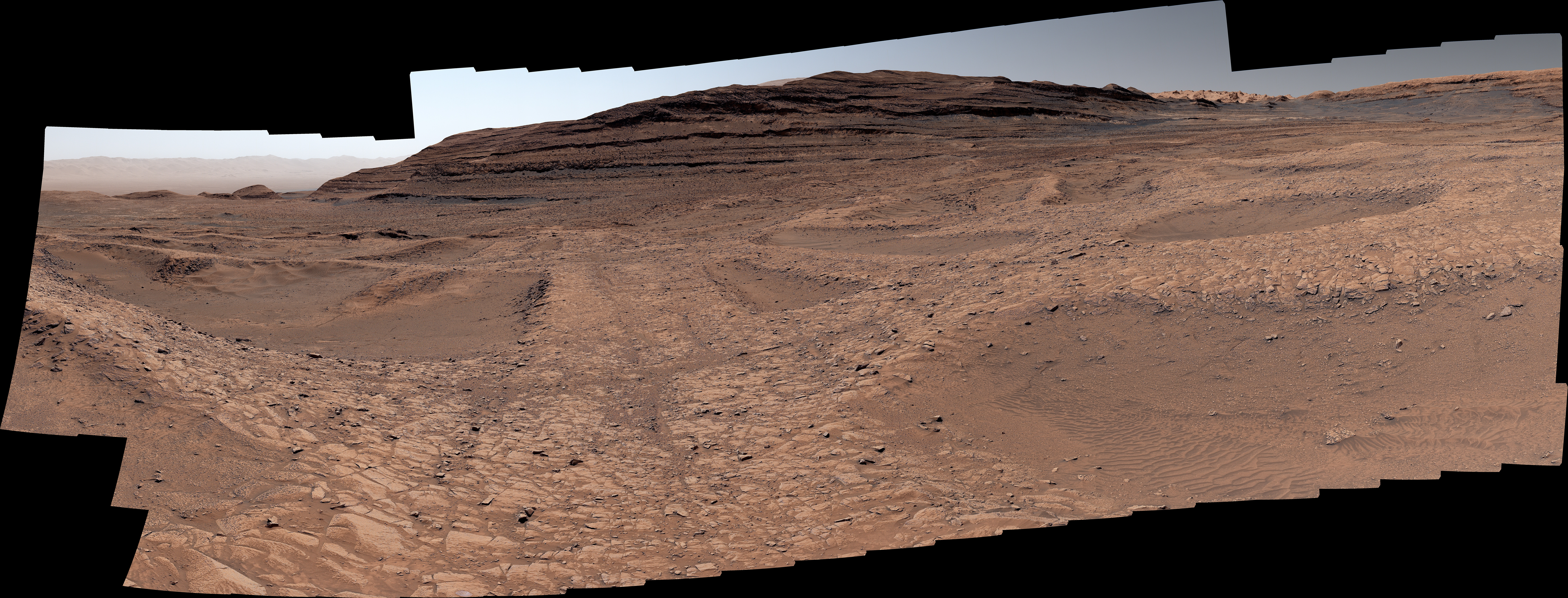
NASA’s Curiosity Rover Sees Martian ‘Spiderwebs’ Up Close
NASA’s Curiosity rover has explored Martian boxwork formations, revealing ancient groundwater flow patterns that suggest microbial life could have survived longer than previously thought. Captured images on August 21, 2025, show these formations resembling spiderwebs. The rover's findings include fractures and nodules, indicating past water activity, raising questions about Mars' climatic history and potential for life.
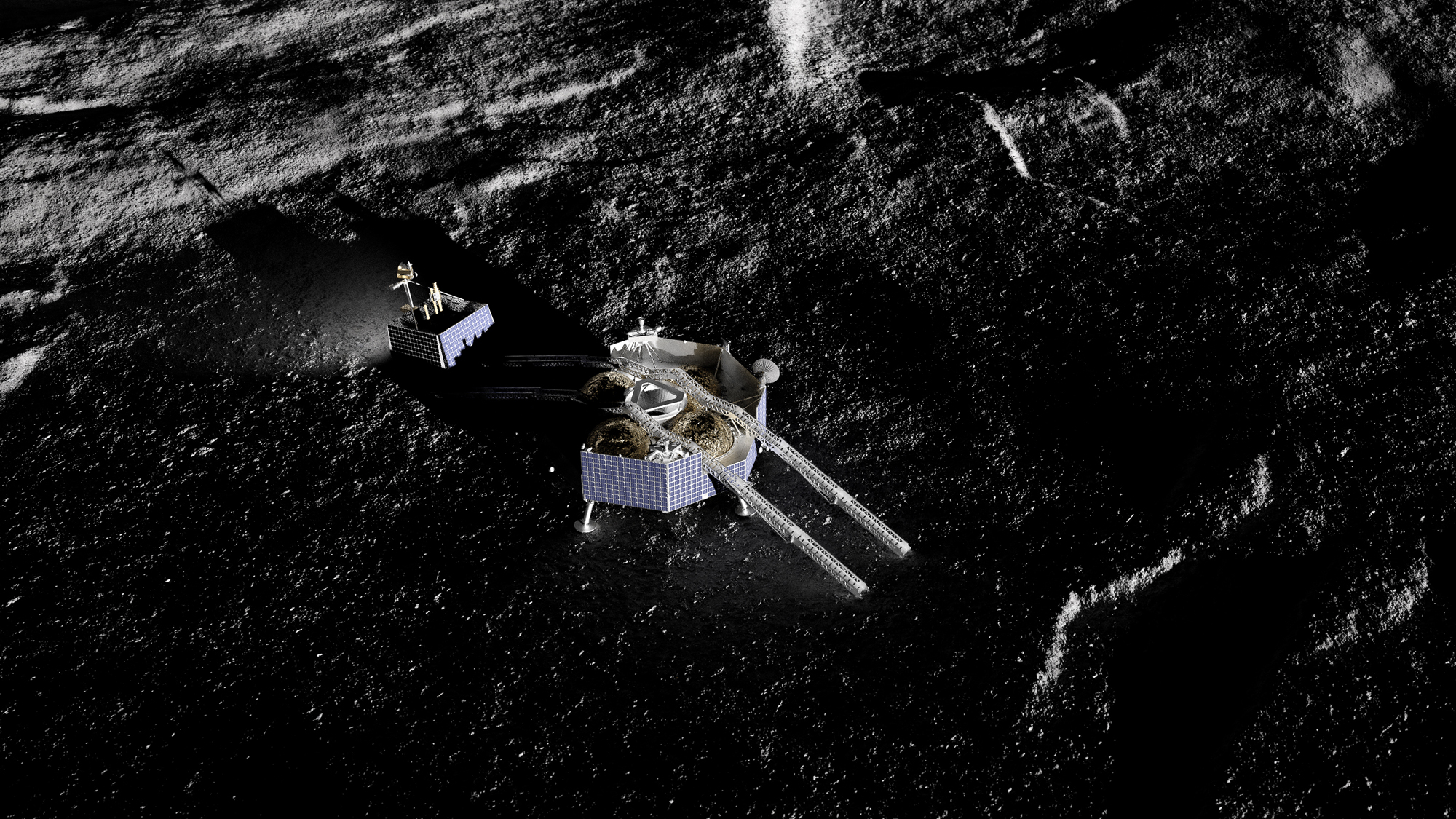
NASA to Explore Additional Methods to Send VIPER to Moon
NASA is exploring alternative methods to deliver its VIPER rover to the Moon, canceling the Lunar Volatiles Science Partnership Announcement for Partnership Proposals. This decision follows evaluations of partnership proposals aimed at sending VIPER at no cost to the government. A new strategy for VIPER will be announced in the future as part of NASA's Moon to Mars efforts.

A second Intuitive Machines spacecraft just landed on the moon — and probably tipped over
Intuitive Machines' Athena lunar lander successfully touched down on the moon's surface on February 26, 2026, but reportedly tipped over. The mission, part of a $4.8 billion contract with NASA, aims to test technologies including a laser retroreflector array and an ice mining experiment. CEO Steve Altemus confirmed the landing occurred within a 50-meter zone on Mons Mouton.
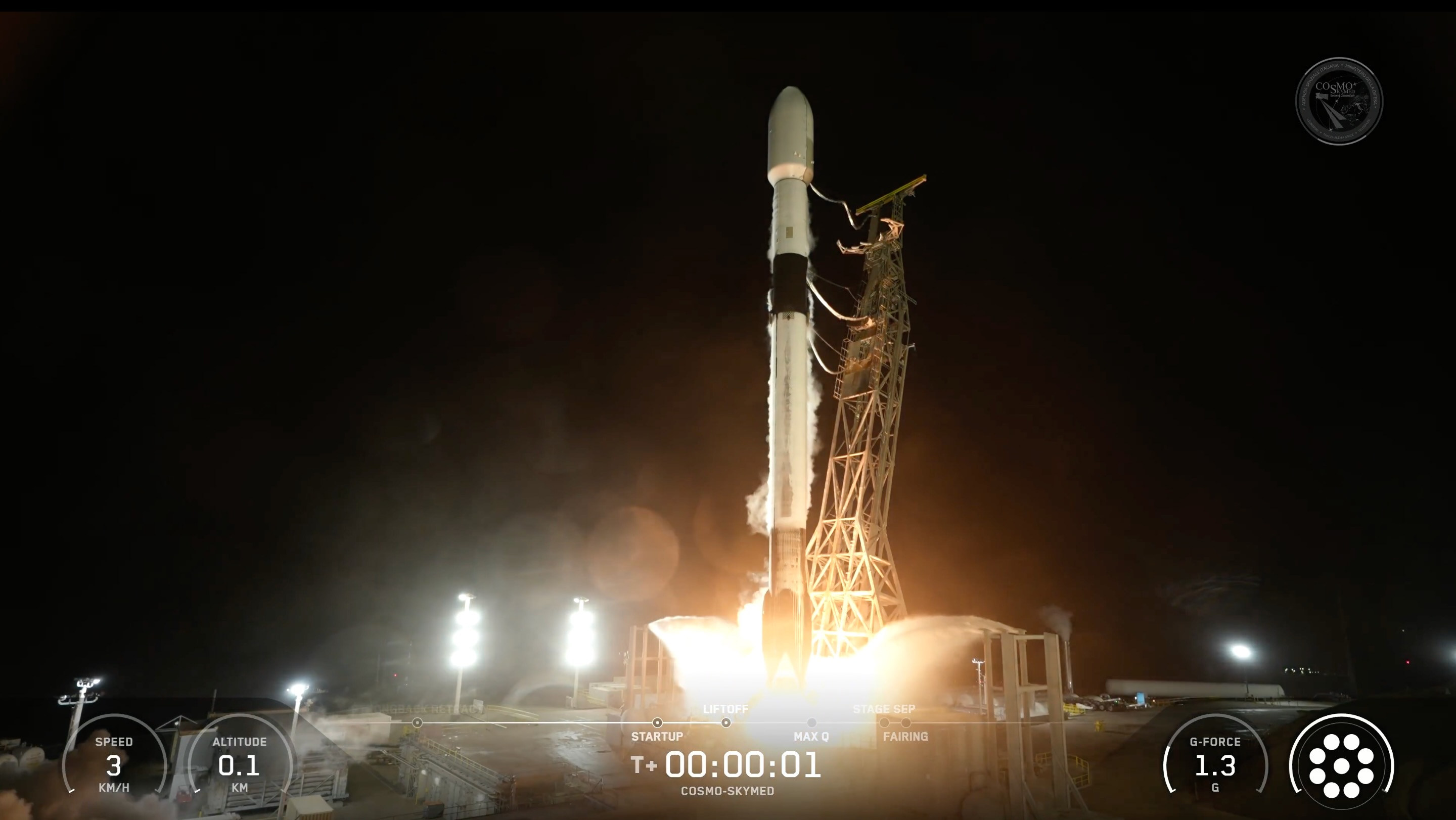
Intuitive Machines’ Lunar Lander Separates from SpaceX Falcon 9 Rocket
Intuitive Machines’ lunar lander successfully separated from SpaceX’s Falcon 9 rocket at 8:01 p.m. EST, initiating its weeklong journey to the Moon. The lander, part of NASA's CLPS initiative, carries instruments for resource detection and a Laser Retroreflector Array. NASA’s Lunar Trailblazer also separated at 8:04 p.m. EST, aiming to map lunar water distribution.

James Webb Space Telescope will study asteroid 2024 YR4
James Webb Space Telescope will study asteroid 2024 YR4 to refine its size and orbital parameters, crucial for assessing potential impact risks in 2032. Observations will utilize Webb's MIRI and NIRCam instruments, with the first round scheduled for early March 2025. This data will enhance understanding of the asteroid's characteristics and inform planetary defense strategies.

NASA Plan to Shoot and Ship Samples of the Red Planet on Hold
NASA's Mars Sample Return project is currently on hold due to scrutiny. The initiative involves the Perseverance rover collecting Martian samples, which are stored in tubes for future retrieval. The plan includes a Sample Return Lander equipped with a Mars Ascent Vehicle and a robotic arm from the European Space Agency. Details remain under review.

NASA Requests Funding for $1 Billion ‘Space Tug’ to Deorbit the ISS
NASA is requesting $1 billion for the development of a U.S. Deorbit Vehicle (USDV) to assist in deorbiting the International Space Station (ISS) by 2030. An initial $180 million is sought for fiscal year 2024 to begin technology development. This effort aims to ensure safe reentry over the South Pacific, enhancing U.S. leadership in space operations.

NASA Space Station Status Report 16 November, 2023 – Biological Printer Maintenance
NASA astronaut Loral O’Hara replaced components on the biological printer, BioFabrication Facility (BFF), testing organ-like tissue printing in microgravity. Expedition 70 investigations support crew health for future lunar and Martian missions. Astronauts conducted vein scans, cleared hardware for the NanoRacks External Platform, and performed various experiments, including cell sensing and Earthshine photography from the International Space Station.

NASA Will Leave Mars Samples in Orbit Following “Orderly Shutdown” of Sample Return Program
NASA has initiated an “orderly shutdown” of its Mars Sample Return program due to funding uncertainties, impacting the Capture, Containment, and Return System (CCRS). This decision leaves Martian samples in orbit rather than returning them to Earth. The agency's officials confirmed the reduction in work related to the program amid budget constraints for the upcoming year.