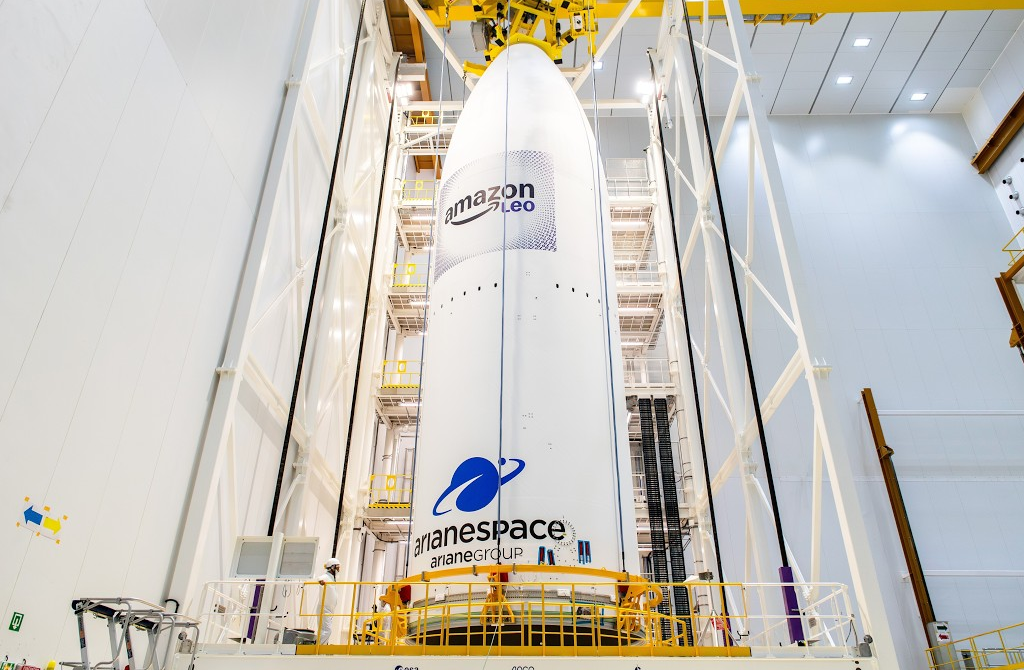
Arianespace readies Amazon Leo launch
Arianespace is preparing for the launch of 32 Amazon Leo satellites on April 28, 2026, from the Spaceport at Kourou, French Guiana. This mission marks the second flight of the Ariane 6 rocket, designed to enhance global connectivity services. The satellites are designated LE-02 and are part of a broader deployment strategy for Amazon Leo's constellation.

India’s space agency: In ’25 it did 20 maneuvers to avoid collisions in space
ISRO's annual Space Situational Report reveals that in 2025, the agency conducted 20 maneuvers to prevent collisions in space. This included 4 collision avoidance maneuvers for GEO satellites and 14 for LEO satellites, including one for NISAR. Additionally, ISRO shifted the orbit of Chandayaan-2 twice due to conflicts with NASA's Lunar Reconnaissance Orbiter.

The perfect place for Celeste’s first navigation signal
ESA teams successfully received the inaugural navigation signal from the Celeste mission on April 8, marking a milestone for European satellite navigation in LEO. This event occurred at ESA’s Navigation Lab in the Netherlands, which has been pivotal for navigation testing, previously hosting the first ground location determination using Galileo satellites over a decade ago.

Amazon reveals aviation antenna as LEO inflight connectivity race intensifies
Amazon has unveiled its aviation antenna designed for the upcoming LEO constellation, targeting gigabit connectivity for commercial aircraft. This development positions Amazon to compete effectively against Starlink's dominance in the inflight broadband market, having already secured partnerships with major airlines. The antenna aims to enhance inflight connectivity capabilities significantly, marking a pivotal advancement in the sector.
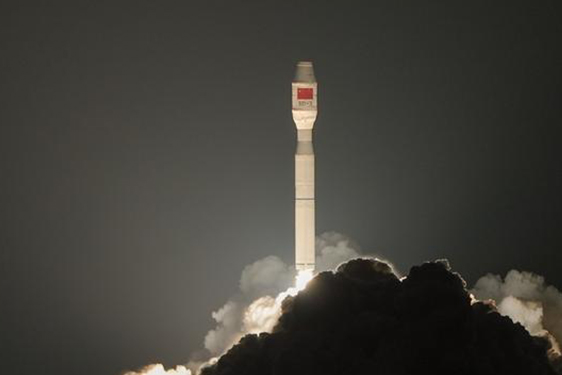
China Accelerates Orbital Internet Deployment with Successful Smart Dragon-3 Sea Launch
China successfully deployed a satellite internet technology test payload via Smart Dragon-3 on April 11, enhancing its sovereign LEO communications infrastructure. This mission underscores China's commitment to advancing its orbital internet capabilities, positioning itself competitively in the global space communications landscape. The test payload aims to validate technologies for future commercial applications in satellite broadband services.

What returning to lunar space means for human health
NASA is preparing for Artemis II, marking the first return to lunar space since Apollo, focusing on human health impacts from spaceflight. Risks include radiation exposure and lunar dust, which can cause respiratory issues. Advances in health monitoring and research, such as TRISH and SENTINEL, aim to mitigate these risks and enhance astronaut safety during missions beyond LEO.

ULA Launches Latest Batch of 29 Satellites for the Amazon Leo Satellite Internet Constellation
Amazon launched 29 satellites for its LEO internet constellation aboard ULA's Atlas V, marking the ninth batch and increasing the total to 241 spacecraft in orbit. This deployment underscores Amazon's commitment to expanding its broadband capabilities through the constellation, enhancing connectivity across various regions. The Atlas V continues to demonstrate reliability in delivering payloads to orbit.

ULA’s Atlas 5 rocket launches its heaviest payload ever with fifth Amazon Leo mission
ULA’s Atlas 5 successfully launched its heaviest payload to date, marking the fifth Amazon LEO mission. The liftoff occurred from pad 41 at Cape Canaveral Space Force Station at 1:46 a.m. EDT. This mission underscores ULA's capabilities in handling substantial payloads, enhancing Amazon's satellite constellation for broadband services in low Earth orbit. Future missions are anticipated.