India
companyIndia is a country with a growing space industry focused on innovative aerospace technologies.
India's space industry is rapidly evolving, contributing significantly to the global aerospace sector. Companies like Space Zone India and Dhruva Space are at the forefront, providing affordable solutions and developing small satellite systems. The industry has generated substantial economic impact, with contributions of $60 billion to the GDP between 2014 and 2024. Various startups and established firms are engaged in research, development, and production of advanced aerospace technologies.
Articles · 3
view in feed →
Starlink struggling for approval on South Africa, India
Starlink faces significant regulatory hurdles in South Africa and India, with Elon Musk criticizing BEE laws as discriminatory. In South Africa, Starlink's operations are stalled due to ownership regulations, while in India, its FDI application is on hold amid national security concerns. Gwynne Shotwell and SpaceX executives are actively engaging with Indian officials to advance their broadband initiatives.
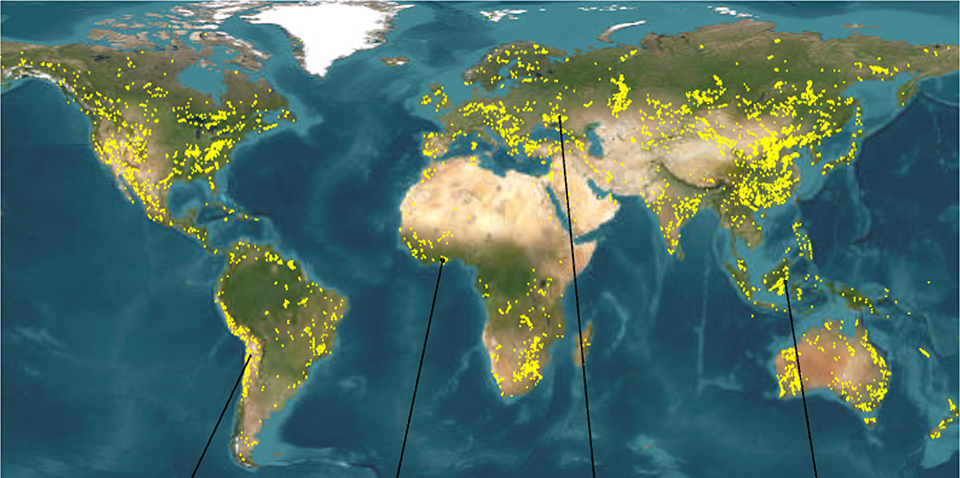
Geographic Hotspots: Where Demand Is Accelerating
China and India are emerging as leaders in the Asia-Pacific satellite sector, projected to capture a 26.5% market share by mid-2026. Vodafone partnered with Amazon Leo for satellite backhaul in Africa, while Orange collaborates with AST SpaceMobile and Eutelsat for D2D services. The Arctic Corridor's satellite market is expected to reach $2.77 billion by 2026.
Geographic Hotspots: Where Demand Is Accelerating
China and India are leading the Asia-Pacific satellite market, projected to capture 26.5% by 2026. In Africa, Vodafone partners with Amazon Leo for satellite backhaul, addressing a 64% usage gap. The Arctic Corridor is projected to reach $2.77 billion by 2026, driven by increased maritime traffic and the need for high-latitude connectivity.