Amazon Leo
programAmazon Leo is a satellite program aimed at providing global internet coverage.
Amazon Leo, previously known as Project Kuiper, is launching a constellation of over 3,000 low Earth orbit (LEO) satellites to deliver fast and reliable internet services worldwide, particularly to underserved areas. The program's first two prototype satellites were successfully launched on October 6, 2023, aboard an Atlas V rocket. Future missions include additional satellite launches to expand the network's capabilities.
Articles · 5
view in feed →
Impressive Starlink deployment rate
SpaceX has launched and deployed 4,207 Starlink satellites in 469 days, significantly outpacing Amazon Leo, which plans a constellation of 3,232 satellites. Amazon faces challenges meeting FCC obligations for its Gen 1 deadline due to delays from launch providers like Arianespace and Blue Origin. The FCC has authorized a second-generation constellation with extended deployment deadlines.
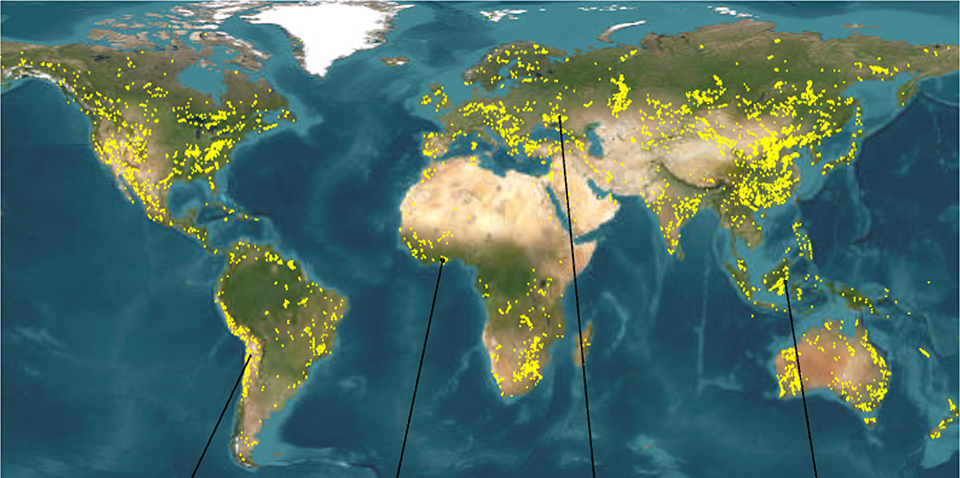
Geographic Hotspots: Where Demand Is Accelerating
China and India are emerging as leaders in the Asia-Pacific satellite sector, projected to capture a 26.5% market share by mid-2026. Vodafone partnered with Amazon Leo for satellite backhaul in Africa, while Orange collaborates with AST SpaceMobile and Eutelsat for D2D services. The Arctic Corridor's satellite market is expected to reach $2.77 billion by 2026.
Geographic Hotspots: Where Demand Is Accelerating
China and India are leading the Asia-Pacific satellite market, projected to capture 26.5% by 2026. In Africa, Vodafone partners with Amazon Leo for satellite backhaul, addressing a 64% usage gap. The Arctic Corridor is projected to reach $2.77 billion by 2026, driven by increased maritime traffic and the need for high-latitude connectivity.

Preparing first Ariane 6 with four boosters and liftoff
Arianespace's Ariane 6 rocket, equipped with four boosters, was prepared for its inaugural launch at Europe's Spaceport in French Guiana. The central core arrived on 2026-01-21, with boosters added by 2026-01-22. The rocket carried 32 Amazon Leo satellites into LEO, successfully lifting off on 2026-02-12 at 13:45 local time, with satellite separation occurring 114 minutes later.

Highlights of first launch of Ariane 6 with four boosters
Ariane 6 successfully launched at 16:45 GMT, marking its first flight with four boosters and delivering 32 Amazon Leo satellites to orbit. This Ariane 64 variant significantly enhances performance, capable of lifting 21.6 tonnes to LEO, compared to 10.3 tonnes with two boosters. The P120C boosters are among the world's most powerful one-piece motors.